
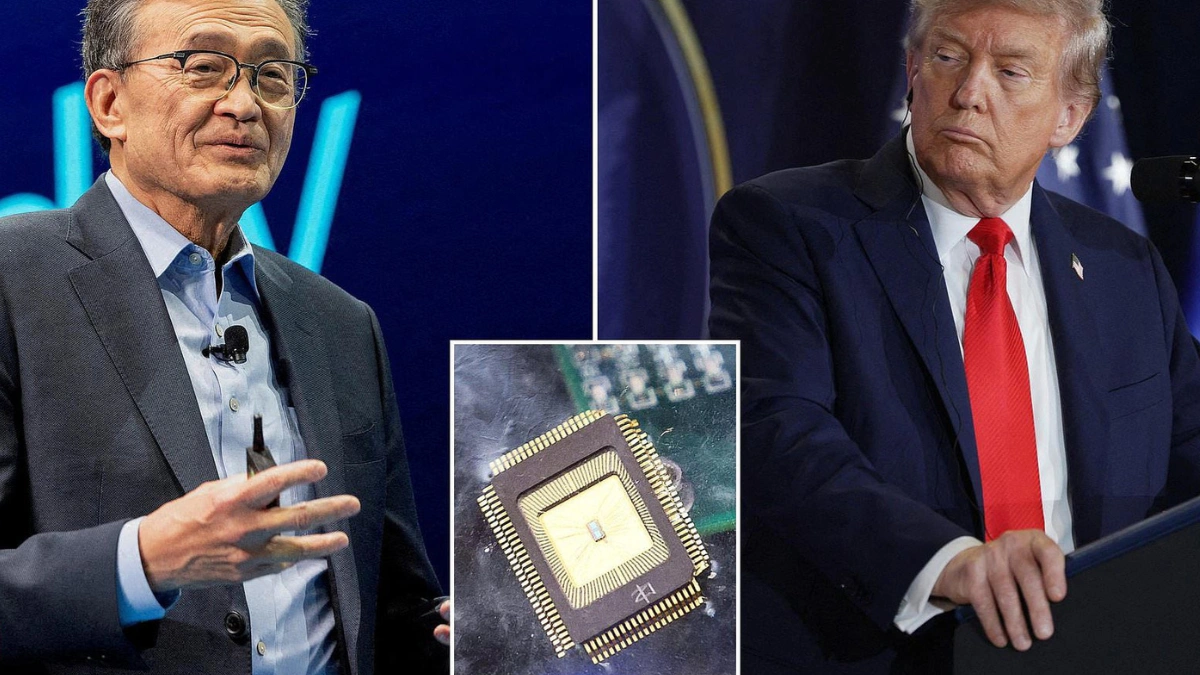
The Trump administration has initiated what many experts refer to as America’s contemporary “Manhattan Project,” and there have been rumours that one of the country’s most competent semiconductor makers, Intel Corp., may be partially nationalised. The urgency of maintaining US technology supremacy in defence, economic security, and artificial intelligence (AI) in the face of growing competition from China is reflected in this extraordinary move.
In an interview with engineer Peter Diamandis, MIT AI researcher Dave Blundin encapsulated the dire situation: “This reminds me of the Manhattan Project or the lead-up to World War II.” Like the space race and the nuclear arms race, it is equally significant. In actuality, it is more crucial.
Bitcoin Smashes Records, Hits $124,500 Amid Policy Support and Institutional Buying
Intel at the Center of the Strategy
California-based Intel has long served as the foundation for innovation in semiconductors in the United States. Even while rivals like Samsung and Taiwan Semiconductor Manufacturing Company (TSMC) control most of the world’s production, Intel is still able to design and manufacture cutting-edge chips in the US.
At the moment, Taiwan produces more than 60% of the semiconductors used worldwide. As tensions increase across the Taiwan Strait, Washington’s reliance has turned into a strategic vulnerability. The US government intends to protect home supply chains vital to AI, defence technologies, and the overall economy by lowering dependency on foreign fabrication factories (fabs) by exploring a direct interest in Intel.
Record US Tariff Collections in July 2025 — Celebration and Concern
Talks With the Trump Administration
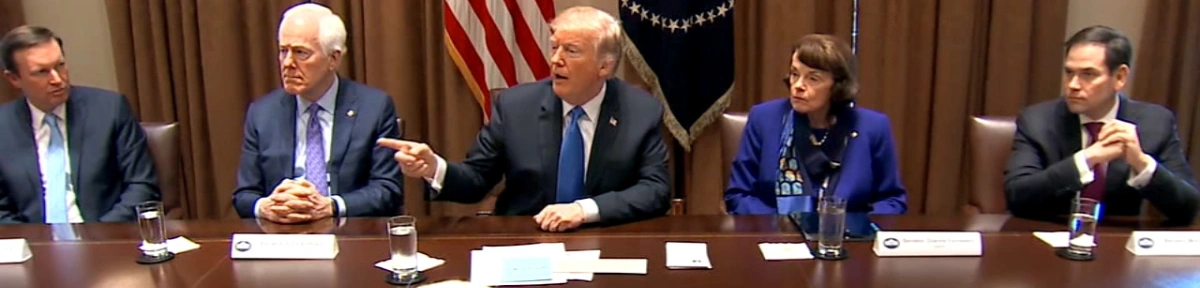
The US government is actively considering investing in Intel, according to sources who spoke to Bloomberg. In order to guarantee more national control over semiconductor manufacture, the framework would probably entail Washington purchasing a share in the business.
Negotiations are still going on, though, and no agreement has been reached. According to one insider, “the talks do not ensure a definitive agreement” and that negotiations could end in a deadlock.
Intel has responded cautiously, for its part. Although the business declined to comment on what it called “rumours or speculation,” it stated in a statement that it is “deeply committed to supporting President Trump’s efforts to strengthen US technology and manufacturing leadership.”
Trump’s Tariff Offensive: Global Trade Politics Take an Unexpected Turn
Nationalization as a Tool of Urgency

Companies are usually only partially or completely nationalised at periods of great national urgency. Such actions have traditionally been linked to wartime mobilisation or the necessity to safeguard sectors of the economy thought to be vital to the survival of the country.
“They’re putting the whole industry on a kind of mobilisation for conflict, except the battleground is supply chains and chip fabs,” Blundin said, implying that nationalising Intel would effectively put the whole US semiconductor industry on a “war footing.”
The plan underscores larger concerns in Washington that, if semiconductor access is not restricted, China may surpass the US in the development of AI, cybersecurity, and military capabilities.
Trump Administration Threatens Harvard’s Control Over Patents Amid Escalating Tensions
The Taiwan Factor

In this discussion, Taiwan continues to be a crucial flashpoint. Blundin said that the US’s defence strategy towards Taiwan is closely related to its reliance on semiconductors: “The US needs to protect Taiwan fundamentally because the fabs are there.” Why would the US defend Taiwan if all the factories relocate to the US?
The United States may lessen its need on Taiwan by relocating production domestically, but this move would have geopolitical ramifications for both Washington’s defence commitments and regional stability.
White House Position
“Discussion about hypothetical deals should be regarded as speculation unless officially announced by the administration,” White House spokesperson Kush Desai cautioned reporters.
Nevertheless, the volume of discussions and the proposal’s uniqueness indicate that the administration is willing to go above and beyond to restore semiconductor independence.
Parallel Deals With AI Chipmakers
Agreements between the US government, Nvidia, and Advanced Micro Devices (AMD) are another contentious step that follows the nationalisation talks.
According to reports, both businesses agreed last week to grant the US government export permits in exchange for 15% of their Chinese chip sales revenue. Jensen Huang, the CEO of Nvidia, even had a face-to-face meeting with President Trump to seal the deal, according to the Financial Times.
However, US security authorities have expressed concerns. They claim that Nvidia’s H20 chips, among others, have the potential to weaken America’s technology lead by accelerating China’s AI research and enhancing its military capabilities.
OpenAI Launches GPT-5: India Positioned as Key Market in Global AI Push
Economic Gains, Strategic Risks

The New York Times reports that the US government could profit more than $2 billion from the Nvidia-AMD agreement. In the short run, this funding infusion is being presented as a boon to semiconductor research and the American economy.
However, experts like Blundin warn that the long-term risks greatly exceed the short-term gains: “This is great in the short term. In the long run, this may quickly go south. An extremely slippery slope precedent, but a very, very good commercial deal.
Trump’s Tariff Threats

President Trump has increased pressure by threatening to put a 100% tariff on imported chips and semiconductors unless businesses agree to construct and manufacture in the US. Reshoring vital supply chains is the goal of the larger “America First” industrial strategy, which includes this threat.
The administration is sending a message that chip security is now a question of national survival rather than just economics by combining tariffs, revenue-sharing arrangements, and the potential nationalisation of Intel.
Criticism From Security Experts

Despite the administration’s aggressive efforts, many contend that the approach could backfire. The New York Times quoted Liza Tobin, the former director of the National Security Council for China, as saying: “This is an own goal and will incentivise the Chinese to up their game and pressure the administration for more concessions.”
According to analysts, pressuring chipmakers to make difficult agreements with the US government while selling cutting-edge devices to China could jeopardise long-term security and cause instability in the global semiconductor market.
Trump’s Tariffs on Indian Imports Spark Economic and Diplomatic Tensions
National Security vs. Global Trade
The conflict between national security and economic opportunity is at the heart of the discussion. The ongoing US-China technological war may intensify as a result of Beijing’s reaction, even though Intel nationalisation and chip export agreements would boost US-based manufacturing and provide short-term economic benefits.
Supply chains for the semiconductor industry span Asia, Europe, and the United States, making it a particularly global business. Given that chips are used in everything from cellphones and automobiles to fighter jets and supercomputers, any disruption might have negative effects on the economy in addition to geopolitics.
Conclusion
In recent American history, the Trump administration‘s efforts to nationalise Intel, impose tariffs, and collect money from AI chipmakers are among the most drastic industrial intrusions. Washington is indicating that existential issues—AI dominance, defence preparedness, and the future of economic power—are at stake by presenting the problem as a new “Manhattan Project.”
But there are serious risks associated with the strategy. Critics worry that it might weaken ties between the US and China, cause problems in global supply chains, and create risky precedents for government involvement in the private sector.
The future of nationalising Intel is still up in the air. In the fierce competition for supremacy in semiconductors, however, the United States is poised to view chips as more than just technological components—rather, they are weapons of national survival.