
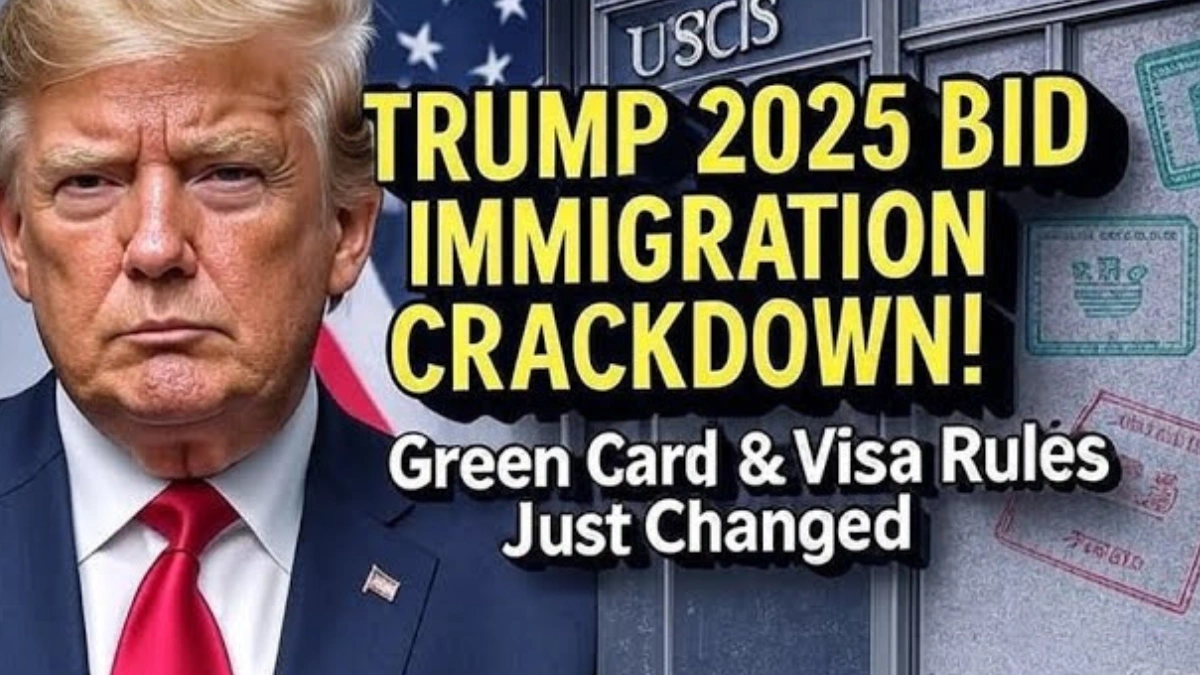
The United States has seen a dramatic change in the U.S. immigration situation, with the first drop in its immigrant population in almost 50 years. The number of foreign-born residents has decreased by more than a million since early 2025, according to new data from the Pew Research Centre. This is because of President Donald Trump’s extensive crackdown on both legal and illegal immigration.
Migration flows have been drastically altered by the Trump administration through major deportations, stricter visa regulations, and ongoing screening of over 55 million visa holders. From a recent peak of 15.8%, immigrants now make up 15.4% of the U.S. population. Critics warn of economic disruptions, declining workforces, and long-term harm to America’s identity as a nation of immigrants, while advocates contend the policies save American employment and national security.
Jerome Powell Warns of Job Market Weakness as Trump’s Tariffs Complicate Fed Policy
A Landmark Shift in the U.S. Immigration

U.S. President Donald Trump has implemented one of the worst U.S. immigration crackdowns in contemporary history since he took office in January. Unprecedented outcomes have already been achieved as a result of his administration’s unrelenting efforts to strengthen border security, tighten visa requirements, and increase deportation procedures. The United States’ immigrant population has decreased for the first time in over 50 years, signalling a turning point in the country’s labour and demographic trends.
More than one million immigrants have been deported or removed from the nation since Trump took office, according to new research from the Pew Research Centre. The figures highlight how quickly executive decisions can alter labour market participation, population migrations, and even long-standing immigration patterns that have historically supported the American economy.
Trump Administration’s Sweeping Visa Review Raises Alarms Across the U.S.
What the Data Reveals

A record 53.3 million immigrants called the United States home at the start of this year, making it one of the greatest foreign-born populations in the nation’s history. But by June, that number had drastically decreased. The number of foreign-born people in the United States has decreased by more than 1.4 million, to 51.9 million, according to researchers.
Additionally, the Pew analysis showed that:
- Immigrants now make up 15.4% of all Americans, a decrease from the historical high of 15.8%.
- 19% of the labour force is made up of immigrants, down from 20% earlier this year.
- Since January, more than 750,000 foreign-born workers have left the sector.
Comparing this abrupt reversal to earlier decades, when immigration, both legal and illegal, increased gradually under every government, is striking. The drop illustrates how quickly changes in enforcement tactics and policies can change population dynamics.
U.S. Small Businesses Struggle for Survival Amid Trump’s Tariff Storm
Why the Decline? Policy Decisions Driving the Trend

The Biden Era Restrictions
Researchers also point to late-stage Biden-era initiatives, even if Trump’s actions are mostly to blame for the current drop. By severely restricting asylum applications in 2024, the Biden administration significantly decreased the amount of migrants who were permitted to enter through authorised border crossings. Even before Trump took office, this strategy paved the way for a sharp decline in new arrivals.
Trump’s Sweeping Executive Orders
Nearly 200 executive orders have been enacted by President Trump since January with the goal of limiting both legal and illegal immigration. These consist of:
- Mass deportations of non-citizens and illegal immigrants.
- Tightened regulations for work permits and student visas.
- Limitations on applications for family reunification.
- Increased policing and surveillance around the border.
Possibly the most extensive measure lately disclosed is the continual vetting procedure. More than 55 million visa holders’ records would be continuously examined under this method. Any infraction of the entrance requirements, no matter how small, may lead to deportation and the cancellation of the visa.
Elon Musk’s Twitter Takeover and the Landmark Settlement for Fired Employees
Economic Consequences: The Labour Market Impact
The U.S. economy has traditionally relied heavily on immigrants to fill positions in technology, construction, healthcare, and agriculture. In just six months, almost 750,000 immigrant workers have left the workforce, putting pressure on a number of businesses.
- Agriculture: Potential labour shortages during busy harvest seasons are being warned about by farmers.
- Hospitality and Construction: Since both industries rely significantly on foreign labour, labour costs are on the rise.
- Technology: Concerns regarding competitiveness in global innovation have been raised by the sluggish admission of highly skilled workers caused by work visa restrictions.
Although proponents of the crackdown contend that the actions give American-born workers greater chances, analysts warn that the abrupt drop could hinder economic growth generally, especially in sectors with a shortage of domestic labour.
Trump Declares Himself “President of Peace” After Claiming to End Multiple Global Wars
Social and Demographic Implications

American society is clearly changing as a result of the decline in U.S. immigration. Reduced remittance transfers overseas, fewer immigrant-run business networks, and declining school enrolments are all being reported by communities with historically strong immigrant populations, including California, Texas, New York, and Florida.
Furthermore, unauthorised immigrants are not the only ones seeing a downturn. A growing number of legal immigrants, including those with family, work, and student visas, are departing because they are unsure of their long-term status. This is especially noticeable in higher education, where recent data shows that Trump’s immigration crackdown has resulted in a 46% drop in the number of Indian students arriving in the United States.
Political and Legal Backlash

Trump’s aggressive stance has sparked both praise and criticism.
- In addition to protecting American jobs, proponents claim that the crackdown brings “law and order” back to a dysfunctional immigration system. The population reduction is seen by them as evidence that Trump has fulfilled his campaign pledges from 2016.
- However, detractors contend that the policies are cruel, discriminatory, and detrimental to the economy. While immigrant advocacy groups are organising rallies in key U.S. cities, civil rights organisations have already filed challenges against some executive orders.
Additionally, legal experts caution that the ongoing screening effort may create risky precedents that would enable the government to cancel visas without following the proper procedures.
Sam Altman on OpenAI’s Future: Why He May Not Be the Right CEO if OpenAI Goes Public
Looking Ahead: What to Expect

The Trump administration has stated unequivocally that it is not finished with U.S. immigration crackdown. In the upcoming months, officials have alluded to further actions, such as:
- Stricter rules on student and employment-based visas.
- Broader use of expedited deportations.
- Expanded detention facilities to accommodate rising enforcement.
The trend of diminishing immigrant populations may continue as long as Trump continues his current policies, since U.S. immigration is predicted to remain a major political topic in the United States.
Bitcoin Smashes Records, Hits $124,500 Amid Policy Support and Institutional Buying
Conclusion
The United States is going through a demographic transition that hasn’t occurred in more than 50 years. The broad objectives of the Trump administration are changing U.S. Immigration trends, which have seen record highs and the first population fall in decades. Critics warn of economic disruption, social fragmentation, and possible human rights breaches, while supporters celebrate the initiative as a long-overdue reform.
Trump’s immigration crackdown has already changed the course of America’s immigrant tale in significant and historic ways. Future policy decisions will determine whether this decline turns out to be a short-term or long-term trend.