
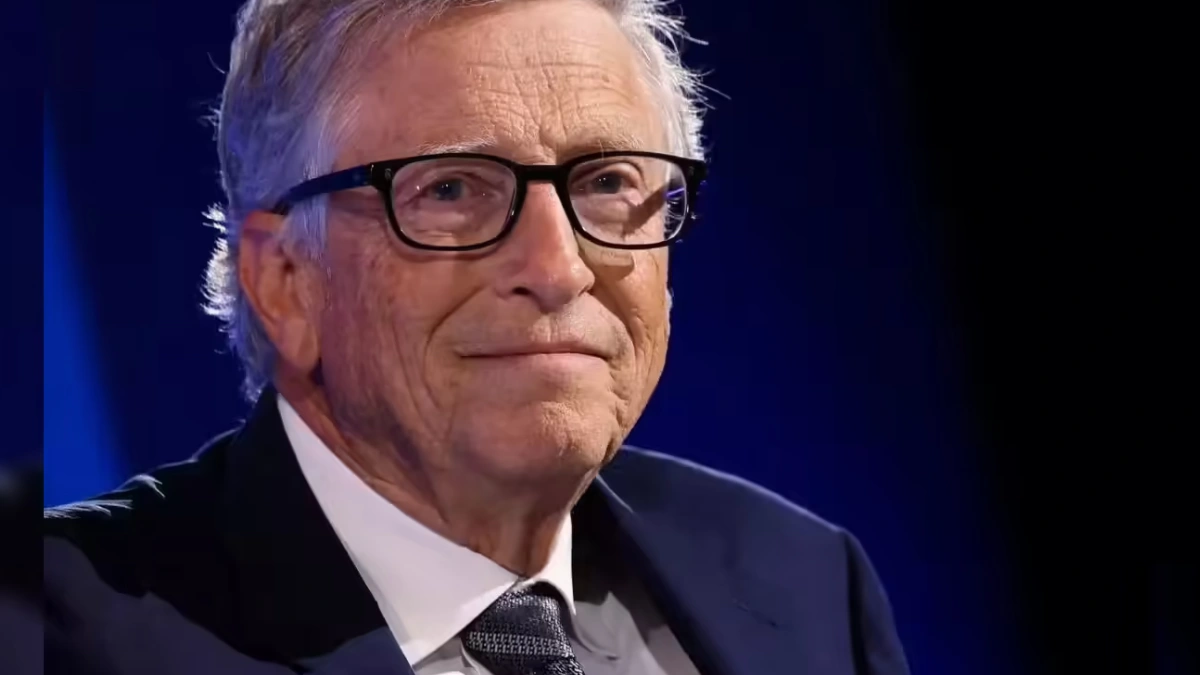
Amidst the rush of enthusiasm surrounding artificial intelligence, Microsoft co-founder Bill Gates has warned investors that not all highly AI valuation startups will eventually succeed. Gates characterised the AI industry as “hyper competitive” in a recent interview with CNBC and reiterated his opinions at Abu Dhabi Finance Week. He emphasised that although the technology itself is revolutionary, many businesses riding the current wave of optimism may not be able to justify their high valuations.
His remarks coincide with the tremendous attention and capital inflows that AI-focused businesses are receiving from the market, prompting questions about whether some areas of the industry are approaching bubble territory. Gates makes it very apparent to investors that while AI will change the world, not all businesses that are currently positioned as leaders in the field will succeed in the long-term.
Blue Origin Launches NASA’s Escapade Mission to Mars: A New Chapter in Commercial Space Exploration
A Hyper-Competitive Industry Takes Shape

Bill Gates claims that intense competition is what defines the current state of AI. Even while entry barriers are high in terms of expertise and computational resources, well-funded players can overcome them. Because of this, dozens of businesses are vying for the same commercial clients and developer ecosystems while rushing to create massive language models, AI platforms, and industry-specific applications.
Gates emphasised the scope of the possibility by stating, “AI is the most important thing going on.” He did, however, offer an important disclaimer: significance does not ensure success for everyone. Technological advantages can quickly dissolve in a market that is changing at a rapid pace, and tomorrow’s leaders could be surpassed by more inventive or efficient competitors.
AI Data Centres Surpass Oil in Global Investment: The Digital Economy’s New Powerhouse
High AI Valuation, Heightened Risk

Bill Gates is particularly worried about valuations. Expectations of rapid development and potential dominance are reflected in the fact that many AI-driven companies are trading at levels significantly higher than previous market standards. These assessments are sometimes based more on anticipated potential than on actual income or profitability.
Market corrections are inevitable, as Bill Gates pointed out when he said that “a reasonable percentage of those companies won’t be worth that much.” He advised investors not to assume that every company with the AI label will provide long-term profits, particularly as competition heats up and maintaining difference becomes more difficult.
Comparing AI Stocks With Market Averages

The degree of investor optimism is demonstrated by the valuation difference between AI-focused businesses and the general market. Businesses with price-to-earnings ratios above 200 include Palantir and Tesla, both of which highlight AI as a key component of their strategy. In contrast, the average of the S&P 500 is approximately 25.
These differences imply that markets are accounting for exceptional future earnings growth. Gates suggested that many businesses will find it difficult to live up to these expectations, even though this might be acceptable for a small number of powerful players. Valuations may be under pressure as earnings realities catch up with market enthusiasm.
Perplexity’s Comet AI Browser Expands to Android: Redefining the Future of Mobile Browsing
Is There an AI Bubble?

Bill Gates took pains to avoid writing off AI as a fad. Rather, he used subtle language to describe the concept of a “AI bubble.” He claims that AI is only a bubble because not all values will continue to climb.
“Some of them will go down,” Gates stated, noting that adjustments are a normal aspect of technology advancements. Prior innovation cycles, such as the internet boom and mobile computing, saw moments of exuberance followed by consolidation, leaving fewer long-lasting businesses to realise long-term value.
OpenAI Expands Sora to Android: A Major Step in Democratizing AI-Generated Video
Lessons From Past Technology Cycles

Decades of experience handling revolutionary technology have shaped Gates’ viewpoint. Many internet firms received enormous valuations during the dot-com boom, but only a small percentage of them survived the ensuing crisis. While many others completely vanished, companies like Google and Amazon grew stronger.
According to Bill Gates, the AI industry might go a similar course. Rapid experimentation and innovation are frequently preceded by early hype and overinvestment. But over time, market forces have a tendency to reward practicality, scalability, and efficiency rather than just theoretical promise.
US Stock Futures Rise on Hopes of Ending the Longest US Government Shutdown
Investors Urged to Prepare for Corrections

Bill Gates’ remarks serve as a caution to investors to balance zeal with restraint. Corrections motivated by fear and unfulfilled expectations are more likely as the AI bubble grows. Businesses that are unable to convert their technological prowess into sustainable business models risk having their valuations drastically decline.
Gates stressed that this does not lessen the significance of AI, but it does highlight the necessity for thorough investigation. Instead of depending only on stories about future potential, investors should concentrate on fundamentals like revenue growth, consumer adoption, and defensible competitive advantages.
Microsoft’s Next-Generation Xbox: A Revolutionary Fusion of Console and PC Gaming
AI as a Transformative Force

Bill Gates is still certain about the long-term effects of AI, despite his cautious tone regarding valuations. Artificial intelligence, he said, is “a deeply profound technology that will reshape the world,” with ramifications that go well beyond business gains.
AI has the capacity to solve some of the most important issues facing humanity, including climate-resilient agriculture, personalised education, and healthcare diagnostics. Gates emphasised that these advantages are genuine and attainable and that doubts about AI’s wider benefits should not be mistaken for doubt about short-term market dynamics.
OpenAI’s Upcoming AI Music Generator: Redefining the Sound of Creativity
Impact on Healthcare

One of the sectors that Bill Gates believes has the most immediate promise is healthcare. AI-driven technologies can help physicians diagnose illnesses earlier, interpret medical pictures more precisely, and optimize treatment regimens. AI may be able to close important gaps in areas where access to medical personnel is restricted.
Bill Gates stated that the objectives of his charitable endeavours are closely aligned with the use of AI in healthcare, especially when it comes to enhancing results in low- and middle-income nations. He contends that these application cases show how AI can produce real societal advantages in addition to financial gains.
Trump Administration Vows to Defend Controversial H-1B Visa Policy
Transforming Education Through AI

Another industry at risk of change is education. Bill Gates emphasised how AI can tailor instruction to each student’s needs, personalise learning, and provide teachers with useful tools.
AI could enhance learning results and lessen inequalities by customising lessons and provide real-time feedback. According to Bill Gates, these uses support the notion that AI’s real worth is found in its capacity to advance human potential rather than only in financial markets.
Artificial Intelligence and Quantum Computing: The Next Frontier in Cybersecurity
Advancing Agriculture and Sustainability

AI has the potential to significantly increase agricultural output and resilience. AI-driven solutions can promote sustainable food production, from systems that maximise water and fertiliser use to predictive analytics that assist farmers in anticipating weather trends.
As the globe deals with population expansion and climate change, Gates underlined the importance of these breakthroughs. AI is particularly well-suited to tackling difficult environmental problems because of its ability to handle enormous volumes of data.
Microsoft Supercharges Windows 11 with New Copilot AI Upgrades
Why Only a Few Winners Will Emerge

The core of Gates’ warning is the conflict between AI’s enormous potential and the possibility of widespread corporate failure. Although the technology is revolutionary in and of itself, timing, strategy, and execution will determine commercial success.
Only businesses that combine state-of-the-art technology with well-defined use cases, robust governance, and sustainable economics are likely to survive. Weaker firms may be driven out when competition heats up, leaving a smaller number of dominating firms to control most of the value.
Google Launches Veo 3.1 and Expands Flow: The Next Chapter in AI-Powered Filmmaking
Conclusion: Balancing Vision With Prudence
Bill Gates maintains a mix between optimism and caution in his appraisal on the state of AI. According to him, artificial intelligence is the most significant technical advancement of the modern period, with the potential to transform entire sectors and enhance people’s lives everywhere. However, he cautions that many highly valued companies will inevitably fail due to the industry’s intense competition.
The message is clear for both politicians and investors. The revolutionary potential of AI is genuine and long-lasting, but market enthusiasm should be handled carefully. As the sector develops, winners will solidify their positions, valuations will change, and the actual effects of AI—both societal and economic—will become more apparent.