
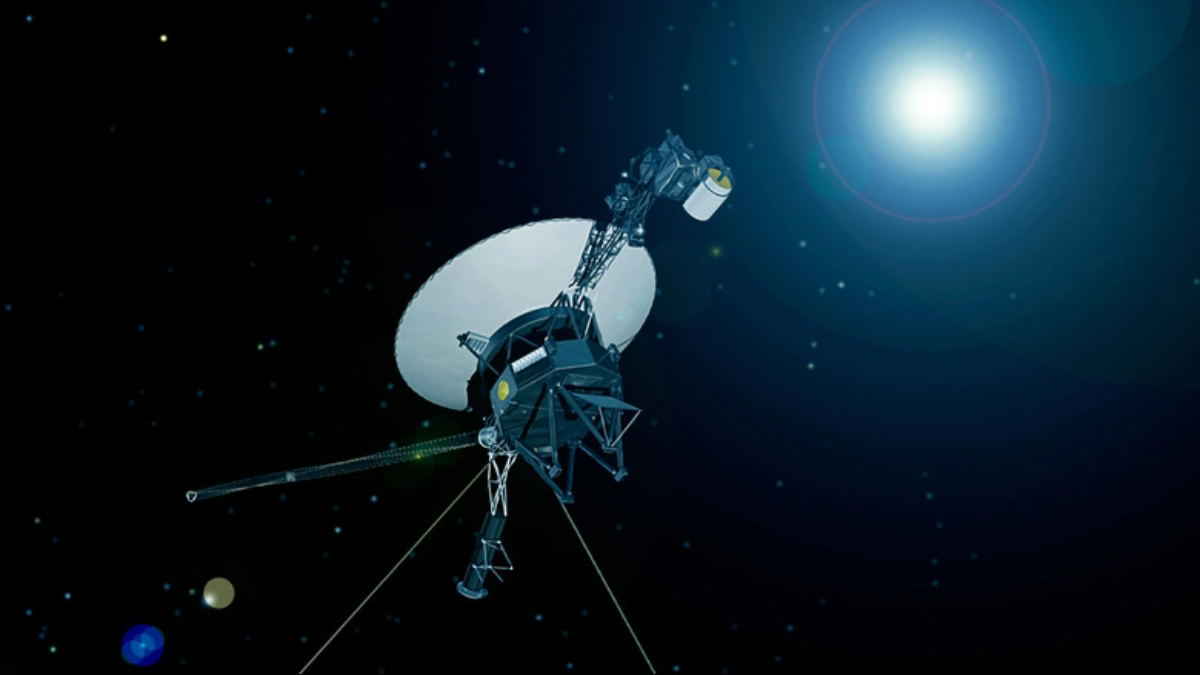
NASA’s Voyager 1 and Voyager 2 spacecraft are still changing our understanding of the solar system almost forty years after they were launched. One of their most remarkable findings is the identification of a very hot boundary region that denotes the change from the Sun’s domain to interstellar space. The probes’ measurements show that temperatures in this far-off region range from 30,000 to 50,000 kelvin, which is much hotter than scientists had previously predicted near the solar system’s periphery.
This discovery sheds new light on how the Sun interacts with the larger galaxy and calls into question long-held beliefs about the nature of space beyond the planets.
Sam Altman Warns of Growing Risks as AI Agents Become More Powerful
The Long Journey of the Voyager Spacecraft
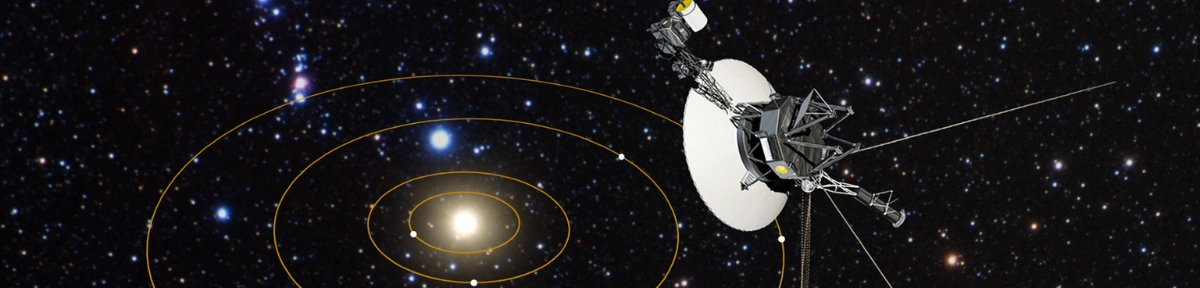
The original purpose of Voyager 1 and Voyager 2, which were launched in 1977, was to investigate the outer planets during an uncommon planetary alignment. Their missions were expanded over time, making them the most far-reaching explorers in human history. Both spacecraft have already ventured well beyond Pluto’s orbit and into interstellar space, bringing with them equipment that are still sending vital scientific data back to Earth.
In August 2012 and November 2018, respectively, Voyager 1 and Voyager 2 achieved this historic milestone. Every passage gave scientists a unique chance to see the environment at the outer edge of the solar system up close; previously, this was only possible through theoretical models.
Trump and Netanyahu Showcase Strong Political Bond During Mar-a-Lago Meeting
Understanding the Heliosphere and Its Outer Layers
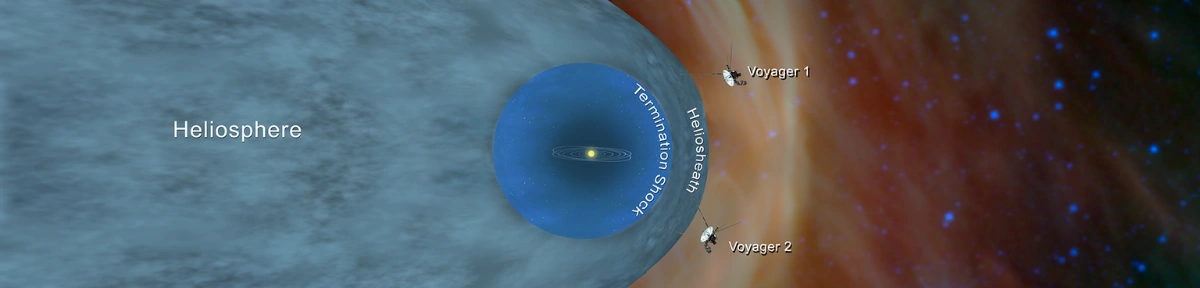
The solar wind is a constant stream of charged particles released by the Sun. The heliosphere, a massive bubble created by this wind encircling the solar system, serves as a barrier against the galaxy’s high-energy cosmic radiation.
The interstellar medium’s pressure causes the solar wind to gradually slow down as it moves outward. This deceleration takes place during the termination shock, after which there is a turbulent area called the heliosheath. The heliopause, when the inward pressure of interstellar space balances the outward pressure of the solar wind, marks the end of the heliosphere.
This transitional zone, where conditions drastically vary over comparatively short distances, is where the Voyager probes found the region.
Nvidia Deepens Its AI Hardware Dominance Through Strategic Deal With Groq
Discovery of a Superheated Plasma Region
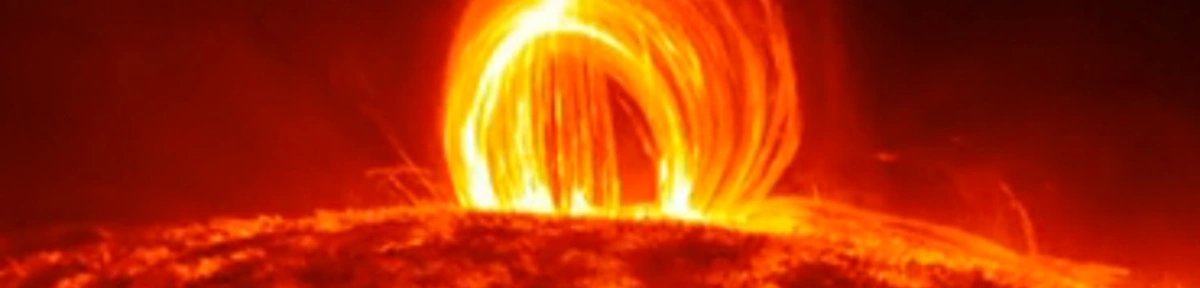
Both spacecraft’s data showed a dramatic rise in plasma temperature as they got closer to and passed through the heliopause. Temperatures are estimated to reach tens of thousands of kelvin, which is much hotter than the heliosphere’s surrounding environment.
Scientists emphasise that this area is not a solid barrier, despite the term “wall of fire” used in popular portrayals. Rather, it is an area of intense plasma where charged particles travel at very high speeds. The heat does not behave like heat on Earth and does not endanger spacecraft travelling through it due to the incredibly low particle density.
According to NASA scientists, particle energy rather than the presence of dense matter is reflected in space temperature. Because of this, it is possible to have extremely high or low temperatures without transferring sufficient heat.
Why the Voyager Spacecraft Were Not Damaged
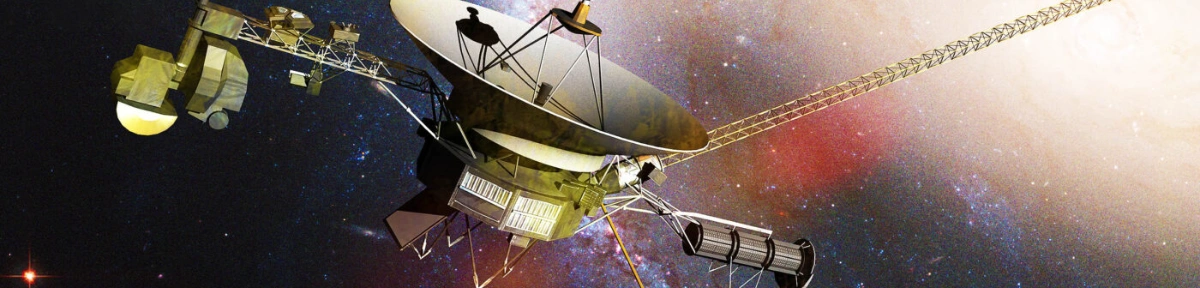
The fact that neither of the Voyager spacecraft sustained damage despite travelling through such an intense area is among the discovery’s most fascinating features. The near-vacuum conditions of deep space are the cause. Even though individual particles are extremely energetic, spacecraft surfaces are rarely struck by them because there are so few of them.
Practically speaking, the area is nearly deserted but incredibly “hot.” This peculiarity contributes to the explanation of how delicate devices that were created decades ago have endured far longer than their intended missions.
Trump Warns Jeffrey Epstein File Releases Could Damage Innocent Reputations
Crossing Into Interstellar Space
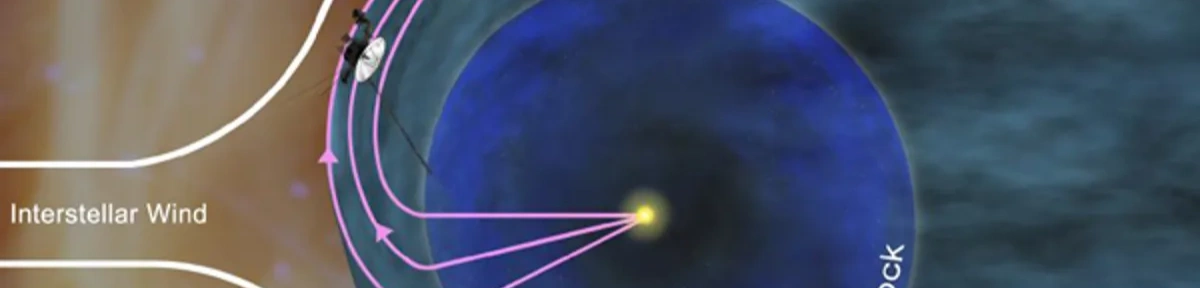
Voyager 1’s instruments saw a sharp decrease in solar particles and an abrupt increase in galactic cosmic rays when it passed through the heliopause in 2012. The similar pattern was noted by Voyager 2 six years later. These modifications offered unambiguous proof that the probes had moved into interstellar space and out of the Sun’s influence.
Both spacecraft recorded changes in magnetic fields and plasma density in addition to particle data, providing a comprehensive picture of the boundary environment. Collectively, these findings demonstrated that the heliopause is not a straightforward, homogeneous surface but rather a unique, dynamic transition.
Sam Altman Reveals OpenAI’s “Code Red” Is a Recurring Strategy, Not a Singular Crisis
Surprising Magnetic Field Alignment
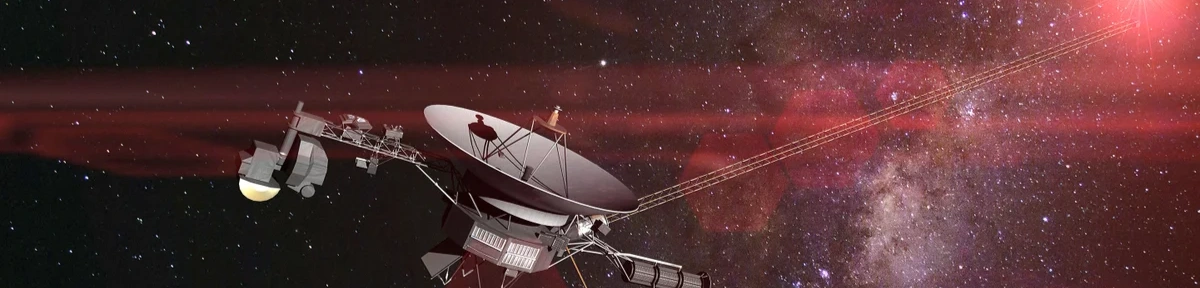
The behaviour of magnetic fields was one surprising discovery made by the Voyager missions. Researchers predicted that the direction of the magnetic field outside the heliopause would be very different from that inside the heliosphere. Rather, an unexpected alignment between the two regions was found by both Voyager 1 and Voyager 2.
This finding implies that solar and interstellar magnetic fields interact in a more complex way than previously thought. Additionally, it suggests that rather than functioning as a clearly defined barrier, the heliopause may be sculpted and stabilised by these aligned magnetic forces.
Bill Gates Warns of AI Valuation Risks Amid Hyper-Competitive Market
Evidence of Particle Leakage at the Boundary

The heliopause appears to be somewhat permeable, according to data from Voyager 2. Particle leakage beyond the barrier in both directions has been demonstrated by measurements, especially at the heliosphere’s flanks.
The heliosphere’s ability to protect Earth from high-energy radiation and the way cosmic rays enter the solar system are both significantly impacted by this discovery. Additionally, it implies that the protective bubble surrounding the Sun is dynamic and continuously sculpted by external galactic forces.
F-1 Visa Case Under Section 221(g) Highlights Growing Role of Social Media Screening
A Boundary That Moves With the Sun’s Activity

The heliopause is not stationary in space. Changes in solar activity, which occur on a roughly 11-year cycle, cause its location to vary. The heliosphere stretches outward when the solar wind is strong and contracts when it is weaker.
Voyager 1 and Voyager 2 encountered the heliopause at slightly different distances—roughly 121 astronomical units (AU) for Voyager 1 and 119 AU for Voyager 2—because of this fluctuation. These variations offer useful information for improving models of the heliosphere’s reaction to interstellar and solar pressures.
ChatGPT Leads a Crowded AI Chatbot Field as Rivals Gain Ground in 2025
What Lies Beyond the Sun’s Influence

Interstellar space is filled with plasma from past star explosions, including supernovae, and lies beyond the heliopause. This substance, which is denser and colder than solar plasma, interacts with the heliosphere to shape the outer limit of the solar system.
The Voyager spacecraft’s rapid change in particle composition and energy levels indicates that the particles are now passing through this galactic environment, distant from the direct impact of the Sun.
US Government Launches Tech Force to Recruit 1,000 Engineers for Federal Service
Continuing Scientific Value of the Voyager Missions
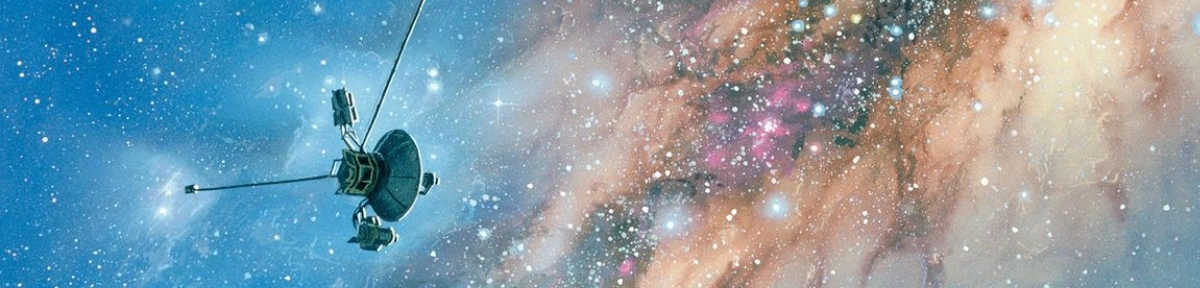
The Voyager probes are still in service after almost 50 years, but their power sources are progressively deteriorating. To enhance models of solar-galactic interaction, cosmic ray propagation, and plasma behaviour in harsh conditions, NASA’s heliophysics scientists still rely on Voyager data.
By charting the heliosphere from within, other missions like the Interstellar Boundary Explorer (IBEX) supplement Voyager’s discoveries. When taken as a whole, these missions offer a more comprehensive understanding of how the solar system functions inside the Milky Way.
Google Launches “Deep Think” in Gemini 3: A Mode Built for Deliberate Reasoning
Conclusion:
The Voyager probes are still in service after almost 50 years, but their power sources are progressively deteriorating. To enhance models of solar-galactic interaction, cosmic ray propagation, and plasma behaviour in harsh conditions, NASA‘s heliophysics scientists still rely on Voyager data.
By charting the heliosphere from within, other missions like the Interstellar Boundary Expl orer (IBEX) supplement Voyager’s discoveries. When taken as a whole, these missions offer a more comprehensive understanding of how the solar system functions inside the Milky Way.