
In early 2026, the United States announced a significant shift in its immigration policy — a suspension of immigrant visa processing for citizens of 75 countries. This revision affects individuals applying for Green Cards from abroad and has sparked widespread discussion, confusion, and concern among families and professionals planning to move to the United States. In this blog, we explore what the suspension means, why it was implemented, who is affected, and what applicants can expect going forward.
What Is the Suspension?
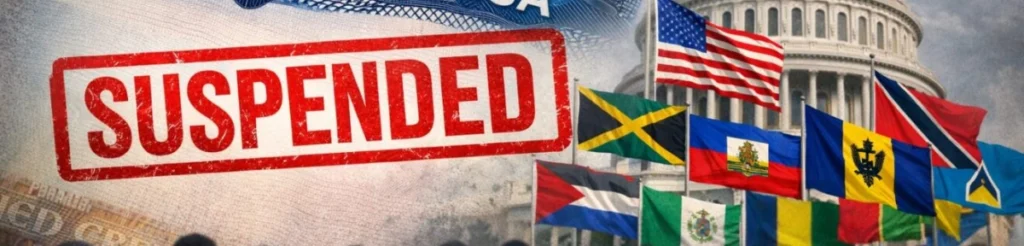
The U.S. Department of State issued instructions to U.S. consulates worldwide to pause immigrant visa issuance to nationals of 75 countries beginning January 21, 2026. This suspension applies to immigrant visas — the kind that lead to permanent residence (Green Cards) — and affects individuals who are outside the United States and waiting for their visas to be issued after interview approval.
Importantly:
- The suspension does not prevent candidates from attending interviews or submitting applications.
- It does prevent new immigrant visas from being printed or issued until the temporary policy is lifted.
- Non-immigrant visas such as tourist (B1/B2), student (F-1), or work visas (e.g., H-1B) are not part of this suspension.
This means that people planning to migrate permanently to the U.S. from the affected countries will face indefinite delays in obtaining their visas.
Why Did the U.S. Take This Step?

Officials have framed the policy as an effort to strengthen scrutiny of individuals who may be likely to rely on public benefits or become a “public charge.” Under U.S. immigration law, consular officers are required to evaluate whether visa applicants are likely to become dependent on government assistance after entry. However, critics suggest this move goes far beyond standard public charge considerations.
The government maintains that this pause will grant them time to:
- Reevaluate screening and vetting procedures
- Ensure long-term immigrant self-sufficiency
- Prevent undue strain on public systems
Critics, however, argue that the policy is overly broad and could hamper lawful immigration, family reunification, and economic mobility for millions of people.
Which Countries Are Affected?

The list of 75 countries spans multiple regions:
- Asia: Afghanistan, Bangladesh, Pakistan, etc.
- Africa: Nigeria, Somalia, Egypt, etc.
- Middle East: Iraq, Iran, Yemen, etc.
- Latin America: Brazil, etc.
- Eastern Europe: Russia, etc.
The full list has not been widely disseminated through official channels, but media and immigration forums report the involvement of many nations with significant numbers of visa applicants.
Interestingly, some countries with large immigrant populations in the U.S., such as India and China, are reportedly not on the suspended list, prompting questions about the criteria used for selection.
Who Is Impacted by This Policy?

1. Families Waiting for Green Cards
Many families rely on family-sponsored immigrant visas to reunite loved ones. Under the new policy, immigrants from the affected countries may find their visas delayed even after interview clearance.
2. Employment-Based Green Card Applicants
Professionals with employer sponsorship — especially those outside the U.S. awaiting visa issuance — could experience indefinite delays. This disrupts job prospects, relocation plans, and corporate hiring strategies.
3. Individuals Already in Green Card Processing
People who applied months or years ago and had their interviews may now face uncertainty as their visa issuance could be paused.
4. Dual Nationals
Individuals holding dual citizenship with one country on the list and another outside it could navigate options by choosing the non-suspended passport for processing.
5. Students and Temporary Workers
Though student and temporary work visas aren’t directly included in this suspension, the shift in policy reflects a broader tightening which could affect perception and administrative review in other visa categories.
Exceptions and Clarifications
There are some important points to note:
- Non-immigrant visas remain unaffected. F, J, H, B visas are still being processed normally.
- Already issued visas are generally valid, and the suspension does not automatically invalidate existing immigrant visas.
- Dual nationals may use a non-suspended passport to proceed with visa processing in some cases.
- Applicants can still attend interviews and submit paperwork — the pause affects visa finalization.
This nuanced approach adds complexity, and applicants are advised to seek professional legal guidance or monitor State Department updates.
Public Charge Rule: What It Means

The policy is rooted in the long-standing public charge ground of inadmissibility, which gives consular officers the discretion to refuse visas to individuals deemed likely to become dependent on public assistance.
However, public charge rules have varied considerably over time. Under recent regulatory changes, the criteria for denying visas on public charge grounds have expanded to include broader socio-economic factors such as:
- Age and health
- Family size
- Education and skills
- Financial history
This has raised concerns among advocates who argue that public charge assessments could be applied unevenly or misinterpret applicants’ potential for economic success.
Economic and Social Implications

For the U.S. Economy
Immigrants contribute substantially to the U.S. economy through labor, entrepreneurship, tax contributions, and demographic rejuvenation. Restrictive immigrant visa policies could:
- Reduce labor force growth
- Affect sectors reliant on global talent
- Discourage foreign investment
For Families
Families often plan relocations and reunifications around predictable immigration timelines. Uncertain policy shifts create emotional and financial strain for those awaiting visas.
For Global Mobility
This move may influence other countries’ immigration policies. Some experts warn of potential reciprocal measures and increased barriers for U.S. citizens abroad.
Legal and Diplomatic Considerations

Experts debate whether this suspension aligns with existing immigration law. Critics cite concerns about:
- Lack of transparency in criteria
- Disparate impact on certain nationalities
- The indefinite nature of the pause
Diplomatic relationships could also be affected. Countries included in the pause may respond with reciprocal restrictions, potentially complicating travel, trade, or bilateral cooperation.
What Should Applicants Do Now?
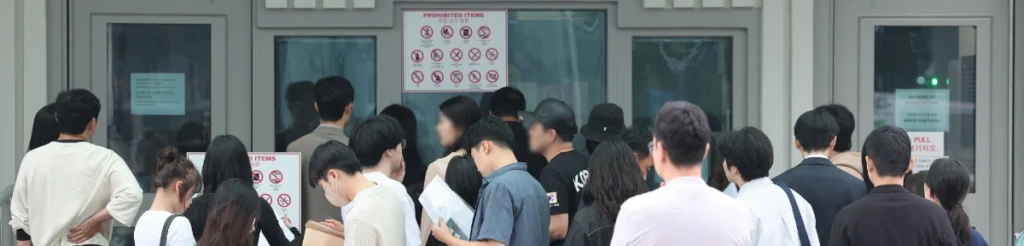
If you or a loved one are affected by this policy, consider these steps:
1. Consult Immigration Counsel
A qualified attorney can help interpret your case, especially concerning dual nationality or alternative visa pathways.
2. Track Official Updates
Policy implementations can evolve. Keeping an eye on the U.S. Department of State, U.S. Citizenship and Immigration Services (USCIS), and embassy notifications is essential.
3. Explore Alternative Visa Options
For some, switching to a non-immigrant path with future adjustment of status could be viable. Others may consider study, work, or investor visa routes.
4. Document Financial Strength
Even if waiting for immigrant processing, demonstrating financial independence through banking, assets, sponsorships, and support documents is advisable for future public charge assessments.
5. Stay Prepared
Have updated documentation, health records, and proof of ties to home country ready as policies shift.
Global Context and Migration Trends

Migration is shaped by push and pull factors — economic conditions, safety, climate change, education, family ties, and opportunity. Restrictive immigration policies like this one contrast with global labor demands in aging societies. Countries such as Canada and parts of Europe are actively recruiting skilled workers, while others tighten gates.
This divergence reflects broader global competition for talent and demographic management.
Conclusion
The U.S. decision to suspend immigrant visa processing for citizens of 75 countries marks a pivotal moment in modern immigration policy. As the world watches, families, professionals, and governments must navigate uncertainty, adapt strategies, and advocate for clarity.
While the policy focuses on self-sufficiency and public charge concerns, its broad scope and indefinite timeline present real challenges for global mobility and human aspirations. In the months ahead, monitoring developments, seeking guidance, and exploring alternative pathways will be crucial for those affected.
Ultimately, immigration policy shapes the lives of millions — and even when paused, the longing for opportunity, family reunification, and a better future persists.