
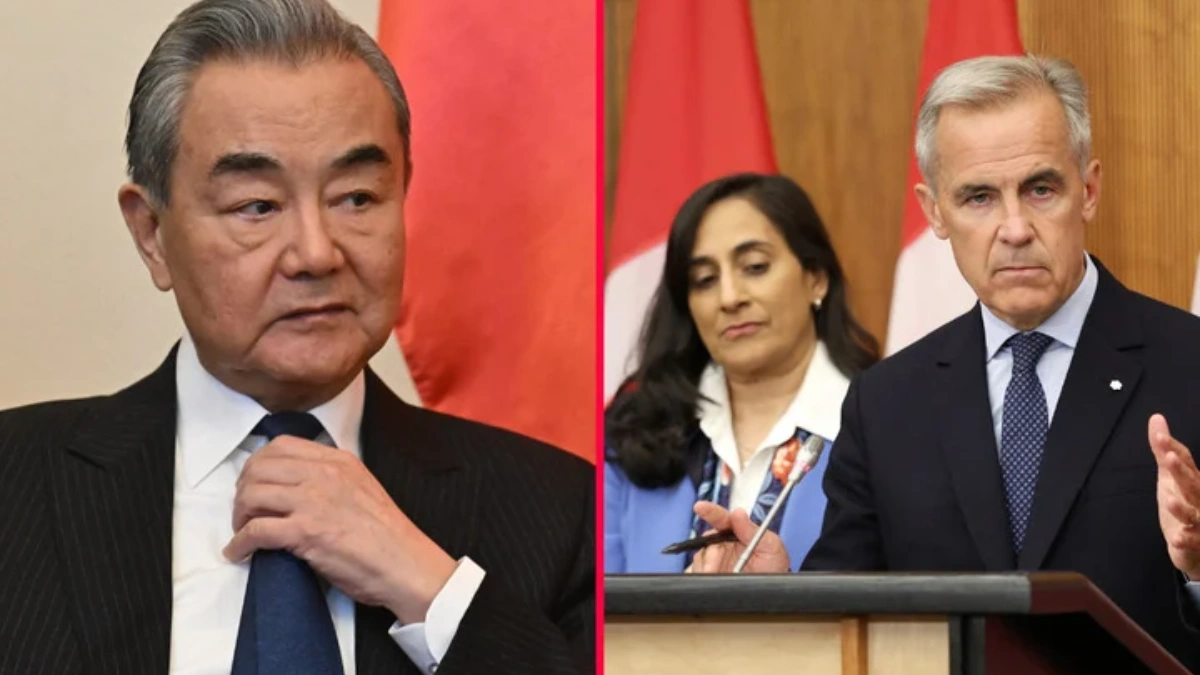
China’s foreign minister’s commitment to removing interference in trade with Canada signals a potentially significant shift in bilateral dynamics. As Ottawa diversifies its economic relationships and recalibrates its dependence on the United States, Beijing appears eager to reinforce commercial ties.
The success of this renewed engagement will depend on balancing economic pragmatism with geopolitical realities. While challenges remain, the mutual benefits of stable trade may encourage both nations to move forward cautiously but constructively.
In an era defined by global uncertainty, strategic diversification and economic resilience are no longer optional—they are essential. If China and Canada can navigate political complexities and build trust-based trade mechanisms, the outcome could reshape not only their bilateral relationship but also broader global trade patterns in the years to come.China’s foreign minister’s commitment to removing interference in trade with Canada signals a potentially significant shift in bilateral dynamics. As Ottawa diversifies its economic relationships and recalibrates its dependence on the United States, Beijing appears eager to reinforce commercial ties.
The success of this renewed engagement will depend on balancing economic pragmatism with geopolitical realities. While challenges remain, the mutual benefits of stable trade may encourage both nations to move forward cautiously but constructively.
In an era defined by global uncertainty, strategic diversification and economic resilience are no longer optional—they are essential. If China and Canada can navigate political complexities and build trust-based trade mechanisms, the outcome could reshape not only their bilateral relationship but also broader global trade patterns in the years to come.China’s foreign minister’s commitment to removing interference in trade with Canada signals a potentially significant shift in bilateral dynamics. As Ottawa diversifies its economic relationships and recalibrates its dependence on the United States, Beijing appears eager to reinforce commercial ties.
The success of this renewed engagement will depend on balancing economic pragmatism with geopolitical realities. While challenges remain, the mutual benefits of stable trade may encourage both nations to move forward cautiously but constructively.
In an era defined by global uncertainty, strategic diversification and economic resilience are no longer optional—they are essential. If China and Canada can navigate political complexities and build trust-based trade mechanisms, the outcome could reshape not only their bilateral relationship but also broader global trade patterns in the years to come.China’s foreign minister’s commitment to removing interference in trade with Canada signals a potentially significant shift in bilateral dynamics. As Ottawa diversifies its economic relationships and recalibrates its dependence on the United States, Beijing appears eager to reinforce commercial ties.
The success of this renewed engagement will depend on balancing economic pragmatism with geopolitical realities. While challenges remain, the mutual benefits of stable trade may encourage both nations to move forward cautiously but constructively.
In an era defined by global uncertainty, strategic diversification and economic resilience are no longer optional—they are essential. If China and Canada can navigate political complexities and build trust-based trade mechanisms, the outcome could reshape not only their bilateral relationship but also broader global trade patterns in the years to come.China’s foreign minister’s commitment to removing interference in trade with Canada signals a potentially significant shift in bilateral dynamics. As Ottawa diversifies its economic relationships and recalibrates its dependence on the United States, Beijing appears eager to reinforce commercial ties.
The success of this renewed engagement will depend on balancing economic pragmatism with geopolitical realities. While challenges remain, the mutual benefits of stable trade may encourage both nations to move forward cautiously but constructively.
In an era defined by global uncertainty, strategic diversification and economic resilience are no longer optional—they are essential. If China and Canada can navigate political complexities and build trust-based trade mechanisms, the outcome could reshape not only their bilateral relationship but also broader global trade patterns in the years to come.
Global trade dynamics are shifting once again as China’s foreign minister pledged to “eliminate interference” in bilateral trade with Canada. The statement comes at a critical moment, as Ottawa signals a strategic pivot away from excessive dependence on the United States and seeks to diversify its economic partnerships. The remarks highlight a potentially transformative phase in China–Canada relations, shaped by geopolitics, economic pragmatism, and shifting global alliances.
A Turning Point in China–Canada Relations

Relations between China and Canada have experienced significant turbulence over the past few years. Diplomatic tensions, disputes over technology and national security, and broader geopolitical friction strained what was once a steadily expanding trade relationship. However, economic realities have pushed both nations to reconsider the long-term costs of disengagement.
China remains one of Canada’s largest trading partners, especially in sectors such as agriculture, natural resources, and consumer goods. Meanwhile, Canada offers China access to high-quality commodities, including canola, wheat, seafood, and critical minerals. As Ottawa reassesses its trade strategy, a renewed focus on stabilizing relations with Beijing may be viewed as both pragmatic and necessary.
The Chinese foreign minister’s vow to remove “interference” suggests a desire to separate political disagreements from economic cooperation. While details of the policy direction remain unfolding, the message appears clear: China wants predictable, uninterrupted trade flows.
Ottawa’s Pivot from the United States

Canada’s economy has long been closely intertwined with that of the United States. The U.S. accounts for the majority of Canadian exports, making the relationship foundational but also exposing Canada to vulnerabilities. Trade disputes, tariff threats, and shifting political priorities in Washington have encouraged Ottawa to explore diversification.
In recent years, Canadian policymakers have spoken openly about reducing overreliance on a single trading partner. While the U.S. remains indispensable, diversification toward Asia and Europe has become a key pillar of Canada’s long-term trade strategy.
China, as the world’s second-largest economy, naturally figures into this equation. By re-engaging economically with Beijing—while balancing national security concerns—Canada may aim to hedge against economic volatility originating south of its border.
What Does “Eliminate Interference” Mean?

The phrase “eliminate interference” carries diplomatic weight. It may refer to:
- Removing politically motivated trade restrictions
- Preventing third-party influence from disrupting bilateral commerce
- Reducing regulatory or administrative barriers
- Ensuring stable supply chains despite geopolitical tensions
For China, the message likely signals frustration with what it perceives as external pressure affecting its economic relationships. For Canada, the phrase may represent an opportunity—if interpreted as a commitment to depoliticizing trade disputes.
However, achieving such separation is easier said than done. Modern trade is increasingly entangled with issues of technology transfer, cybersecurity, national security, and human rights. Both nations will need carefully calibrated frameworks to maintain economic engagement without compromising their broader policy positions.
Economic Stakes for Both Nations

The economic implications are substantial.
For Canada:
- Expanded access to Chinese markets could boost agricultural exports.
- Diversified trade reduces exposure to U.S. policy shifts.
- Opportunities may grow in clean technology and critical minerals.
For China:
- Stable access to Canadian commodities supports domestic food security.
- Strengthened ties with G7 members signal diplomatic resilience.
- Diversified partnerships reduce vulnerability to Western trade coalitions.
Canadian farmers and exporters, particularly in prairie provinces, have historically relied on Chinese demand. Disruptions in canola or meat exports have had direct impacts on livelihoods. A stabilization of trade could restore confidence among producers.
The Geopolitical Context
This development occurs against a broader backdrop of global fragmentation. Major economies are increasingly forming strategic blocs, and supply chains are being reorganized around “friend-shoring” and “de-risking.”
Canada’s balancing act involves:
- Maintaining strong security and defense alignment with Western allies
- Protecting sensitive technologies and infrastructure
- Engaging in pragmatic trade partnerships
China, meanwhile, is actively seeking to stabilize trade ties with key economies amid global economic uncertainty. Strengthening commercial relationships with countries like Canada can serve as a counterbalance to escalating tensions elsewhere.
Potential Challenges Ahead

Despite the optimistic tone of diplomatic statements, several obstacles remain:
- Political Trust Deficit – Years of strained diplomatic engagement have created skepticism on both sides.
- Technology and Security Concerns – Advanced technology sectors remain highly sensitive.
- Public Opinion – Domestic audiences in both countries may question closer ties.
- U.S. Reaction – As Canada deepens trade with China, Washington may watch closely.
Canada’s pivot is unlikely to mean abandoning its U.S. partnership. Rather, it may represent strategic diversification. However, navigating triangular dynamics among Ottawa, Beijing, and Washington will require diplomatic finesse.
Opportunities for Strategic Cooperation

If managed carefully, renewed engagement could open doors in several sectors:
- Clean Energy Collaboration: Canada’s natural resources and China’s manufacturing scale could complement each other.
- Critical Minerals Supply Chains: Essential for electric vehicles and renewable technologies.
- Agricultural Technology: Sharing innovations to enhance productivity.
- Educational and Research Exchanges: Universities could benefit from structured cooperation.
Trade relationships in the 21st century are not merely about goods; they are about technology, sustainability, and resilience.
Business Community Response

The business communities in both nations are likely to welcome signs of stability. Companies prefer predictability over political volatility. Clear communication from policymakers regarding trade frameworks and dispute-resolution mechanisms will be essential.
Canadian exporters may see new opportunities in consumer goods, agri-food, and services. Chinese importers may regain confidence in sourcing from Canadian suppliers without fear of sudden restrictions.
Long-Term Strategic Implications

If China and Canada successfully insulate trade from political disputes, the development could serve as a model for middle-power diplomacy in a polarized world. It would demonstrate that economic pragmatism can coexist with policy differences.
However, this path requires:
- Transparent communication
- Institutional safeguards
- Strong dispute resolution channels
- Respect for regulatory standards
The pledge to eliminate interference must translate into measurable policy adjustments. Otherwise, skepticism could quickly return.
Conclusion
China’s foreign minister’s commitment to removing interference in trade with Canada signals a potentially significant shift in bilateral dynamics. As Ottawa diversifies its economic relationships and recalibrates its dependence on the United States, Beijing appears eager to reinforce commercial ties.
The success of this renewed engagement will depend on balancing economic pragmatism with geopolitical realities. While challenges remain, the mutual benefits of stable trade may encourage both nations to move forward cautiously but constructively.
In an era defined by global uncertainty, strategic diversification and economic resilience are no longer optional—they are essential. If China and Canada can navigate political complexities and build trust-based trade mechanisms, the outcome could reshape not only their bilateral relationship but also broader global trade patterns in the years to come.