
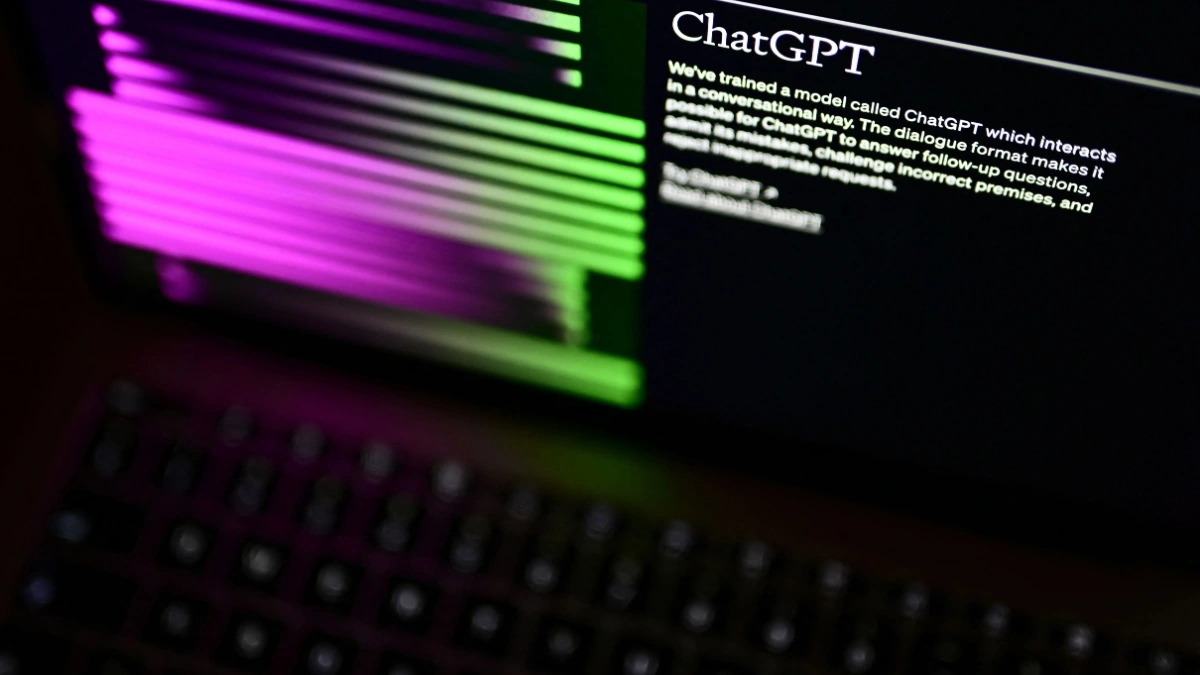
In the digital age, governments and institutions increasingly rely on artificial intelligence tools to draft statements, analyze data, and streamline communications. But the same technologies that enhance efficiency can also expose sensitive operations when used carelessly. Recent reporting and analysis have drawn attention to a striking case: a Chinese official’s interaction with ChatGPT allegedly helped reveal elements of a broader global intimidation campaign.
While the full details remain contested and evolving, the episode highlights a powerful reality — AI tools can inadvertently surface patterns, language, and operational footprints that were once easier to obscure. It also raises serious questions about information security, digital transparency, and the unintended consequences of AI adoption within state systems.
The Incident That Raised Eyebrows
The controversy began when analysts noticed unusual similarities between publicly circulated messaging attributed to Chinese-linked networks and AI-generated text patterns. Investigators reportedly traced some of this activity to the use of ChatGPT or similar large language models by individuals connected to official or semi-official entities.
The key issue was not simply the use of AI — many governments experiment with such tools — but the operational fingerprints left behind. Certain phrasing structures, repetition patterns, and stylistic markers suggested that automated assistance had been used in crafting coordinated communications.
In sensitive geopolitical environments, even small linguistic clues can trigger deeper scrutiny. What might have seemed like routine AI-assisted drafting instead opened a window into a much larger ecosystem of coordinated messaging and pressure tactics.
Understanding the Alleged Intimidation Network

Analysts and cybersecurity observers have long warned about transnational pressure campaigns aimed at dissidents, activists, and diaspora communities. These operations can include:
- Online harassment and coordinated trolling
- Legal or administrative pressure on critics abroad
- Surveillance of overseas communities
- Information operations targeting specific narratives
- Direct or indirect intimidation of individuals
The recent AI-related discovery did not create these concerns — it amplified existing ones by providing additional technical signals that investigators could analyze.
Importantly, many of the specific claims remain under investigation, and public evidence varies in strength depending on the source. However, the broader pattern of transnational digital pressure campaigns has been documented by multiple research groups over the past several years.
How AI Tools Can Leave Digital Fingerprints

Large language models like ChatGPT produce text that is highly fluent but often statistically distinctive. When used repeatedly across coordinated campaigns, they can create detectable patterns.
Key indicators analysts sometimes examine include:
1. Stylistic Consistency at Scale
AI-assisted content may display unusually uniform tone and structure across supposedly independent accounts.
2. Repetition Patterns
Certain phrase constructions or transitional wording can appear with higher-than-normal frequency.
3. Timing and Volume
AI tools enable rapid content generation, which can produce posting patterns that look mechanically consistent.
4. Prompt Leakage
In some cases, fragments of prompts or instruction-like phrasing accidentally appear in published text.
None of these signals alone prove coordinated activity. However, when combined with network analysis and behavioral data, they can become powerful investigative clues.
The Risks of Government AI Adoption

The episode underscores a growing challenge for governments worldwide: integrating AI into official workflows without creating new security vulnerabilities.
Potential risks include:
- Accidental disclosure of internal processes
- Metadata exposure
- Over-reliance on automated drafting
- Inconsistent operational security practices
- Traceable linguistic patterns across campaigns
Ironically, tools designed to increase efficiency can sometimes reduce plausible deniability if used without strict safeguards.
Many governments are now racing to develop internal AI policies precisely because of these risks.
The Broader Context: Digital Influence Operations

To understand why this incident matters, it helps to view it within the larger landscape of global information competition. Over the past decade, multiple countries — not just China — have been accused of running online influence or pressure campaigns beyond their borders.
Common objectives of such operations include:
- Shaping international narratives
- Monitoring diaspora communities
- Countering political criticism
- Amplifying favorable messaging
- Deterring activism
What makes the current moment different is the automation multiplier provided by AI. Tasks that once required large teams can now be scaled quickly with relatively few operators.
This dramatically changes both the reach and the detectability of such efforts.
Why Investigators Took Notice

The reason this particular case gained attention is the convergence of several factors:
- Apparent AI text signatures
- Network behavior patterns
- Known geopolitical tensions
- Prior reporting on transnational pressure tactics
When these elements align, analysts become more confident that they are observing coordinated rather than organic activity.
However, it is crucial to maintain analytical caution. AI detection remains an inexact science, and false positives are possible. Many experts emphasize the need for multi-source verification before drawing firm conclusions about any specific operation.
Implications for China’s Global Image

If elements of the reporting are substantiated over time, the episode could contribute to existing concerns among Western governments about Beijing’s overseas influence activities. China has consistently rejected accusations of transnational intimidation, describing them as politically motivated or misinterpreted.
Still, perception often matters as much as proof in geopolitics. Even the suggestion that official actors are using AI in coordinated pressure campaigns can:
- Increase regulatory scrutiny
- Harden diplomatic attitudes
- Encourage further investigations
- Complicate China’s soft-power efforts
At the same time, Beijing is far from alone in exploring AI-enabled communications. Many countries are rapidly integrating similar technologies into government workflows.
The AI Transparency Challenge

One of the most important lessons from this episode is how AI is reshaping the transparency landscape. In the past, coordinated messaging campaigns could remain opaque for longer periods. Today, advanced analytics, linguistic forensics, and network mapping tools make concealment more difficult.
We are entering an era where:
- Text patterns can be statistically analyzed at scale
- Coordinated behavior is easier to map
- Automation leaves measurable traces
- Digital investigations move faster
This does not mean covert operations will disappear — but it does mean they are becoming riskier to execute without detection.
What Governments and Organizations Should Learn

Regardless of the final conclusions about this specific case, several broader lessons are already clear.
First, AI use in sensitive environments requires strict operational guidelines. Casual or inconsistent use can create unintended exposure.
Second, digital literacy at the institutional level is becoming a national security issue. Understanding how AI outputs can be traced is now essential.
Third, transparency expectations are rising globally. Activities that might once have remained obscure are increasingly discoverable through open-source intelligence techniques.
Fourth, the line between commercial technology and geopolitical risk is continuing to blur.
Conclusion
The reported case of a Chinese official’s use of ChatGPT inadvertently surfacing clues about a wider intimidation effort illustrates the double-edged nature of artificial intelligence in modern statecraft. AI tools offer extraordinary efficiency and scale — but they also generate new forms of traceability.
While many details remain under investigation and should be approached with analytical caution, the broader signal is unmistakable: in the age of advanced analytics, operational secrecy is harder to maintain than ever before.
For governments worldwide, the lesson is not to avoid AI, but to use it with far greater discipline, awareness, and oversight. The future of digital competition will not be defined solely by who has the most advanced tools — but by who understands their risks the best.