
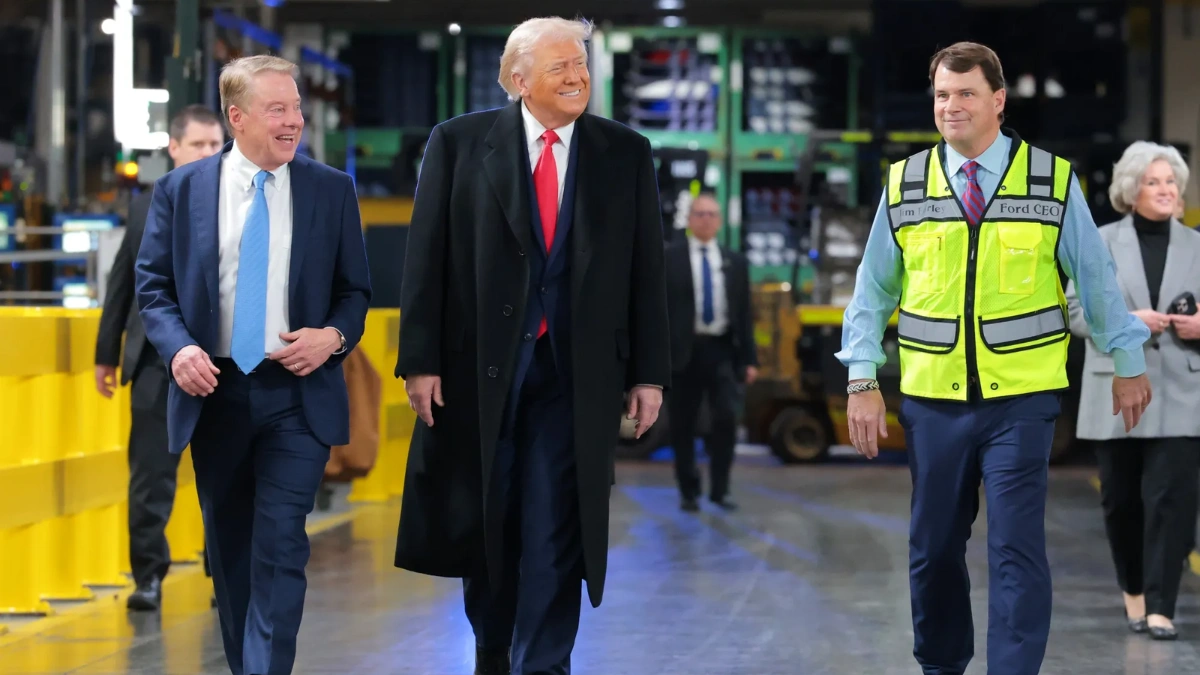
For more than half a century, Canada’s automotive industry has been deeply integrated with the United States. From assembly lines in Ontario to parts suppliers across the country, the sector has operated as a tightly woven North American ecosystem. But as U.S. tariffs and trade pressures intensify, Canada’s auto heartland finds itself at a crossroads. In response, Ottawa is turning toward Asia—seeking new partnerships, fresh markets, and diversified supply chains to protect one of its most vital industries.
This strategic pivot is not merely about expanding trade. It is about safeguarding jobs, sustaining economic growth, and future-proofing Canada’s role in the global auto transformation—especially as electric vehicles (EVs), batteries, and advanced manufacturing reshape the industry.
The North American Auto Web

Canada’s auto sector, concentrated primarily in Ontario, has long thrived on seamless cross-border trade with the United States. Under agreements such as NAFTA and now the
United States–Mexico–Canada Agreement, parts and finished vehicles move back and forth multiple times before reaching consumers. This integrated model enabled efficiency and global competitiveness.
However, shifts in U.S. trade policy—especially tariff threats on steel, aluminum, and vehicles—have exposed vulnerabilities in Canada’s dependence on a single dominant market. Even when tariffs are narrowly targeted, uncertainty alone can delay investment, disrupt planning cycles, and increase production costs.
For communities in Windsor, Oshawa, and other manufacturing hubs, the stakes are high. The automotive industry directly and indirectly supports hundreds of thousands of Canadian jobs. A prolonged trade squeeze risks ripple effects across suppliers, logistics providers, and service industries.
Tariff Pressure and Strategic Anxiety

Canada’s auto sector, concentrated primarily in Ontario, has long thrived on seamless cross-border trade with the United States. Under agreements such as NAFTA and now the
United States–Mexico–Canada Agreement, parts and finished vehicles move back and forth multiple times before reaching consumers. This integrated model enabled efficiency and global competitiveness.
However, shifts in U.S. trade policy—especially tariff threats on steel, aluminum, and vehicles—have exposed vulnerabilities in Canada’s dependence on a single dominant market. Even when tariffs are narrowly targeted, uncertainty alone can delay investment, disrupt planning cycles, and increase production costs.
The broader concern is structural: If the United States adopts a more protectionist approach, Canada cannot afford to rely on a single export destination for such a critical industry. Diversification becomes not just an option—but a necessity.
Why Asia Matters
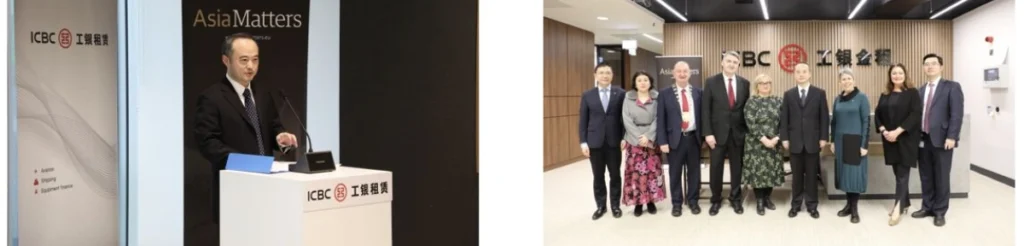
Asia is home to some of the world’s largest and fastest-growing automotive markets. Countries like Japan, South Korea, India, and members of ASEAN collectively represent enormous consumer bases and sophisticated manufacturing ecosystems.
Canada already has strong trade links through agreements such as the Comprehensive and Progressive Agreement for Trans-Pacific Partnership (CPTPP), which includes Japan and several Southeast Asian economies. This provides a framework for tariff reductions and regulatory alignment.
More importantly, Asia dominates global battery production and electric vehicle supply chains. China, South Korea, and Japan are leaders in lithium-ion battery manufacturing and critical mineral processing. As the auto industry shifts toward electrification, aligning with Asian partners becomes strategically vital.
The EV Revolution and Canada’s Opportunity

The global automotive industry is undergoing its most dramatic transformation in a century. Electrification, automation, and digital connectivity are redefining production and demand.
Canada holds significant advantages in this transition:
- Abundant reserves of critical minerals such as lithium, nickel, cobalt, and graphite.
- A skilled manufacturing workforce.
- Clean energy sources that make EV production more sustainable.
- Political stability and transparent regulations.
By partnering with Asian firms that specialize in battery technology and EV components, Canada can integrate upstream mineral extraction with downstream manufacturing. This creates a vertically integrated supply chain capable of serving global markets.
Japanese and South Korean automakers have already shown interest in North American EV investments. Expanding those partnerships to include Canadian facilities strengthens economic resilience.
Investment Diplomacy in Action

Ottawa has intensified outreach to Asian governments and corporations. Trade missions, investment incentives, and joint research initiatives are central to this strategy.
Key focus areas include:
- Battery Gigafactories – Attracting large-scale battery production facilities to Canada.
- Critical Mineral Processing – Encouraging Asian companies to establish refining and processing plants locally.
- R&D Collaboration – Partnering on next-generation battery chemistry and EV platforms.
- Export Expansion – Promoting Canadian-built vehicles and components in Asian markets.
These efforts signal that Canada aims not merely to diversify exports but to become an indispensable node in the global EV ecosystem.
Balancing the US Relationship
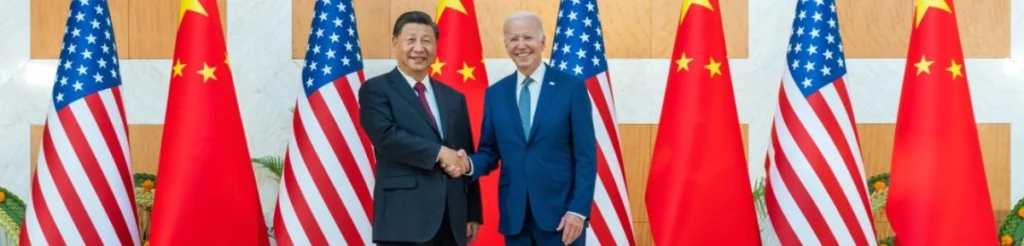
Despite this pivot, Canada cannot and does not intend to abandon its relationship with the United States. The two economies are deeply intertwined. The U.S. remains Canada’s largest trading partner by a wide margin.
The goal, therefore, is balance—not replacement.
By strengthening ties with Asia, Canada gains leverage and resilience. It reduces vulnerability to sudden policy shifts and demonstrates that it has alternatives. This strategic diversification may even encourage more stable negotiations with Washington.
In trade diplomacy, optionality equals power.
Challenges of the Asian Pivot

While the strategy is promising, it is not without obstacles.
1. Competition
Other countries, including the United States and European nations, are aggressively courting Asian investment. Incentives must remain competitive without straining public finances.
2. Infrastructure Gaps
Large-scale EV and battery production requires upgraded ports, rail systems, and energy grids. Expanding export capacity toward Asia necessitates improvements in Pacific-facing logistics.
3. Regulatory Alignment
Automotive standards differ across markets. Harmonizing safety, emissions, and certification requirements can be complex.
4. Geopolitical Sensitivities
Engagement with Asian economies—particularly China—requires careful navigation of political tensions and national security considerations.
Nevertheless, policymakers appear determined to overcome these hurdles in pursuit of long-term stability.
The Role of Provincial Governments

Ontario, as Canada’s automotive heartland, plays a central role in executing this strategy. Provincial incentives, workforce training programs, and partnerships with local colleges and universities are critical.
Meanwhile, provinces rich in critical minerals—such as Quebec and British Columbia—are aligning resource development with national industrial goals.
This multi-level coordination strengthens Canada’s bargaining position with global investors.
A Long-Term Vision for Resilience

The auto industry’s evolution demands adaptability. Electrification, decarbonization, and digitization are global trends that transcend regional politics. Canada’s response to U.S. tariff pressures could ultimately accelerate its modernization.
By integrating critical mineral extraction, battery production, and vehicle assembly within a diversified trade framework, Canada positions itself as:
- A reliable partner in global supply chains.
- A sustainable manufacturing hub.
- A bridge between Western and Asian markets.
If executed effectively, this strategy could transform short-term trade anxiety into long-term competitive advantage.
Economic Implications

Diversifying toward Asia could:
- Stabilize employment in Ontario’s auto sector.
- Attract billions in foreign direct investment.
- Expand Canada’s export base beyond North America.
- Strengthen currency resilience through diversified trade flows.
At the same time, maintaining cooperative dialogue under the United States–Mexico–Canada Agreement ensures that North American integration remains intact.
The key lies in complementarity—leveraging North American manufacturing efficiency while tapping Asian technological expertise and market scale.
Conclusion: Turning Pressure into Opportunity
Canada’s embrace of Asia reflects strategic pragmatism rather than geopolitical realignment. Faced with tariff uncertainty and protectionist rhetoric, Ottawa recognizes the risks of overdependence.
The pivot eastward is about safeguarding communities, modernizing industry, and positioning Canada at the forefront of the electric vehicle revolution. It is about ensuring that Windsor’s factories, Oshawa’s assembly lines, and countless suppliers across the country remain globally competitive.
Trade tensions may have triggered this recalibration—but innovation, sustainability, and diversification will define its success.
In an era of shifting alliances and economic nationalism, Canada’s auto heartland is betting on a broader horizon. And in doing so, it may emerge stronger, more resilient, and better connected to the world than ever before.