
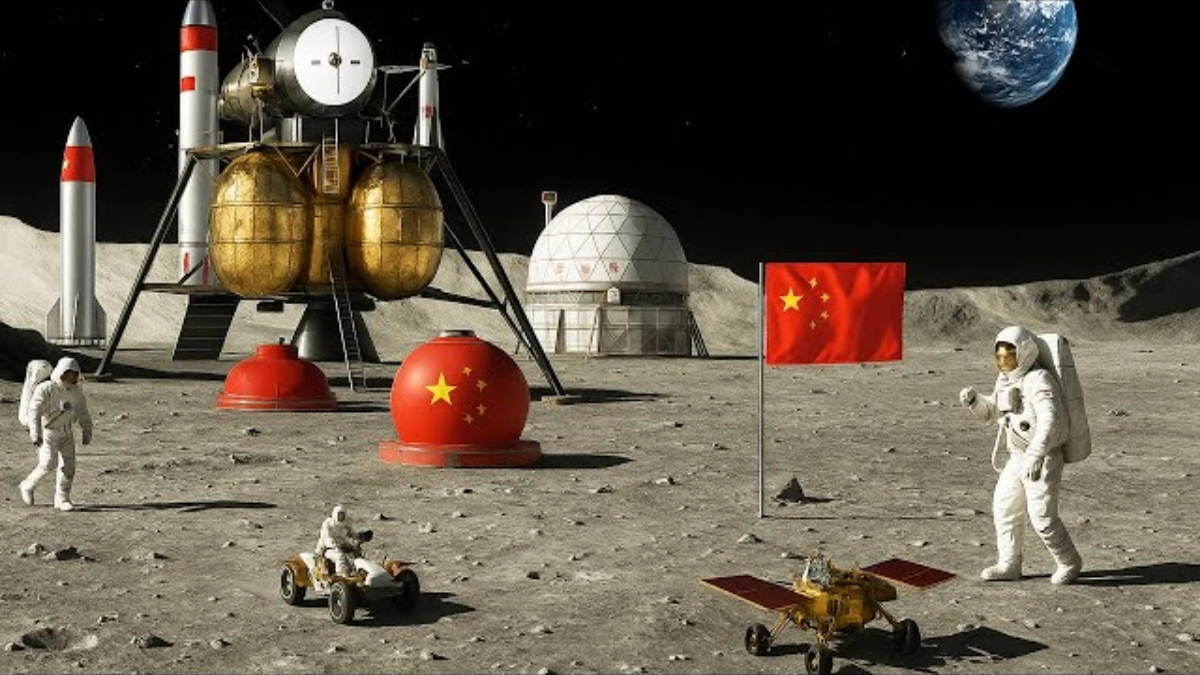
China is no longer just aiming for the stars—it is planning to build an economic, scientific, and strategic stronghold on the Moon. With an estimated investment projected to reach $66 trillion over several decades, China’s lunar ambitions are reshaping the global space race and redefining how humanity views Earth’s nearest neighbor.
This is not science fiction. It is a carefully calculated long-term strategy combining space exploration, resource extraction, national security, and technological dominance.
So what exactly is China planning on the Moon—and why does it matter to the rest of the world?
Why the Moon Matters in the 21st Century
For decades, the Moon was viewed mainly as a symbol of human achievement. Today, it is increasingly seen as a strategic asset.
The Moon offers:
- Access to rare minerals and helium-3, a potential future clean energy source
- A launchpad for deep-space missions to Mars and beyond
- Strategic high ground for space-based communications and surveillance
- Opportunities for long-term human settlement beyond Earth
China understands that whoever dominates the Moon could shape the future of space economics and geopolitics.
The Scale of China’s $66 Trillion Lunar Vision
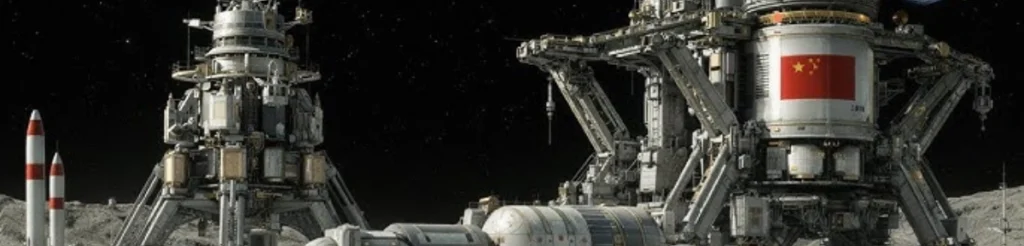
The $66 trillion figure does not refer to a single government budget. Instead, it represents cumulative investments across decades, including:
- Government funding
- State-owned enterprises
- Private Chinese aerospace companies
- Infrastructure, logistics, and research ecosystems
China’s lunar plan spans 30 to 50 years, making it one of the most ambitious projects in human history.
China’s Lunar Roadmap: Step by Step

1. Robotic Exploration and Mapping
China’s Chang’e lunar missions laid the foundation.
Key milestones:
- Chang’e-4 became the first spacecraft to land on the Moon’s far side
- Chang’e-5 successfully returned lunar samples to Earth
- Advanced mapping of lunar terrain and resources
These missions were not symbolic—they were reconnaissance.
2. Building a Permanent Lunar Research Station
China, in partnership with Russia, plans to establish the International Lunar Research Station (ILRS) near the Moon’s south pole by the 2030s.
Why the south pole?
- Presence of water ice in permanently shadowed craters
- Stable temperatures
- Near-continuous solar power availability
This station will support:
- Long-term human presence
- Scientific research
- Resource extraction experiments
3. Human Landings by the 2030s
China has confirmed plans to send Chinese astronauts (taikonauts) to the Moon before 2035.
These missions will focus on:
- Testing life-support systems
- Construction technologies
- Lunar mobility and habitats
Unlike short Apollo-style visits, China aims for sustained habitation.
The Economic Engine: Mining the Moon

One of the most talked-about aspects of China’s lunar strategy is resource extraction.
Helium-3: The Moon’s Hidden Treasure
Helium-3 is extremely rare on Earth but abundant on the Moon.
Potential benefits:
- Clean nuclear fusion fuel
- No radioactive waste
- Massive energy output
If fusion technology becomes viable, helium-3 could be worth trillions of dollars, making the Moon an energy goldmine.
Rare Earth Elements and Metals
The Moon contains:
- Titanium
- Rare earth metals
- Aluminum and silicon for construction
China already dominates Earth’s rare earth supply chain. Extending that dominance to space could cement its technological leadership for generations.
Lunar Infrastructure: Roads, Power, and Data
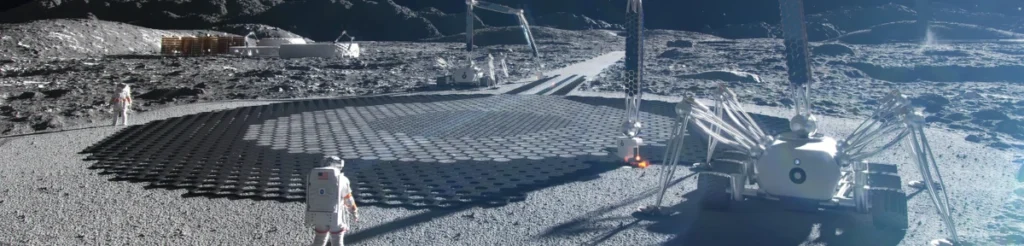
China’s vision goes far beyond planting flags.
Planned infrastructure includes:
- Lunar surface power grids
- Nuclear and solar energy stations
- Autonomous construction robots
- 3D-printed habitats using lunar soil
- Moon-to-Earth communication networks
This infrastructure is what drives the astronomical cost—and long-term payoff.
Military and Strategic Implications

While China publicly emphasizes peaceful exploration, experts warn of dual-use capabilities.
Strategic advantages include:
- Monitoring Earth and space assets
- Protecting Chinese satellites
- Establishing space-based defense systems
Control of cislunar space (the region between Earth and the Moon) could become as important as controlling oceans on Earth.
How China’s Plan Compares to the US and Others

United States
- NASA’s Artemis program aims to return humans to the Moon
- Focused on international partnerships
- More transparent but slower due to political cycles
China
- Centralized decision-making
- Long-term consistency
- Rapid execution
- Strong state backing
Europe, India, and Japan
- Primarily focused on research missions
- Limited funding compared to China and the US
China’s advantage lies in patience and persistence.
The Role of Private Companies

China is encouraging private aerospace startups to participate in:
- Cargo delivery
- Satellite deployment
- Lunar robotics
- Space tourism (long-term)
This mirrors the US SpaceX model but remains closely aligned with state objectives.
Risks and Challenges

Despite its ambition, China’s lunar plan faces major challenges:
- Immense costs and technological risks
- Unproven lunar mining economics
- International legal uncertainty under the Outer Space Treaty
- Potential geopolitical conflict in space
However, China appears willing to accept these risks in exchange for long-term dominance.
What This Means for Humanity
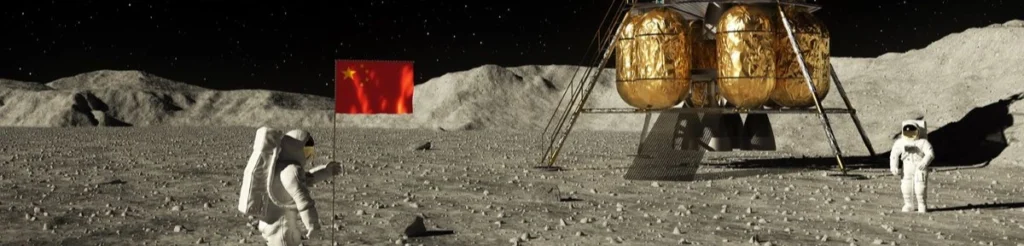
China’s $66 trillion Moon plan signals a turning point.
The Moon is no longer a destination—it is becoming a marketplace, a laboratory, and a strategic frontier.
Key implications:
- The start of a new global space economy
- Increased competition and innovation
- Rising need for international space governance
- The possibility of humans becoming a multi-planetary species
Final Thoughts
China’s lunar strategy is not about one mission or one decade. It is about reshaping the future of civilization beyond Earth.
Whether viewed as bold leadership or strategic rivalry, one thing is clear:
The next great chapter of human history may be written on the Moon—and China intends to be the author.