
Nvidia has taken a decisive step to reinforce its leadership in the AI hardware market by entering into a non-exclusive licensing agreement with AI chip challenger Groq. In addition to the license agreement, Groq’s founder, president, and a number of important staff members are joining Nvidia. The action highlights Nvidia’s approach of acquiring interesting alternative methods for accelerating AI without going through with a full acquisition.
The agreement is part of Nvidia’s larger strategy to maintain its lead in the quickly changing field of artificial intelligence, where specialised architectures, efficiency, and inference speed are becoming just as important as sheer computing power. Nvidia obtains access to innovative chip designs and seasoned leadership by partnering with Groq, all the while retaining freedom in how it incorporates those capabilities.
Not an Acquisition, but a High-Value Strategic Move

Nvidia has been cautious to stress that it is not purchasing Groq altogether, despite the agreement receiving a lot of attention. According to CNBC, Nvidia is purchasing assets from Groq for an estimated $20 billion, which, if true, would be the company’s biggest purchase to date. Nvidia, meanwhile, has openly refuted the idea that the transaction constitutes an acquisition.
Nvidia said in remarks to TechCrunch that Groq is not being purchased and declined to elaborate on the agreement’s full scope or price. The company’s determination to escape regulatory scrutiny and maintain Groq’s independence is demonstrated by its insistence on presenting the agreement as a licensing and talent acquisition deal.
Even so, the transaction’s reported size indicates that Nvidia values Groq’s technology and experience strategically.
Trump Warns Jeffrey Epstein File Releases Could Damage Innocent Reputations
Talent Transfer Signals Long-Term Intent

Nvidia’s choice to appoint Groq’s top executives is among the deal’s most noteworthy elements. As part of the deal, Jonathan Ross, the creator of Groq, Sunny Madra, the president of Groq, and a number of other workers will join Nvidia.
Most people agree that this talent transfer is an essential part of the agreement. In the AI hardware community, Ross in particular is well-respected for his work creating unique accelerators that go against traditional GPU-based methods. Nvidia has access to Groq’s intellectual property, institutional knowledge, and engineering philosophy by hiring Ross and his team.
These actions align with Nvidia’s long-standing goal of bolstering its technological advantage by carefully selecting top industry professionals.
Sam Altman Reveals OpenAI’s “Code Red” Is a Recurring Strategy, Not a Singular Crisis
Groq’s LPU: A Different Approach to AI Acceleration
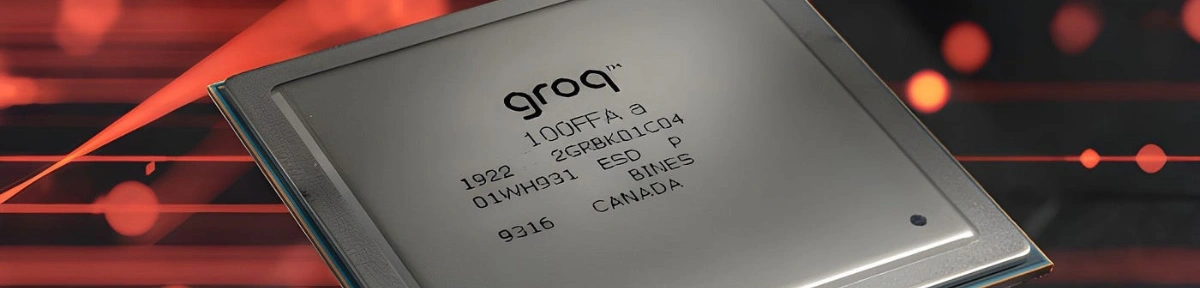
Groq’s CPU architecture, referred to as the Language Processing Unit, or LPU, is what makes it so appealing. Groq’s LPUs are specifically made to run large language models (LLMs), in contrast to general-purpose graphics processing units (GPUs), which are intended to handle a variety of workloads.
Groq claims that its processors can perform LLMs at up to ten times the speed of traditional GPU-based techniques while using about a tenth the energy, positioning their LPU as a highly efficient alternative for inference-heavy workloads. Such assertions have resonated in an industry that is increasingly focused on lowering energy costs and latency, despite the fact that they are challenging to independently verify.
Efficiency and inference performance are becoming just as crucial as training power as AI deployments grow, especially in real-time applications. This change is specifically targeted by Groq’s design philosophy.
xAI’s Android Hiring Push Sparks Buzz Across the Developer Community
Jonathan Ross and the Legacy of Custom AI Chips
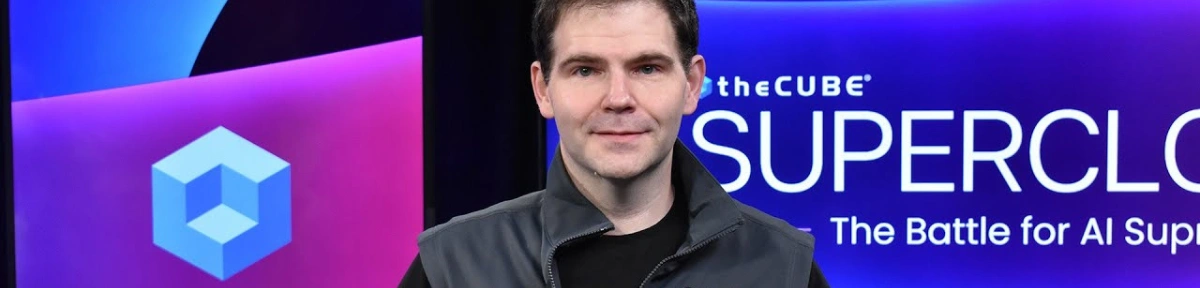
Given his experience, Jonathan Ross’s transfer to Nvidia is very noteworthy. Ross was a key figure in the creation of the Tensor Processing Unit (TPU) at Google prior to starting Groq. The TPU established the feasibility of specialised AI chips and was one of the first bespoke accelerators created especially for machine learning applications.
Ross’s career has been characterised by his conviction that, rather than depending exclusively on general-purpose architectures, AI workloads benefit from hardware designed to specific computational patterns. His choice to work for Nvidia indicates that the firm is keen to include this viewpoint in its own product roadmap.
Incorporating knowledge from other architectures might assist Nvidia, which now controls the GPU industry, future-proof its offerings.
Bill Gates Warns of AI Valuation Risks Amid Hyper-Competitive Market
Competition Intensifies in the AI Hardware Market

The deal’s timing is indicative of the growing rivalry in the AI hardware market. Nvidia’s GPUs, which power everything from research labs to cloud data centres, are now the standard platform for developing and implementing AI models. But the business now has to contend with increasing competition from both established firms and startups looking to carve out niches in specialised workloads.
While some businesses are creating specialised accelerators for edge computing, robotics, and domain-specific AI activities, others, like Groq, have concentrated on inference optimisation. Despite their strength, these opponents contend that GPUs are not necessarily the best option for all AI use cases.
By licensing Groq’s technology instead of getting rid of it through purchase, Nvidia may learn about these different strategies while still having the flexibility to incorporate or modify them as needed.
F-1 Visa Case Under Section 221(g) Highlights Growing Role of Social Media Screening
A Non-Exclusive Agreement Keeps Options Open

Another important aspect of the licensing agreement is that it is non-exclusive. It lets Nvidia use Groq’s technology without stopping Groq from looking for new clients or collaborations. This arrangement lowers risk for Nvidia while maintaining Groq’s autonomy in the marketplace.
According to Nvidia, this method offers strategic flexibility. Without committing to a complete merger or acquisition, the corporation can assess how Groq’s architecture challenges or enhances its own concepts. Additionally, it avoids the impression that Nvidia is suppressing competition, which is crucial given the growing regulatory scrutiny of big tech companies.
ChatGPT Leads a Crowded AI Chatbot Field as Rivals Gain Ground in 2025
Groq’s Rapid Growth Makes It a Credible Challenger

Nvidia’s involvement can be explained by Groq’s growing prominence. Strong investor faith in the company’s technology and business plan was demonstrated in September when it raised $750 million in fundraising at a valuation of $6.9 billion.
Additionally, the business has noted a sharp increase in adoption. Groq claims that their technology now enables AI applications for over two million developers, a sharp rise from roughly 356,000 developers the year before. This increase implies that developers looking for quicker and more effective inference solutions are starting to use Groq’s platform.
Due to this momentum, Groq is now regarded as one of the more reliable competitors in a market that is dominated by Nvidia.
US Government Launches Tech Force to Recruit 1,000 Engineers for Federal Service
Strategic Implications for Nvidia’s Future Roadmap
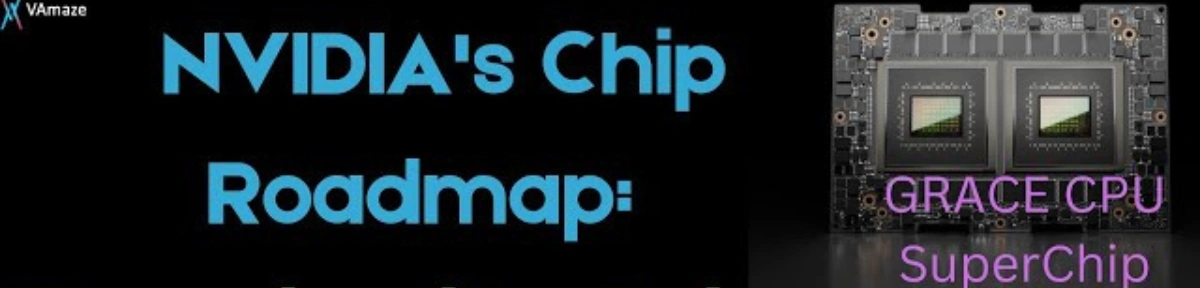
The Groq merger would be Nvidia’s biggest deal to date if the $20 billion value that has been reported is even partially correct. More significantly, as AI workloads continue to diversify, it might influence the organization’s long-term strategy.
Nvidia can position itself to handle a wider range of AI use cases by fusing its superiority in GPUs with knowledge from specialised accelerators like Groq’s LPU. As clients seek more specialised solutions for training, inference, and deployment, the company may be able to sustain its leadership with this hybrid strategy.
Google Launches “Deep Think” in Gemini 3: A Mode Built for Deliberate Reasoning
Conclusion:
The deal between Nvidia and Groq demonstrates a clever tactic for preserving market dominance in AI hardware. Instead of purchasing a competitor outright, Nvidia has opted to retain its alternatives while licensing technology, hiring top staff, and gaining insight into different architectures.
The agreement shows an understanding that a single processor type might not determine the future of AI computing. Regardless of which architectural strategies finally win out, Nvidia is committed to making sure that it stays at the forefront of innovation as efficiency, energy consumption, and inference speed become increasingly important.
By doing this, Nvidia strengthens its position as a key player influencing the next stage of AI infrastructure, in addition to being a hardware supplier.