
In the shifting landscape of global geopolitics, alliances and power blocs are once again in flux. NATO—the North Atlantic Treaty Organization—stands at the center of this transformation. Originally formed during the Cold War to counter Soviet influence, NATO has evolved into the cornerstone of Western defense cooperation. Now, as three countries move closer to joining the alliance, fresh pressure is mounting on both Vladimir Putin in Russia and Donald Trump in the United States, with profound implications for global security, European stability, and U.S.-Russia relations.
The potential expansion of NATO underscores how deeply strategic alliances continue to shape international diplomacy — and how Russia and the U.S. find themselves responding in dramatically different ways.
Why NATO Matters Today?
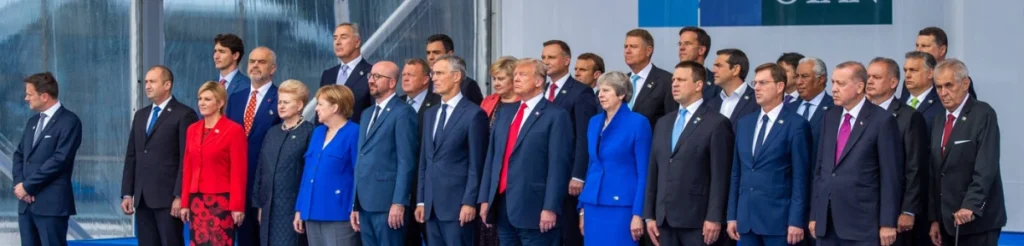
NATO’s founding principle is collective defense: an attack against one member is considered an attack against all. Article 5 of the NATO treaty has only been invoked once — after the September 11, 2001, terrorist attacks — yet its deterrent effect remains central to European security.
Since the end of the Cold War, NATO has expanded gradually to include many former Warsaw Pact states. After Russia’s 2014 annexation of Crimea and the 2022 invasion of Ukraine, NATO’s role has become even more pivotal. The alliance functions not only as a military pact but as a symbol of shared democratic values — an ideal that stands in stark opposition to Russia’s increasingly authoritarian stance under President Vladimir Putin.
Now, with three countries actively seeking membership, NATO expansion is not merely theoretical — it is happening in real time.
Which Countries Are Seeking NATO Membership?
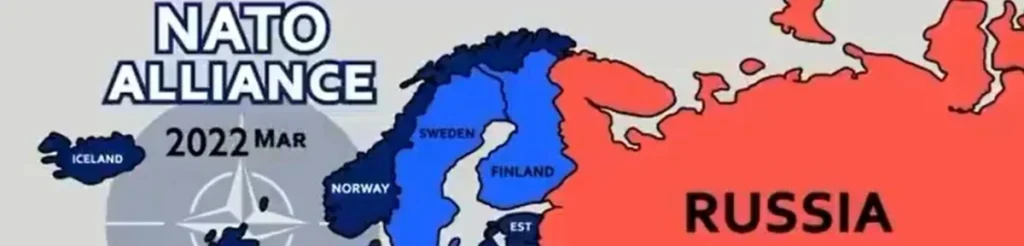
The three nations most frequently cited as potential future NATO members are:
1. Ukraine
Ukraine’s bid for NATO membership has been one of the most consequential developments in recent international politics. Russia’s invasion in 2022 made Ukraine’s NATO aspirations a central issue in its defense strategy — both symbolically and militarily.
2. Georgia
Since the Russo-Georgian War in 2008, Georgia has sought closer ties with NATO. Georgia’s strategic location at the crossroads of Eastern Europe and Western Asia underscores its geopolitical significance.
3. Bosnia and Herzegovina
Still recovering and stabilizing after the Yugoslav Wars of the 1990s, Bosnia and Herzegovina has gradually aligned with Western institutions. Its potential accession reflects ongoing integration with Euro-Atlantic structures.
Each country’s bid carries different strategic consequences, yet all share a common theme: aligning with NATO presents not only security guarantees but also a clear signal of political alignment — one that challenges Russian influence.
Putin’s Response: Security Interests and Strategic Threat Perception
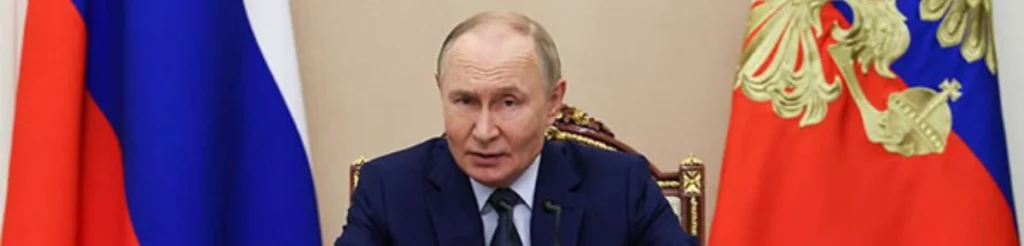
From the Kremlin’s perspective, NATO expansion is not a benign diplomatic phenomenon — it is a threat.
Security Buffer Zone
Russia has long insisted on maintaining a buffer zone of neighboring countries that are not part of military alliances perceived as hostile. The absorption of Eastern European states into NATO has heightened Russian anxieties about encirclement.
Ukraine: A Red Line
Ukraine’s potential NATO membership, particularly after years of conflict with Russia, represents a fundamental challenge to Putin’s strategic priorities. Ukraine was long considered part of Russia’s “sphere of influence,” and its embrace of Western alliances is seen as a geopolitical defeat in Moscow.
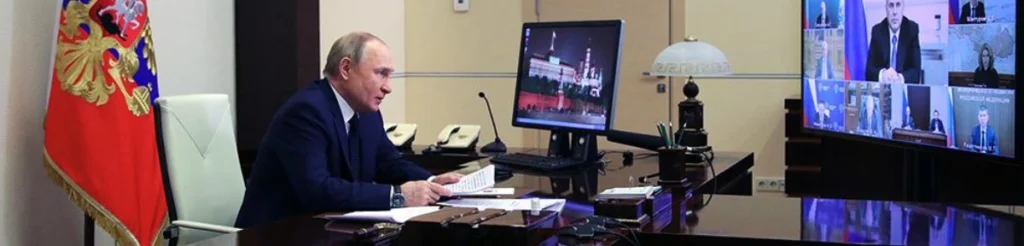
Putin has repeatedly portrayed NATO expansion as an existential threat to Russia’s national security. His government has issued demands — most recently in diplomatic statements and policy pronouncements — calling for binding guarantees that certain former Soviet states will never join NATO.
Georgia and the South Caucasus
Georgia’s bid carries implications for Russia’s influence in the South Caucasus. The brief 2008 war between Russia and Georgia left Russian troops in breakaway regions of Georgia, and the prospect of NATO membership only escalates tensions.
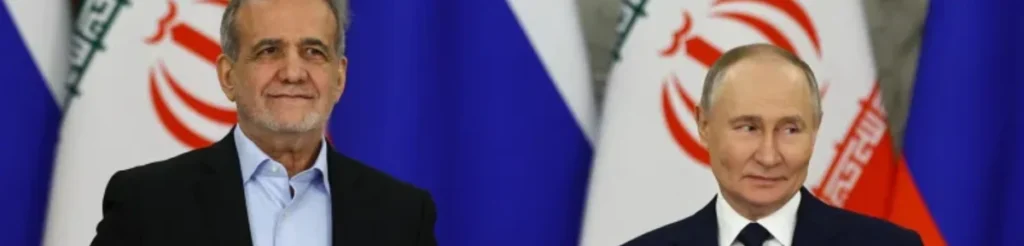
In response to NATO’s shifting posture, Russia has increased its military presence along its western borders, modernized its nuclear arsenal, and strengthened bilateral defense relationships with countries like China and Iran. These moves underscore Moscow’s determination to counterbalance Western alliances.
Trump’s Response: Mixed Signals and Political Debate
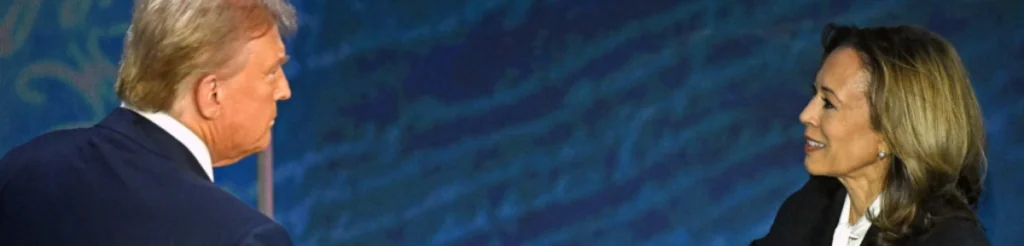
Unlike Putin, whose opposition to NATO expansion is consistent with Russia’s long-standing strategic calculus, U.S. responses — particularly under Donald Trump — have been more ambivalent.
“America First” and NATO Burden-Sharing
During his presidency, Trump often criticized NATO members for not contributing enough to defense spending. He pushed for increased financial commitments from European allies, arguing that the U.S. was bearing an unfair share of the alliance’s costs.
This stance resonated with broader elements of Trump’s “America First” philosophy. While he did not call for abandoning NATO, Trump’s rhetoric suggested a transactional view of alliances — one that prioritized economic contribution over collective defense ideals.
Mixed Signals on Expansion
Although Trump publicly affirmed U.S. commitments to NATO, he also raised questions about whether new members should be admitted without clear financial commitments. Some critics argued that Trump’s approach weakened the alliance’s cohesion at a time when Russian aggression made unity more critical than ever.
Under the Biden administration, U.S. policy has shifted toward strengthening NATO ties and supporting Ukraine with security assistance. Yet Trump’s past criticisms have had a lasting impact on how allies perceive U.S. leadership within NATO.
With Trump once again a central figure in American politics, his stance on further NATO expansion — especially if it involves Ukraine — remains a point of debate in Washington.
Strategic Implications of Expansion
1. Increased Military Security Guarantees
For Ukraine, Georgia, and Bosnia and Herzegovina, NATO membership would mean protection under Article 5, effectively deterring future aggression. For Russia, this represents a direct reduction of its strategic influence.
2. A Stronger NATO Presence in Eastern Europe
NATO expansion would solidify Western military infrastructure across the eastern flank of Europe. This could include new deployments of personnel and equipment, enhanced air defense systems, and joint military exercises.
3. Escalation Risks
Russia has warned that NATO’s advancement into its periphery could trigger heightened military tensions. While full-scale conflict between NATO and Russia is unlikely, localized escalations — cyberattacks, hybrid warfare tactics, and proxy conflicts — remain a concern.
4. Political Solidarity
Bringing Ukraine or Georgia into NATO would signal strong political unity among Western democracies. It would reinforce the narrative that sovereign nations have the right to choose their alliances without fear of coercion.
What Allies Think

European NATO members are not unified on expansion. While countries like Poland and the Baltic states strongly support Ukraine’s inclusion, others are cautious. Concerns include:
- The readiness of candidate countries to meet NATO’s military standards
- The administrative and logistical requirements of enlargement
- The potential for provoking Russia further
Bosnia and Herzegovina’s bid faces internal political challenges, including ethnic divisions that complicate decision-making. For Georgia, domestic reforms and democratic benchmarks are also prerequisites.
Despite these complexities, the idea of expansion continues to gain momentum, particularly as Russia’s war in Ukraine reshapes security priorities across Europe.
A Turning Point in Global Alliances
The calls for expansion come at a time when international alliances are in flux. The rise of China as a strategic competitor, Russia’s assertive foreign policy, and shifting U.S. political dynamics all contribute to a complex global landscape.
Transatlantic Unity
NATO serves as a bedrock of transatlantic cooperation. A united NATO can project stability across Europe and hold strategic influence in global affairs.
Emerging Multipolarity
As powers like China and Russia seek to assert their influence, NATO’s expansion can be interpreted as part of a broader recalibration of global power — one that reinforces Western alliances as a counterbalance to authoritarian models.
Looking Ahead
The calls for three new NATO members — Ukraine, Georgia, and possibly Bosnia and Herzegovina — are more than diplomatic gestures. They reflect deep strategic shifts in the way nations seek security in an era of geopolitical uncertainty.
For Putin, this expansion is a strategic threat that demands defensive posturing and a reassertion of Russian power. For Trump and U.S. policymakers, the debate underscores broader questions about America’s role in global alliances, burden-sharing, and the balance of national versus collective security priorities.
As these debates continue, the world watches closely. NATO’s evolution — and the responses it elicits — will shape not just European security but the future of global geopolitics.