
The field of artificial intelligence (AI) is developing more quickly than many specialists had anticipated. Technology is no more a vision of the future; rather, it is a force that is changing life today, from influencing how people communicate to altering international enterprises. However, its quick development also begs important issues, such as what jobs will be replaced by machines and how humans will adjust.
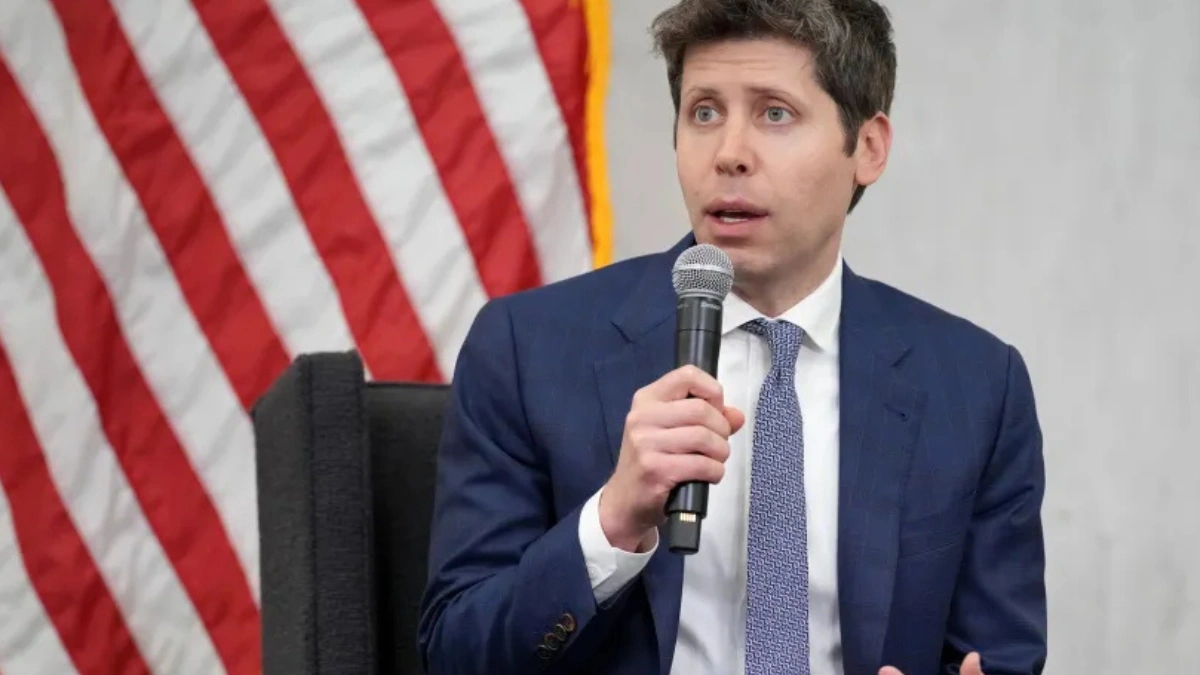
The ability of OpenAI CEO Sam Altman to make forecasts has frequently been questioned. However, his latest comments highlight the magnitude of the upheaval that lies ahead and provide insight into the groups that are most likely to be affected initially. Altman stressed the value of human adaptation while outlining his hopes for AI’s role in science, employment, and society in speeches at significant international events.
A Decade to Superintelligence
In Berlin, Altman spoke about the future of AI development at the Axel Springer Global Reporters Network event, where he was given the esteemed Axel Springer Award. According to him, before 2030, superintelligence—AI that outperforms humans in almost every way—may be discovered.
In 2030, he said, “I would be very surprised if we don’t have models that are extraordinarily capable and do things that we ourselves cannot do.” He said this by the end of this decade.
“GPT-5 and similar models already outperform humans in certain tasks, but they still have limitations,” Altman said. Nonetheless, the rate of advancement suggests that these disparities will quickly narrow. He anticipates that in a few years, AI will advance to the point where it can find scientific answers that humans cannot, which could signal the start of true superintelligence.
Market Update: Bitcoin Holds Strong, Ethereum Consolidates, and Lyno AI Presale Gains Momentum
The Workplace in Flux

Beyond science, Altman concentrated on how AI will change the nature of work. His perspective places more emphasis on changing the tasks that are performed within occupations than on completely replacing them.
“I can easily envision a world in the not-too-distant future where 30–40% of the tasks that occur in the economy today are done by AI,” he remarked.
The upheaval will hit certain industries sooner than others. For instance, customer service positions are particularly vulnerable to automation, particularly those that involve computer or phone contact. Many of these professions, according to Altman, would be better performed by AI systems, replacing human labour.
But the picture of programming is more complicated. Computer programmers are a profession about which Altman expressed a lack of confidence over its prospects. Today’s coding is very different from two years ago because developers are depending more and more on AI tools to speed up operations. Programmers may be repurposed by AI to become supervisors of automated coding systems or innovators who use AI as leverage, rather than having their jobs eliminated.
Nvidia’s $100 Billion Partnership with OpenAI Sparks Antitrust Concerns
Tasks vs. Jobs: A Useful Framework

Altman noted that the percentage of tasks that are automated, rather than the number of jobs lost, is the true indicator of AI’s impact. As AI replaces repetitive tasks and frees up workers to concentrate on strategic, creative, or interpersonal components, many employment will change rather than perish.
According to this viewpoint, there are two possible realities: some workers might be displaced, while others might see an increase in their output and range of job. Importantly, just as the internet created sectors that were unthinkable in the 1980s, AI may potentially create completely new job categories that do not already exist.
Meta Prepares to Launch Celeste Smart Glasses: A Glimpse Into the Future of AR and AI
A Philosophy for the Next Generation

Altman’s perspective is also shaped by his own experiences. He talked about the significance of training the next generation for a world that is always changing, having recently become a father.
In an AI-driven economy, he underlined the importance of adaptation and lifelong learning as the most important survival skills. “Those will be invaluable—the meta-skill of learning how to learn, of learning to adapt, of learning to be resilient to a lot of change,” he said.
Creativity, empathy, and the capacity to create beneficial goods and services are among the other traits that will continue to be distinctively human. Altman was upbeat about the continued importance of human inventiveness, saying, “I’m so confident that people will still be the centre of the story for each other.” Additionally, I firmly believe that human curiosity, the drive to help others, and the need to express our creativity are all boundless. My children will undoubtedly continue to amaze us with their creations, as every new generation does.
Microsoft and OpenAI Reshape Their Partnership: Toward a For-Profit Future and Global AI Expansion
Balancing Fear and Capability

Rapid innovation can be scary. Some scientists caution that in the future, sophisticated AI may regard people as unnecessary, much the way people do with ants. While acknowledging these worries, Altman provided a more upbeat comparison.
He cited Ilya Sutskever, a co-founder of OpenAI, when he stated: “He hoped that an AGI—or all AGIs—would treat humanity—like a loving parent.” I find the framing to be quite lovely.
Still, Altman acknowledged the possibility of unforeseen repercussions. “Asking it to do something could have unintended consequences or side effects, even if it is not intentional.” We must thus make sure that this instrument is in line with human values.
The challenge, in his opinion, is not only creating strong systems but also making sure they align with human values and goals.
Preparing for an AI-Driven World

According to Altman, the way forward lies in readiness rather than opposition. It is necessary for employees, educators, and legislators to determine which jobs are most susceptible to automation and which competencies are most suited for artificial intelligence.
Automation may become commonplace in customer service, programming is changing quickly, and other sectors—from legal research to logistics—are probably going to experience a similar shift. How humans will position themselves inside this shift is the key question, not whether AI will change the workplace.
The value of flexibility, inventiveness, and problem-solving skills will only increase. Workers can guarantee they will always be needed even as machines become more sophisticated by emphasising these human-centered talents.
Geoffrey Hinton Warns AI Could Deepen Inequality and Cause Mass Unemployment
The Dual Nature of AI: Challenge and Opportunity
Altman’s comments highlight AI’s dual reality. On the one hand, there is concern over job losses as automation may replace up to 40% of jobs in the economy. AI, on the other hand, provides a toolkit for hitherto unheard-of levels of creativity, productivity, and scientific advancement.
Managing the shift is a problem for individuals, governments, and enterprises. In order to teach flexibility and digital fluency, educational systems must change. Businesses need to reevaluate their responsibilities and train staff to collaborate with AI. Innovation and worker protections must be balanced by policymakers.
Elon Musk’s xAI and Grok Chatbot Returns to Government Procurement List
Conclusion: A Human-Centred Future
Sam Altman‘s outlook on the future is neither overly hopeful nor apocalyptic. It recognises the dangers of automation, such as the potential for major job upheaval, but it also emphasises the adaptability and inventiveness of people.
AI might become more intelligent than humans by the end of this decade, which would change society, business, and research. However, Altman is still optimistic that people will continue to propel advancement, influencing technology in the same way that it influences them.
The story of AI will ultimately be about how humans collaborate with these tools to adapt, learn, and create rather than about machines taking the place of people. In addition to surviving the shift, those who value creativity, adaptability, and lifelong learning will prosper in the era of superintelligence. science, Altman concentrated on how AI will change the nature of work. His perspective places more emphasis on changing the tasks that are performed within occupations than on completely replacing them.