
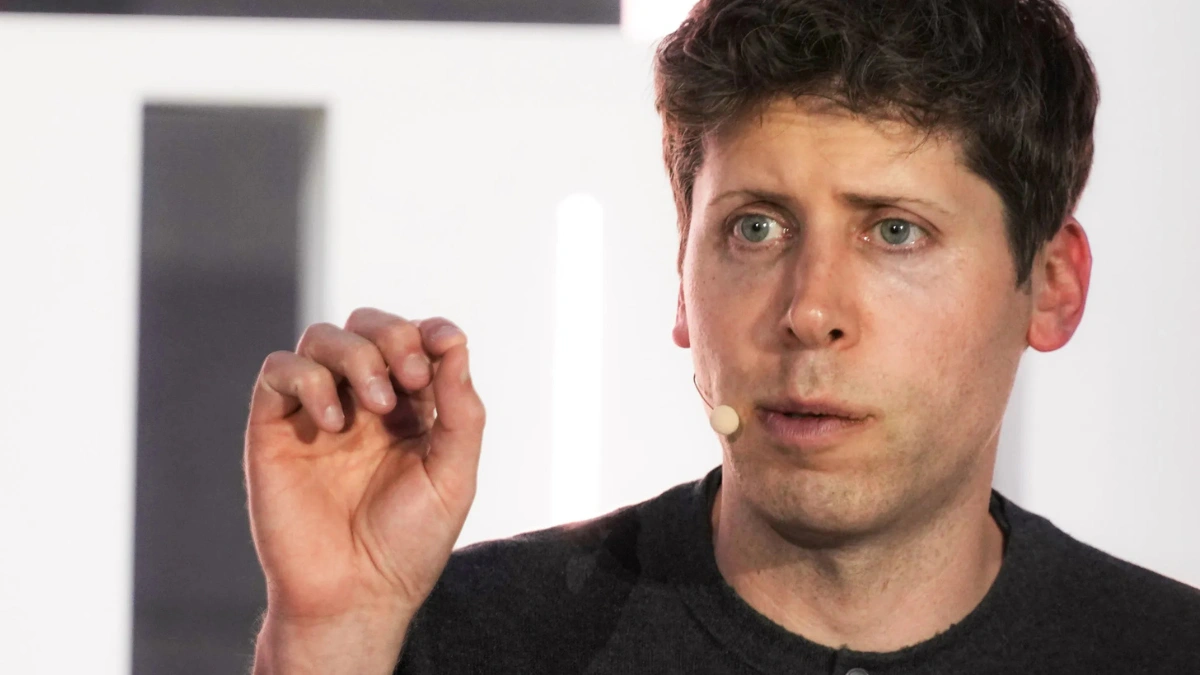
AI agents are quickly nearing a level of capacity that, if not carefully regulated, poses significant threats in the real world, according to OpenAI CEO Sam Altman. Altman cautioned in a recent public statement that sophisticated AI systems are now capable of identifying serious security flaws, raising questions about how malevolent actors can abuse such skills.
As AI models develop from experimental tools into autonomous or semi-autonomous entities capable of carrying out complex tasks with little human control, his comments echo growing anxiety within the technology sector. Altman stressed that although these advancements hold great promise, they also bring with them new risks that have never been seen before.
Nvidia Deepens Its AI Hardware Dominance Through Strategic Deal With Groq
A Call for More Nuanced Risk Measurement

Altman clarified that current methods for assessing AI skills are insufficient in a post uploaded on social media platform X. He claims that comprehending how AI systems may be misused is now more difficult than just gauging their level of strength.
According to Altman, “we have a strong foundation of measuring growing capabilities.” “However, as we move into a new era, we will require a more nuanced understanding and measurement of how those capabilities could be abused and how we can limit those downsides in both our products and the world.”
It is quite challenging to achieve this equilibrium, Altman emphasised. He pointed out that many concepts that seem reasonable at first look might have unexpected effects when implemented widely. Technology businesses are travelling mostly unexplored ground because there is little historical instruction on managing systems of this complexity.
Rapid Progress Brings New Challenges

Altman agreed that in the last year, AI systems have advanced remarkably. From sophisticated coding to intricate reasoning and data analysis, jobs that previously required highly skilled professionals can already be completed by modern models.
He did, however, issue a warning that the rate of advancement itself poses a risk. The variety of ways that AI can be abused grows along with its capabilities. If sufficient controls are not in place, tools intended to support researchers, developers, and security experts may also empower attackers.
Altman claims that AI agents are now at a point where they can help on their own in sectors like system analysis, computer security, and vulnerability detection—all of which have inherent risks when used improperly.
Trump Warns Jeffrey Epstein File Releases Could Damage Innocent Reputations
AI Agents and the Risk of Cybersecurity Abuse

The use of AI in cybersecurity was one of Altman’s most important cautions. According to him, OpenAI has seen its models improve to the point where they can detect serious software flaws.
According to Altman, “models are becoming proficient enough at computer security that they are starting to find critical vulnerabilities.”
Such capabilities may be used to automate hacking attempts, but they could also be very helpful for fortifying defences, spotting vulnerabilities, and enhancing resistance. Altman cautioned that AI agents could reduce the technical obstacles needed to carry out assaults if careful controls are not in place.
This worry is in line with more widespread industry concerns that AI-powered tools could significantly increase cybercrime by making it possible for attackers to operate more quickly, effectively, and with considerably less skill than was previously required.
Sam Altman Reveals OpenAI’s “Code Red” Is a Recurring Strategy, Not a Singular Crisis
Rising Global Concerns Over AI-Driven Cyberattacks

Altman’s remarks coincide with mounting evidence that AI tools are already being employed in actual cyber operations. Anthropic, an AI company, recently revealed that Chinese state-sponsored hackers have abused its Claude Code system.
The study claims that the hackers targeted about thirty organisations, including government agencies, financial institutions, and technology companies. Interestingly, the attacks apparently required very little human intervention, demonstrating how AI agents may automate a significant amount of the hacking process.
The event heightened worries among security professionals and lawmakers that AI might drastically alter the threat landscape by enabling highly scalable attacks that are challenging to identify and stop.
Bill Gates Warns of AI Valuation Risks Amid Hyper-Competitive Market
OpenAI Responds by Expanding Safety Leadership

Altman revealed that OpenAI is hiring a Head of Preparedness, a position created especially to foresee and handle the possible abuse of cutting-edge AI systems, in response to these escalating concerns.
Understanding how new AI capabilities could be abused and creating plans to reduce those dangers before they worsen will be the main focus of the role. This shows that conventional safety frameworks are no longer adequate for the next generation of AI agents, according to Altman.
Instead than responding to incidents after damage has been done, OpenAI seeks to proactively detect threat vectors as AI systems become more powerful and autonomous.
ChatGPT Leads a Crowded AI Chatbot Field as Rivals Gain Ground in 2025
Beyond Cybersecurity: Broader Social Risks Emerge

Altman highlighted that cybersecurity is not the only area where AI agents represent a threat. He pointed out that as early as 2025, OpenAI started noticing early indications of hazards to mental health from AI interactions.
Concerns have been expressed regarding over-reliance, emotional manipulation, and the dissemination of damaging or false information, even if AI chatbots and assistants can provide assistance, knowledge, and company. AI systems have been accused in a number of lawsuits and investigation reports of causing misinformation, confusion, and psychological anguish among susceptible users.
Altman’s recognition of these problems implies that the social implications of AI are starting to take centre stage in industry safety conversations.
US Government Launches Tech Force to Recruit 1,000 Engineers for Federal Service
The Challenge of Balancing Innovation and Protection

The challenge of striking a balance between the immense benefits of AI and the necessity to prevent misuse was a recurrent subject in Altman’s remarks. He maintained that while inadequate safeguards could put society at serious risk, excessively restrictive policies could hinder innovation and limit the beneficial effects of AI.
Altman noted, “These questions are hard and there is little precedent,” highlighting the lack of precise models for managing systems with such extensive and dynamic capabilities.
This conflict lies at the core of continuing discussions about how to appropriately implement cutting-edge AI systems without impeding advancement or jeopardising safety among researchers, regulators, and technology leaders.
Google Launches “Deep Think” in Gemini 3: A Mode Built for Deliberate Reasoning
Industry-Wide Implications for AI Governance

Altman’s warnings draw attention to problems that go much beyond OpenAI. Other businesses creating comparable technology will have the same challenges as AI agents grow more potent and accessible.
Experts contend that these hazards cannot be handled by a single organisation. Effective management of AI-related dangers may need coordinated efforts incorporating industry standards, regulatory frameworks, and international cooperation.
However, governance is made more difficult by the global nature of AI development. Different nations and businesses may implement different safety regulations, resulting in inconsistent safeguards and possible abuse opportunities.
Global Markets on Edge: Fed Decision, Central Bank Wave, and China Data Set the Tone for 2026
Looking Ahead: Preparing for a More Autonomous AI Future
Altman has continuously insisted that AI will have revolutionary effects on industry, science, and medicine despite his reservations. In related comments, he has forecast that AI-driven innovation and discovery may have a breakthrough in the upcoming years.
His most recent remarks, however, point to a growing understanding that planning ought to stay up with advancements. Understanding how AI agents can fail—or be abused—becomes just as crucial as improving their capabilities as they approach autonomous action in high-risk settings.
Conclusion:
Sam Altman’s comments represent one of the clearest acknowledgments yet from a leading AI executive that advanced AI agents pose real and immediate challenges. While these systems hold immense promise, their ability to identify vulnerabilities, automate attacks, and influence human behavior introduces risks that society has never had to manage at this scale.
By calling for deeper analysis, stronger safeguards, and dedicated preparedness efforts, Altman is signaling a shift in how AI leaders view responsibility in an era of increasingly autonomous systems. As AI continues to evolve rapidly, the question is no longer whether risks exist—but whether institutions can move quickly enough to understand and contain them while preserving AI’s transformative potential.