
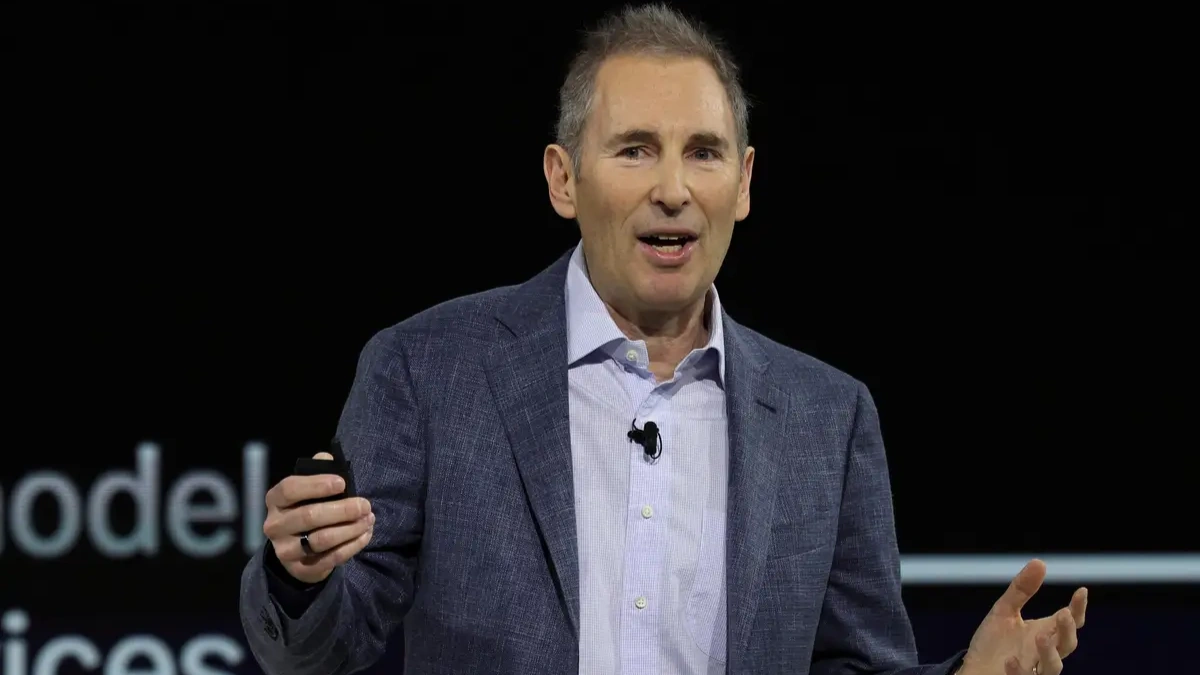
In January 2026, Amazon CEO Andy Jassy made headlines at the World Economic Forum in Davos with an unusually candid acknowledgment: the much-debated tariffs imposed under the Trump administration are now beginning to show up in consumer prices. This statement marked a notable shift in tone for a leader who, just months earlier, had downplayed the impact of tariffs on retail prices and consumer spending.
For years, the debate over trade tariffs and inflation has been a political linchpin — with policymakers, economists, and business leaders arguing over whether tariffs would meaningfully raise retail prices. Jassy’s recent remarks suggest the answer may now be legible in the marketplace.
A Shift in Tone: From Mitigation to Admission

When President Trump’s tariff regime began rolling out in 2025, Amazon attempted to insulate consumers from the shock. Jassy and other executives encouraged sellers and the company itself to stockpile inventory, effectively front-loading shipments ahead of tariff increases in hopes of postponing price hikes. That strategy worked — temporarily. Early in the process, Jassy publicly said Amazon had not seen meaningful price increases as a result of tariffs and that consumer demand remained strong.
However, by late 2025, those inventories had largely depleted. As the tariff-shielded products ran out, sellers faced a stark choice: absorb the increased costs themselves or pass them on to customers. According to Jassy, the result has been a mix of both behaviors among Amazon’s vast marketplace of sellers, but the overall trajectory is unmistakable: tariffs are now “creeping” into final prices.
In his Davos interview, Jassy told CNBC that the earlier strategy was no longer sufficient, and that the effects of tariffs were starting to emerge clearly in pricing. Some sellers are indeed increasing prices to consumers, others are absorbing part of the cost to stay competitive, and a subset are choosing a mix of these approaches.
Why This Matters: Tariffs and Retail Pricing?

Tariffs, in essence, are taxes on imported goods. While governments often use them to protect domestic industries or influence trade balances, economists warn that such levies rarely remain invisible to consumers. The cost of tariffs tends to be passed along at some point — most often to buyers — because middlemen and sellers operate on thin profit margins. Retail margins, as Jassy pointed out, are generally mid-single digits, leaving little flexibility to absorb sudden cost increases.
Amazon’s business model, with its millions of third-party sellers, complicates the picture further. Unlike traditional retailers that might negotiate uniform pricing strategies, Amazon hosts a diverse ecosystem where each vendor decides independently whether to raise prices. The result is a mosaic of pricing behavior: some products remain stable, other items creep upward.
What Consumers Are Seeing?

For everyday shoppers, the data is already tangible. Multiple market analyses indicate price bumps in categories like electronics, apparel, and household goods — categories heavily reliant on imported components or finished products. While Amazon itself has disputed that overall prices have skyrocketed beyond regular market variability, many consumers report noticeable increases and shifting purchasing behavior.
Indeed, research surveys show that a significant portion of U.S. consumers are choosing lower-cost or generic alternatives as prices rise. A 2025 Deloitte survey found that more than three-quarters of shoppers have actively traded down to cheaper brands to manage higher costs, a sign that tariff-induced pricing pressures are affecting real buying decisions.
Political and Economic Context

The spotlight on tariff-linked price increases comes at a politically sensitive moment. As 2026 unfolds, the U.S. faces midterm elections and rising concern about cost-of-living pressures. Tariff policy — once a cornerstone of Trump’s trade strategy — has become a flashpoint in debates over inflation, economic growth, and consumer resilience.
Politically, Jassy’s remarks also reflect a broader tension between government policy and corporate realities. Amazon, as one of the largest employers and retailers in the world, is inevitably entangled in debates over trade, taxation, and market dynamics. In mid-2025, the company drew direct political attention when it briefly considered showing tariff-related fees on product listings, prompting criticism from political leaders concerned about the optics of visible price inflation.
In Davos, Jassy’s comments did not just signal shifting corporate strategy — they underscored the growing difficulty of shielding consumers from macroeconomic forces that are increasingly outside any single company’s control.
How Amazon Is Responding?

Despite the admission of rising prices, Jassy emphasized that Amazon is still working to limit the impact on consumers. Strategies include expanding product offerings, accelerating delivery timelines, and finding efficiencies in the supply chain to blunt cost pressures wherever possible. However, even with these efforts, the reality remains that “you don’t have endless options” when costs rise across the supply chain.
This is especially true in categories with low profit margins or thin competitive pricing, where sellers have little room to absorb additional costs without hurting profitability. As a result, even with Amazon’s scale and logistical sophistication, tariff pressures are increasingly intimate in pricing decisions.
The Broader Retail Landscape

Amazon is not alone. Other major retailers — including big box stores and traditional e-commerce outlets — are seeing similar pricing dynamics emerge. Economists and industry analysts have noted that tariffs are reshaping not just pricing but inventory planning, supply chain sourcing, and vendor relationships across the retail landscape.
For suppliers and manufacturers, the increased cost of importing raw materials or finished goods has forced a reevaluation of global sourcing strategies. Some retailers are diversifying sourcing to countries with more favorable tariff treatment, while others are investing in localized production to reduce exposure to international duties. These shifts, however, take time and capital — and may not immediately shield consumers from the effects of existing tariffs.
Consumer Behavior and Market Adjustments

One interesting consequence of tariff-related price increases has been changes in consumer behavior. Shoppers are increasingly sensitive to price differences, leading to a rise in discount shopping, bargain hunting, and brand switching. In some categories, demand for premium or discretionary products has softened regardless of tariff effects, complicating the narrative about whether inflation is primarily tariff-driven or part of broader economic trends.
Retail stocks, including Amazon, have shown some volatility amid these developments. Share prices have experienced downward pressure in response to slowing growth and concerns about how tariffs will influence sales volume and consumer spending.
What Lies Ahead in 2026?

Andy Jassy’s shift in tone is a reminder that economic policies, especially tariffs, can have delayed but significant effects on markets. While the early months after tariff implementation can be masked by strategies like inventory stockpiling, the long-term pressures often surface once buffers are exhausted.
Jassy himself acknowledged that keeping prices low is an ongoing effort — and that consumers and sellers alike may feel the true impact of tariff costs as 2026 progresses. Whether those effects intensify or stabilize will depend on multiple factors, including global trade negotiations, domestic economic conditions, and how retailers and manufacturers adapt their operations in response.
In practical terms, Americans may begin to notice that items they once considered affordable are no longer insulated from broader economic shifts. This could have ripple effects on overall consumer spending habits, inflation measurements, and even political attitudes toward trade policy.
Conclusion
Six months ago, Amazon CEO Andy Jassy conveyed confidence that tariffs would not meaningfully drive up prices for consumers. Today, that confidence has evolved into a sober admission that tariffs are indeed beginning to affect retail pricing. The causes — depleted tariff buffers, thin retail margins, and a diverse marketplace of independent sellers — are economic realities that even a global giant like Amazon cannot ignore.
While Amazon continues efforts to mitigate price increases, the broader lesson may be that macroeconomic policies have long lead times and complex downstream effects. For consumers, the pain of higher prices once delayed may now be arriving sooner than many expected.
As 2026 unfolds, all eyes will be on how retailers, policy makers, and consumers adapt to this new pricing environment