
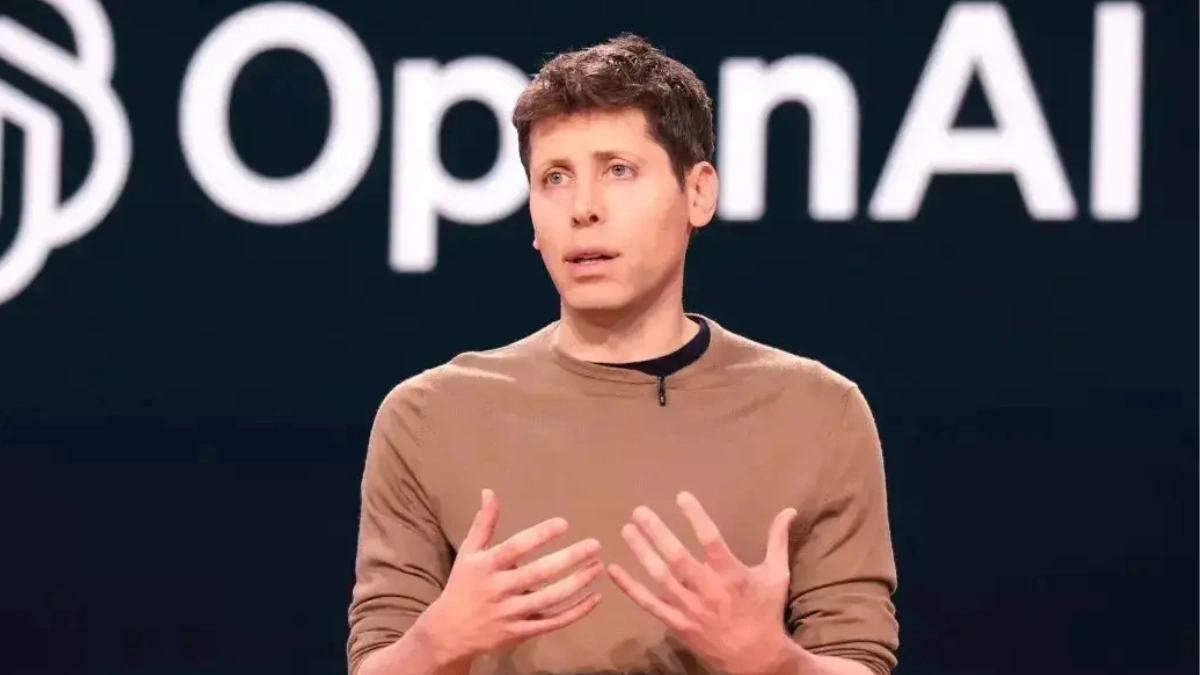
Nowadays, artificial intelligence is not just a sci-fi futuristic idea. Industry operations are already being altered by AI, from producing code to responding to consumer enquiries. The impact of technology on employment has become a major concern as it advances. Will machines completely supplant people, or will they displace existing possibilities while generating new ones?
Sam Altman, CEO of OpenAI, the organisation that created ChatGPT and other revolutionary AI models, is among the few individuals in a better position to answer these issues. Altman recently spoke on The Tucker Carlson Show on the professions that are most at risk from automation, those that are safer, and the need for society to adjust. His responses highlight the benefits and drawbacks of an AI-powered economy.
Sam Altman on OpenAI’s Future: Why He May Not Be the Right CEO if OpenAI Goes Public
Customer Support: First in Line for Automation
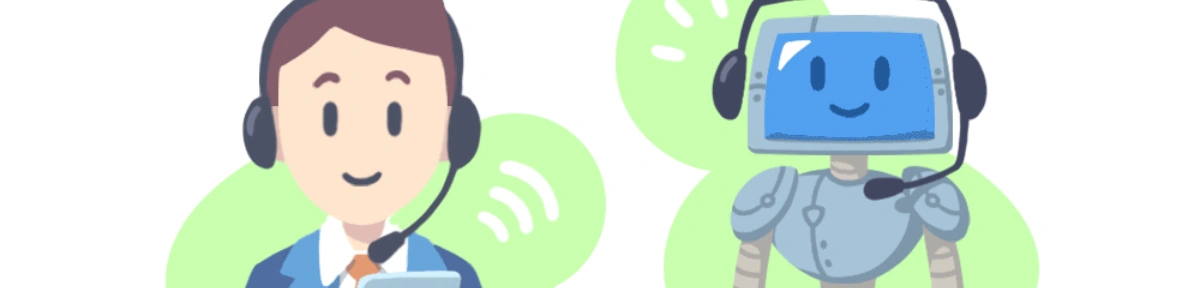
Sam Altman made it apparent that customer service positions are among the most dangerous, especially those involving computers or phones.
Why These Jobs Are Vulnerable
- Repetitiveness: Support enquiries, which range from resolving refunds to debugging log-ins, frequently follow similar patterns.
- Scalability: AI chatbots are significantly more capable than humans at handling thousands of interactions at once.
- Cost Reduction: Businesses save money by providing round-the-clock service and lowering payroll expenses.
Sam Altman believes that technology will probably be able to respond to questions more quickly and reliably than humans. That’s a compelling offer for businesses looking to increase productivity.
Human Preference Still Matters
Human labourers are not yet completely obsolete, though. According to a 2025 survey, 81% of consumers still prefer in-person interactions. Empathy, patience, and the capacity to manage odd requests are highly valued by many. While acknowledging this, Altman contended that people might become more accustomed to automated help if AI tools become more responsive and natural.
Elon Musk and Sam Altman: Two Rebels, Two Roads, One Revolution in Learning
Programming: A Future on the Edge
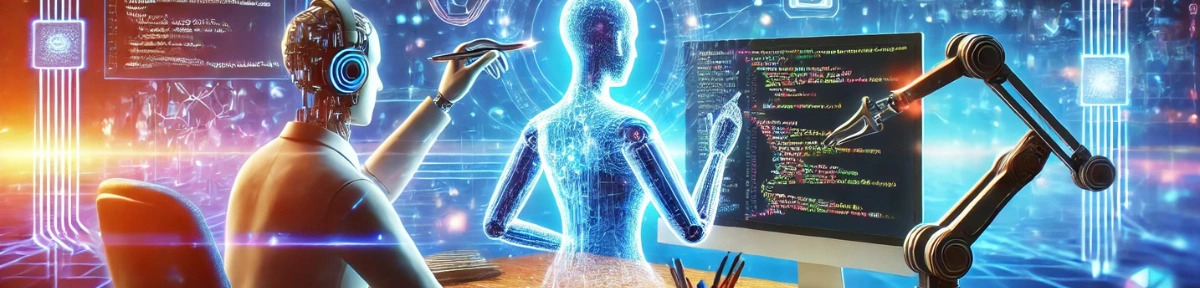
The future of software engineering and programming is more uncertain than that of customer assistance. According to Altman, AI has the potential to simultaneously empower and upend programmers.
The Optimistic View
Now, even novices can create websites, apps, or games by inputting natural language commands into AI-powered coding assistants. This makes software development more accessible, allowing small enterprises and entrepreneurs to create digital goods without the need for huge development teams. For some, AI is making everyone a potential programmer rather than displacing programmers.
The Pessimistic View
On the other hand, widespread automation might make fewer human programmers necessary. If AI can do simple coding, businesses might need fewer entry-level programmers. This has the potential to change the traditional tech career ladder, which uses entry-level positions as stepping stones to more senior ones.
The Productivity Paradox
Interestingly, some research indicates AI may slow down seasoned coders. AI can speed up ordinary coding, but it can also result in incorrect code that needs to be fixed. Senior programmers may have to do more debugging as a result. AI makes things more accessible for novices while making them more difficult for professionals, creating a paradox.
Sam Altman acknowledged that the conclusion is still up in the air. Human developers concentrate on higher-level creativity, design, and problem-solving, thus while the quantity of software occupations may decline, their breadth may increase.
Nursing: The Power of Empathy

Although there is uncertainty in technical roles, Altman said that one profession that is unlikely to be impacted by AI is nursing.
Why Nurses Are Irreplaceable
- Emotional Support: Patients frequently require empathy, assurance, and trust in addition to treatment.
- Human Judgment: Medical care often involves improvisation in uncertain circumstances, which is a challenge for algorithms.
- Physical Presence: It is impossible for technology to simulate the human touch, whether it is used to soothe a sick or a child.
Altman stressed that nurses’ profound human connection will continue to be crucial even if AI helps doctors with administrative or diagnostic duties.
Broader Implications
There is a similar resilience in other occupations that largely depend on empathy, such teaching, therapy, and caregiving. DeepMind CEO Demis Hassabis has also noted that while AI may improve certain roles, it cannot take the place of the qualities that make them distinctively human.
Microsoft and OpenAI Reshape Their Partnership: Toward a For-Profit Future and Global AI Expansion
A Dividing Line: Routine vs. Human-Centered Work
Altman’s remarks highlight a crucial boundary for the future of work:
- At Risk: Jobs with predictable, repetitive, and routine tasks.
- Safer: Jobs that rely on creativity, empathy, judgment, and complex social interactions.
According to this gap, workers who develop abilities that AI finds difficult to imitate will have the best chance of succeeding.
Geoffrey Hinton Warns AI Could Deepen Inequality and Cause Mass Unemployment
Preparing for an AI-Shaped Future
The shift that Altman talks about is not a distant prospect; it is already taking place. Governments, businesses, and employees must now get ready to adapt
Reskilling and Lifelong Learning
AI will require many workers to reskill as it changes sectors. This can entail switching from jobs that need a lot of repetition to ones that require more creativity, leadership, or interpersonal skills. Altman stressed the value of lifelong learning as a means of surviving in the modern economy.
Human-AI Collaboration
Altman recommended accepting AI as a collaborator rather than opposing it. Working together will yield the best results in many industries, with people using AI to increase efficiency while using their judgement, empathy, and vision where machines cannot.
Policy Challenges
Governments will come under increasing pressure to modify their educational systems, offer retraining, and reconsider their safety nets for those who have been displaced. The advantages of AI could concentrate within a small number of businesses and leave others behind if policy is not carefully considered.
Balancing Efficiency and Humanity
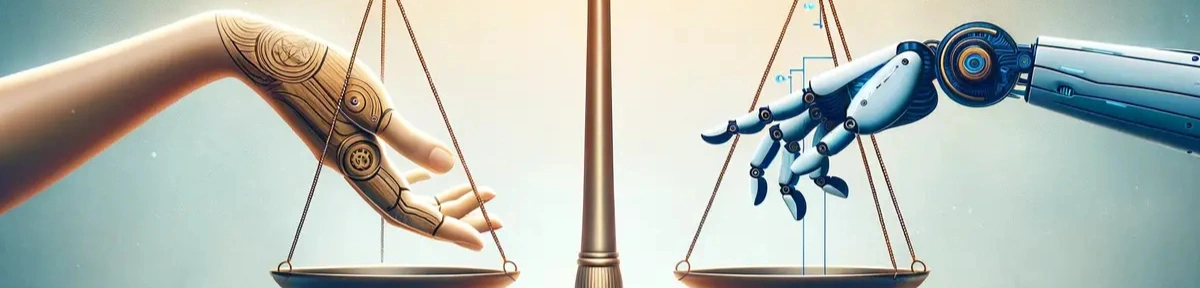
Sam Altman’s predictions also bring up a more profound query: to what extent should society prioritise efficiency at the expense of human labour? Businesses may profit from AI-driven productivity, but sectors run the risk of losing their human element if automation becomes too widespread.
Companies may use chatbots to save money in customer service, for example, but if customers feel alienated, their loyalty and trust may be damaged. AI may be able to create more code more quickly in programming, but without human supervision, creativity and responsibility may suffer.
Sam Altman hinted that the difficulty lies not in halting AI but rather in striking a balance between its advantages and the indispensable attributes of human labour.
Elon Musk’s xAI and Grok Chatbot Returns to Government Procurement List
Conclusion:
Sam Altman presents a warning about the future, not a paradise or a dystopia. It is obvious that routine jobs like customer service are at risk. Programming is in a precarious position, and how humans decide to include AI tools will determine its future. Nursing and other empathy-driven occupations, however, are safe because they rely on traits that machines cannot replicate.
The message is clear and urgent for workers: retrain, adapt, and capitalise on human strengths. The difficulty for organisations is to use AI ethically while striking a balance between productivity and human worth. Ensuring equitable distribution of opportunity in the AI-driven economy is a challenge for policymakers.
In the end, the tale of AI and work is not one of complete human replacement by robots. It’s about exploring the next frontier of teamwork, where people create the unpredictable and technology manages the predictable. The workplace of the future will be shaped more by that frontier than by any one job projection.