
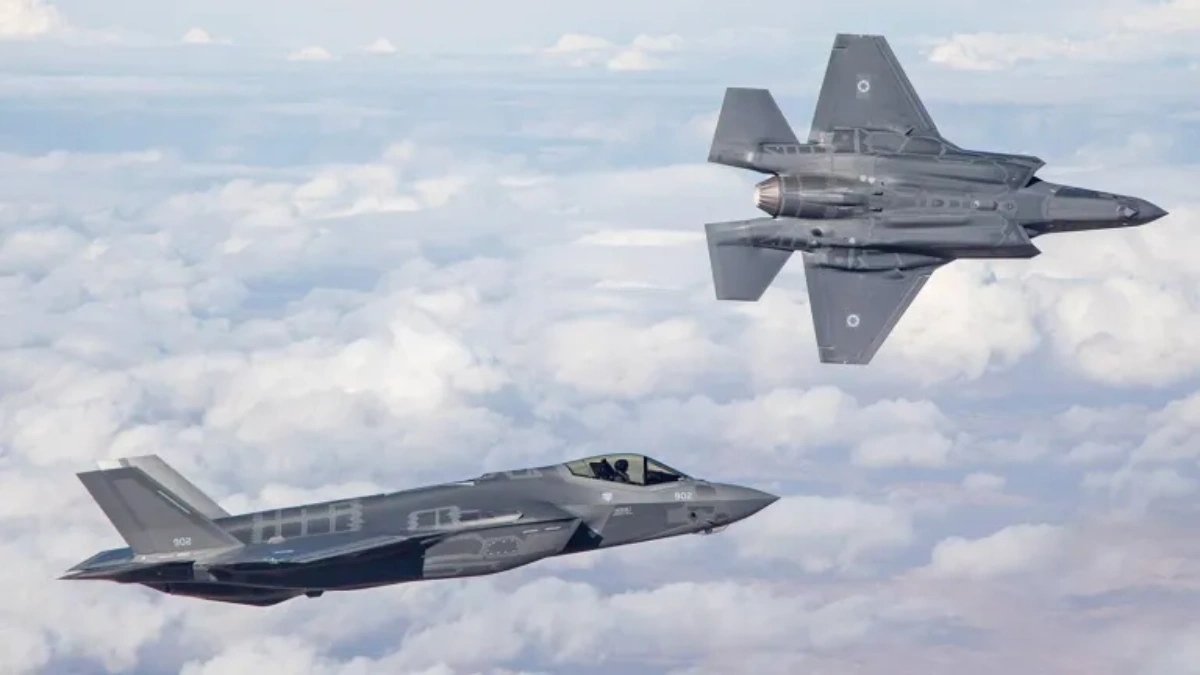
In recent days, publicly available flight tracking maps and military monitoring sites have shown elite U.S. Air Force F-35A Lightning II jets moving eastward across the Atlantic Ocean toward Europe and potentially the Middle East amid growing concerns over a possible conflict with Iran. These movements have drawn attention worldwide as geopolitical tensions between Washington and Tehran remain unusually high.
This blog explores what the shifting flight routes could mean, why the F-35A’s deployment is significant, and how this builds upon broader U.S. military posture changes in response to escalating Iran tensions.
What the Flight Maps Show
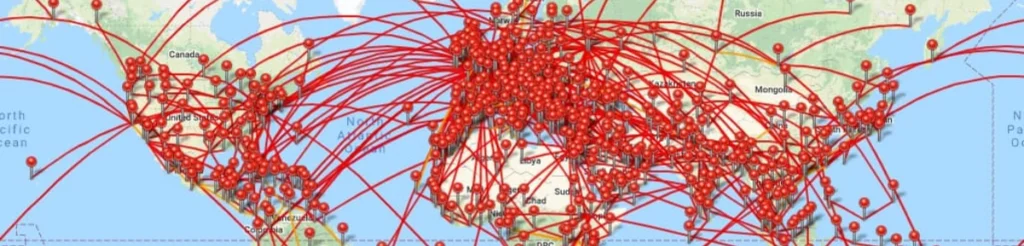
According to real-time tracking data highlighted in recent reports, a group of U.S. Air Force F-35A fighter jets previously operating in Puerto Rico were observed migrating eastward across the Atlantic. These flights were supported by aerial refueling tankers, indicating a long-range repositioning rather than routine training sorties.
The F-35A Lightning II is a fifth-generation stealth fighter designed for air superiority, precision strike, and intelligence roles. The fact that multiple units of this aircraft are making extensive trans-Atlantic flights has observers and analysts interpreting the movements as part of broad readiness and repositioning linked to rising tensions in the Middle East.
Why the F-35A Matters in This Context

The F-35A is one of the most advanced combat jets in the world, combining stealth technology with advanced sensors, networking capabilities, and precision strike potential. These attributes make it a centerpiece of U.S. airpower and a key asset for both deterrence and potential conflict.
Unlike older fighter platforms, the F-35A can operate deep in contested airspace while gathering and sharing battlefield data in real time. Its movement toward potential conflict zones usually signals a heightened readiness posture and may serve multiple strategic purposes:
- Deterrence: The deployment of high-end assets can signal to potential adversaries that the U.S. is serious about defense commitments and prepared for escalation.
- Force Projection: Moving advanced fighters closer to a region of tension reduces response time and increases operational flexibility.
Allied Assurance: Positioning sophisticated aircraft reassures U.S. partners of American commitment to security cooperation.
What Is Driving Tensions With Iran?
The backdrop to these flight movements is a sharp rise in U.S.–Iran tensions. Over the past year, relations have deteriorated due to a series of significant developments:
- Iran’s internal unrest: Protests and political instability inside Iran have triggered hardline responses from Tehran. Iranian officials have refused direct negotiations unless U.S. threats cease.
- U.S. political pressure: Recent statements from U.S. leadership have hinted at readiness to take decisive military actions if certain conditions are met.
- Military buildups: Beyond F-35 movements, the U.S. military has increased the presence of F-15E Strike Eagles and other assets in locations such as the Middle East, reflecting broader force reinforcement.
These elements have created an atmosphere where both regional allies and global observers worry that a miscalculation could spiral into open confrontation.
Broader U.S. Military Movements
The F-35 repositioning is not occurring in isolation. Multiple developments reflect a reinforced U.S. posture in the Middle East:
- The aircraft carrier USS Abraham Lincoln and several destroyers have been deployed to the Persian Gulf and surrounding waters, carrying significant firepower and support assets.
- Aerial military exercises involving fighter jets and allied aircraft are underway, indicating heightened readiness and interoperability drills with coalition forces.
- Additional deployments of fighter jets, including F-15E models, have been confirmed.
Collectively, these movements suggest that Washington is positioning a variety of assets to provide deterrence, protect American interests, and reassure allies in a volatile regional security environment.
Are These Movements a Prelude to War?

It is important to understand the difference between military repositioning and an immediate intent to engage in conflict. While flight maps showing F-35As moving east may appear alarming, military analysts caution that such movements can serve multiple strategic ends — many of which do not involve erupting into war.
Strategic Signaling and Deterrence
Part of the rationale behind deploying high-value assets like the F-35A could be to send a clear message of strength to Tehran and to reassure regional partners such as Israel, Gulf Cooperation Council members, and NATO allies that the U.S. remains committed to security and stability.
Publicly demonstrating the ability to rapidly reposition stealth fighters across continents is itself a form of deterrence — showing that options are available if escalation occurs.
Preparedness for Escalation
Another plausible explanation for repositioning is preparing for rapid escalation if diplomatic efforts fail or if a direct threat emerges. Placing forces closer to potential flashpoints reduces response time and ensures that tactical options remain viable under changing circumstances.
However, at present, there has been no official Department of Defense confirmation that war with Iran is imminent. Statements about force movements typically emphasize readiness and defensive posturing rather than offensive intent.
The Regional Response

Iran’s leadership has publicly declined direct negotiations, framing U.S. pressure as an attempt to influence internal affairs. Tehran’s refusals underscore the difficulty of de-escalating tensions through diplomacy at this stage.
Meanwhile, U.S. allies in the region and beyond are watching closely. Some supporters of U.S. efforts view the deployments as necessary to counter threats and maintain regional balance. Others express concern that a dramatic military buildup could provoke rather than prevent conflict.
What This Means for Global Security

The movement of F-35A fighters eastward as shown on flight maps reflects a broader moment of uncertainty in global geopolitics. It illustrates how military logistics, public data, and strategic communication all play roles in how nations prepare for and signal during times of tension.
Even short of war, increased U.S. military presence — especially involving advanced aircraft like the F-35A — adds layers of complexity:
- Commercial aviation: Increased military air activity may influence commercial airspace routing and passenger flight patterns in the region.
- Regional alliances: Countries adjacent to potential conflict zones must balance their diplomatic positions carefully.
- Global markets: Heightened geopolitical risk often impacts energy prices, investment sentiment, and international trade.
Conclusion
Flight tracking maps showing F-35A jets moving east are one of the most visible indicators yet of how the United States is repositioning its military assets amid rising fears of a conflict with Iran. The movements, supported by tanker flights and broader military buildup, underscore an environment of heightened strategic readiness.
While these developments do not prove an imminent war, they reflect how advanced military capabilities are deployed as part of deterrence strategies, alliance assurance, and operational preparedness. In volatile geopolitical landscapes, such repositioning is often tactical — recalibrating forces to be responsive to multiple possible futures rather than a predetermined path toward conflict.
As the situation evolves, continued monitoring of official defense announcements, satellite imagery, and flight data will be essential for understanding how global powers navigate the intersection of diplomacy and deterrence in the Middle East.