
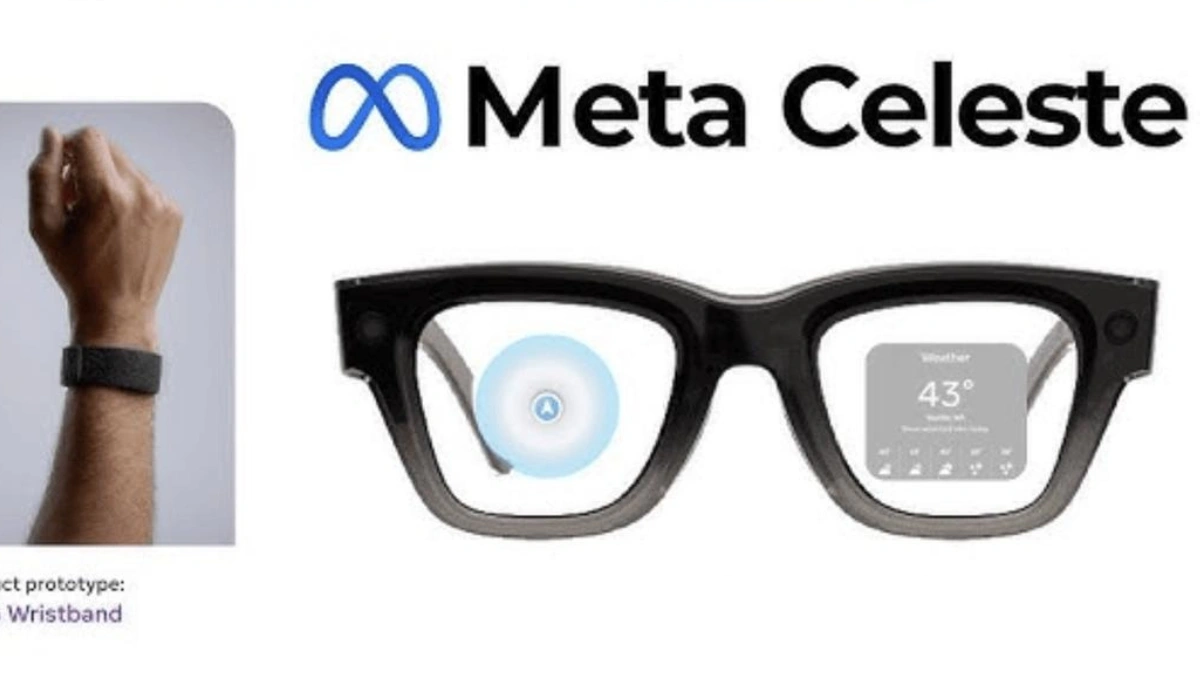
The parent company of Facebook and Instagram, Meta Platforms, is getting ready for one of its most significant hardware launches to date. The business will unveil Celeste, its first consumer-ready smart glasses with an integrated digital display, during its next annual Connect event.
This revelation represents Meta’s long-term dedication to wearable technology, augmented reality (AR), and artificial intelligence (AI) as a link between the real and virtual worlds, and goes beyond simply releasing a new gadget. The rollout coincides with a pivotal moment for the business, as it aims to demonstrate that its multibillion-dollar investments in AI and AR are becoming more tangible for customers.
Sam Altman’s Predictions on AI and Jobs: What the Future of Work Could Look Like
Celeste: Meta’s First Consumer-Ready Display Glasses

Internally code-named “Hypernova,” the Celeste smart glasses are anticipated to retail for approximately $800. Celeste will have an integrated augmented reality display in the right lens, in contrast to earlier Ray-Ban and Oakley partnerships.
The tiny display is made to provide simple digital interactions, such as alerts, reminders, messages, and notifications. Celeste introduces consumers to wearable screens in a discrete, useful format, which is a first step towards the widespread acceptance of augmented reality, even though it is not yet capable of immersive AR.
By adopting this methodical strategy, Meta is presenting Celeste as a fundamental product that will influence developer ecosystems and customer behaviour before more sophisticated devices, rather than as a completely immersive AR gadget.
Microsoft and OpenAI Reshape Their Partnership: Toward a For-Profit Future and Global AI Expansion
Meta’s Long-Term AR Vision

Mark Zuckerberg, the CEO of Meta, has stated time and time again that he thinks AR glasses will soon be just as necessary as smartphones. According to reports, Meta has spent more than $60 billion on its AR and AI businesses since 2020, demonstrating its commitment to being a leader in this field.
According to the business, smart glasses will be the first step towards “superintelligence,” a time when artificial intelligence (AI) systems will be able to outsmart humans and blend in with everyday life. Celeste is only the beginning; a fully comprehensive augmented reality experience is anticipated with the more sophisticated Orion headset, which is scheduled for release in 2027.
Building on Past Smart Glasses Efforts

Through collaborations with Oakley and Ray-Ban, Meta has already dabbled in wearable technology, releasing glasses with cameras, livestreaming capabilities, and a small amount of AI integration. With nearly two million units sold since 2023, Meta is among the few businesses in the smart glasses market to truly gain momentum with consumers.
Celeste, however, represents a substantial advancement. Celeste wants to further augment reality capabilities, but at a more controlled, user-friendly level than the ambitious Orion prototype that was unveiled last year. This is in contrast to its predecessors, which mostly relied on fashion and social network integration.
U.S. Supreme Court Backs Trump’s Immigration Raids in Southern California
Features: Display, Gesture Control, and Fashion Partnerships
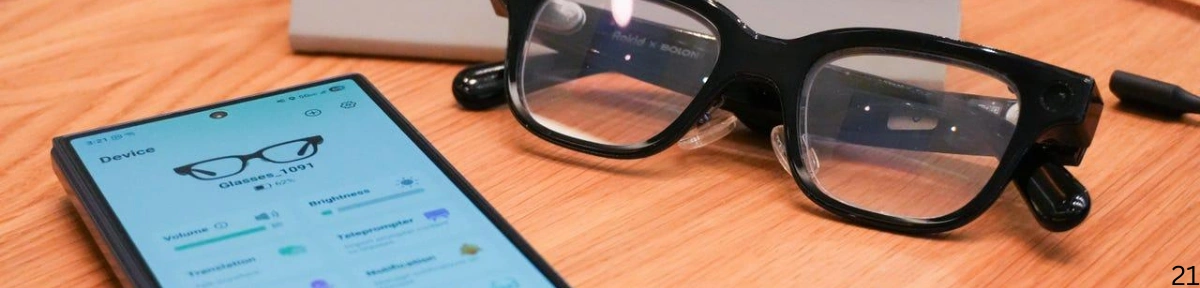
For digital updates in real time, the Celeste glasses will have a tiny augmented reality display. According to analysts, this understated design was done on purpose to enable Meta to test uptake and usability before pursuing truly immersive experiences.
It is also rumoured that Meta will release a wristband controller that will enable users to operate the glasses with hand motions. The hands-free, intuitive interaction that the business envisions as a defining characteristic of future AR ecosystems is highlighted by this functionality.
In order to attract fashion-forward customers, Meta might work with Prada to develop the spectacles. Prada’s striking, thick-framed design may support the hardware and give Celeste a posh appearance and feel, matching Meta’s hardware to upscale fashion trends.
Geoffrey Hinton Warns AI Could Deepen Inequality and Cause Mass Unemployment
The Pricing Dilemma: $800 and a Niche Market

Compared to Meta’s Ray-Ban glasses, which start at $299, Celeste is anticipated to retail for about $800 upon launch. This establishes Celeste as a high-end product, but it also calls into question its widespread use.
IDC’s Jitesh Ubrani, an industry analyst, warned that the glasses would feel heavy and be more appealing to early adopters. He estimated that first sales might only amount to a few hundred thousand units.
However, even modest sales could help Meta achieve its larger objectives. The business wants to create an ecosystem of apps and experiences that will pave the way for more sophisticated devices by making Celeste available to developers and tech aficionados.
Elon Musk’s xAI and Grok Chatbot Returns to Government Procurement List
Strategic Importance: Developers as the Key to AR Growth

Long-term success for Meta with Celeste depends more on developer involvement than on short-term customer demand. Meta intends to make a software development kit (SDK) available at launch, allowing other developers to make apps for the glasses.
This approach is reminiscent of the early stages of the smartphone revolution, when device value was determined by app ecosystems. Meta wants to scale creativity and utility by empowering developers now so that users will have access to a vast library of augmented reality applications when more sophisticated products like Orion are released.
Trump Administration’s Sweeping Visa Review Raises Alarms Across the U.S.
Balancing Innovation With Controversy

Celeste is a significant technological advancement, yet criticism still surrounds Meta’s reputation in general. The business is frequently criticised for platform responsibility and child safety.
Whistleblower reports claimed that Meta previously dissuaded internal study into the negative effects of virtual reality and let its AI chatbots engage in inappropriate interactions with youngsters. Meta updated its policy to strengthen safety and tighten restrictions in response to public outcry.
The launch of Celeste at the right time highlights Meta’s dual task of advancing innovation while avoiding moral and legal ambiguity. The level of public trust will determine whether or not customers accept the company’s AR vision.
Sam Altman on OpenAI’s Future: Why He May Not Be the Right CEO if OpenAI Goes Public
Comparing Celeste to Competitors

For many years, the smart glasses business has been a difficult area for the major IT companies. Once heralded as revolutionary, Google Glass was not adopted by the general public. Instead of focussing on lightweight AR glasses, Apple has turned its attention to its $3,499 Vision Pro headset, which aims to provide a mixed reality experience.
In this regard, Meta’s Celeste falls somewhere in the middle: more ambitious than simple camera-enabled wearables, less expensive than Apple’s Vision Pro, and more useful than Google’s initial efforts. It remains to be seen whether this middle route turns out to be the sweet spot.
OpenAI Launches GPT-5: India Positioned as Key Market in Global AI Push
What Celeste Means for the Future of AR

Celeste’s launch focuses more on laying the groundwork for AR’s future development than it does on achieving instant market dominance. The item offers:
- Consumer exposure to lightweight AR displays.
- Chances for developers to test out AR applications.
- A testing ground for gesture-based controls, fashion collaboration, and hardware integration.
In order to avoid the mistakes made by early AR pioneers and maintain customer interest before its more ambitious releases, Meta plans to pace its rollout and concentrate on slow adoption.
Conclusion:
The introduction of the Celeste smart glasses by Meta at Connect marks a strategic turning point rather than just a product launch. Celeste embodies the company’s effort to introduce customers to augmented reality gradually through its low-key AR display, gesture-based controls, and hints of luxury design.
The glasses serve a greater function, drawing developers, gauging consumer interest, and solidifying Meta’s position as the front-runner in wearable augmented reality technology, even though their high price and niche usage may restrict their short-term success.
Celeste serves as a stepping stone for Meta—a well-considered action that links the company’s vision of the AI-driven, immersive digital future of the future with the consumer reality of today.