
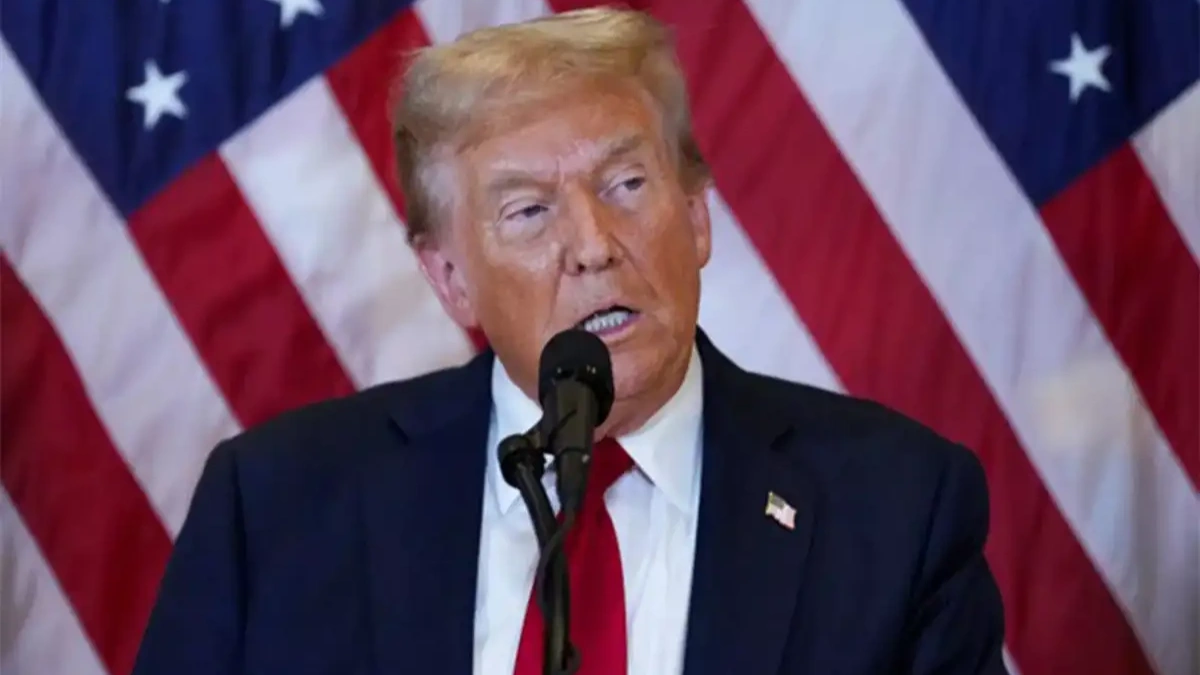
Global financial markets are extremely sensitive to geopolitical events, and few developments have captured investor attention recently like the ongoing Iran war. When former U.S. President Donald Trump made a major announcement regarding the conflict—signaling a temporary pause in military action and hinting at possible negotiations—it sent shockwaves across global markets.
This announcement is now being viewed as a potential turning point not just in the geopolitical landscape, but also for the stock market. Investors, analysts, and policymakers are closely watching how this situation unfolds, as it could reshape market trends in the coming months.
What Did Trump Announce?

In a surprising move, Donald Trump announced a temporary pause in military strikes on Iran, indicating that diplomatic talks were underway. The announcement came at a critical time when tensions were escalating, and fears of a prolonged war were weighing heavily on global markets.
This shift in tone—from aggressive military action to possible negotiation—immediately changed investor sentiment. Markets, which had been under pressure due to uncertainty, responded positively to the possibility of de-escalation.
According to recent reports, the announcement led to a sharp rally in U.S. stock markets, with major indices gaining over 1%.
Immediate Market Reaction

The stock market reaction was swift and significant:
- The Dow Jones Industrial Average surged by over 600 points
- The S&P 500 and Nasdaq also posted strong gains
- Oil prices dropped sharply after previously rising due to war fears
This response highlights a key principle of financial markets: uncertainty drives fear, while clarity drives confidence.
Investors had been pricing in the worst-case scenario—a prolonged conflict disrupting global energy supply. Trump’s announcement temporarily reduced those fears, leading to a “risk-on” sentiment where investors returned to equities.
Why This Could Be a Turning Point
1. Shift from War to Diplomacy
Markets hate uncertainty more than bad news. A prolonged war creates unpredictable outcomes, including:
- Rising oil prices
- Supply chain disruptions
- Inflation spikes
By signaling a move toward diplomacy, Trump introduced the possibility of stability, which is highly favorable for markets.
2. Oil Prices and Inflation Relief
One of the biggest concerns during the Iran conflict has been oil supply disruption, especially due to tensions around the Strait of Hormuz, a key global shipping route.
Before the announcement:
- Oil prices surged significantly
- Inflation fears increased
After the announcement:
- Oil prices dropped by nearly 10%
- Pressure on inflation eased
Lower oil prices are crucial because they:
- Reduce transportation and production costs
- Ease inflation
- Support consumer spending
All of these factors are positive for stock markets.
3. Investor Psychology and Market Sentiment
The stock market is not just driven by numbers—it’s driven by sentiment.
Trump’s announcement created a psychological shift:
- From fear → optimism
- From selling → buying
- From defensive assets → growth stocks
This kind of sentiment reversal often leads to short-term rallies and can even trigger longer-term bullish trends if sustained.
But Is the Rally Sustainable?
While the market reaction has been positive, experts caution that the situation remains fragile.
1. Temporary Pause, Not a Resolution
The announcement only confirmed a temporary halt in strikes, not a permanent ceasefire. If tensions escalate again, markets could quickly reverse gains.
2. Iran’s Response Remains Uncertain
Reports suggest that Iran has denied ongoing negotiations, which adds another layer of uncertainty.
If diplomatic talks fail, the risk of renewed conflict could trigger:
- Another oil price spike
- Stock market volatility
- Global economic instability
3. Energy Market Disruptions Still Exist
Even with the pause, the damage to energy infrastructure and supply chains has already been done.
- Global oil supply remains tight
- Energy markets are still volatile
- Inflation risks have not completely disappeared
Analysts warn that even if the war ends, economic aftershocks could continue for months.
Historical Perspective: Markets and War

History shows that geopolitical conflicts often cause short-term volatility but not long-term collapse.
According to market data:
- Major global conflicts typically lead to initial sell-offs
- Markets tend to recover once uncertainty reduces
- Long-term growth trends remain intact
This suggests that while the Iran war may create turbulence, it is unlikely to permanently derail the stock market.
Sector-Wise Impact
1. Energy Sector
- Oil companies may face volatility due to fluctuating prices
- Short-term declines seen as oil prices drop
2. Technology Sector
- Likely to benefit from improved sentiment
- Growth stocks perform well in stable environments
3. Defense Sector
- Gains during conflict periods
- May see pullback if tensions ease
4. Commodities (Gold)
- Typically rise during uncertainty
- Fell slightly after the announcement as risk appetite returned
Global Market Implications

This isn’t just a U.S. story—the impact is global.
- European markets rebounded after the announcement
- Asian markets showed positive momentum
- Emerging markets gained from improved risk appetite
The interconnected nature of global finance means that any shift in U.S. foreign policy can influence markets worldwide.
What Investors Should Do Now

1. Stay Updated
Geopolitical events are evolving quickly. Investors should track:
- Official announcements
- Oil price movements
- Global economic indicators
2. Avoid Panic Decisions
Market volatility is normal during such events. Long-term investors should avoid emotional reactions.
3. Diversify Portfolio
A diversified portfolio helps manage risk during uncertain times.
4. Watch Key Indicators
- Oil prices
- Inflation data
- Federal Reserve policies
These factors will determine whether the current rally continues.
Conclusion
Donald Trump’s announcement regarding the Iran war has clearly acted as a short-term catalyst for the stock market, triggering a strong rally and improving investor sentiment.
However, calling it a definitive turning point may be premature.
The situation remains fluid, and the future direction of markets will depend on:
- Whether diplomatic talks succeed
- Stability in oil prices
- Global economic conditions
For now, the markets have reacted with optimism—but as history shows, geopolitical risks can return just as quickly as they fade.
Investors should remain cautious, informed, and prepared for continued volatility in the weeks ahead.