
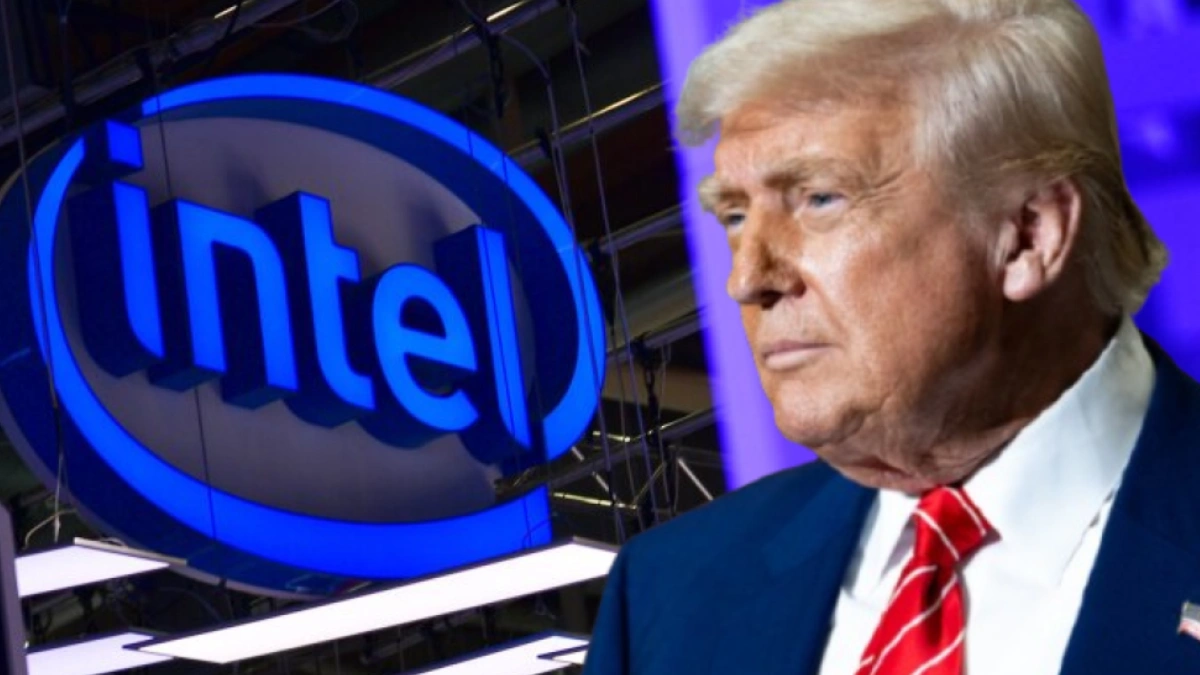
A historic $8.9 billion investment in Intel Corporation has been announced by the U.S. government, demonstrating Washington’s stead fastest commitment to reviving the US semiconductor sector to date. In a time of escalating technical competition with China, the agreement, which was jointly announced by Intel and the administration of President Donald Trump, is a calculated attempt to strengthen national security while lowering reliance on foreign supply chains.
The transaction buys 433.3 million shares of Intel for $20.47 a share, giving the U.S. government a 9.9 percent equity stake in the company. The action represents a significant change in Washington’s willingness to collaborate with the private sector in order to gain leadership in vital technologies, even though the share will remain passive—no board representation or direct control powers.
Meta Prepares to Launch Celeste Smart Glasses: A Glimpse Into the Future of AR and AI
Why Semiconductors Matter: Economic and Security Stakes
Modern digital life is built on semiconductors. Smartphones, computers, automobiles, medical devices, defence systems, and, more and more, the artificial intelligence (AI) platforms influencing the world economy are all powered by them. Since a large portion of the world’s advanced semiconductor production is centred in East Asia, supply chain disruptions and escalating geopolitical tensions have highlighted America’s vulnerability in recent years.
Assuring a steady domestic semiconductor supply has become a national security necessity for American officials, not just an economic one. Washington’s resolve to maintain cutting-edge research, production, and innovation in the United States is demonstrated by the $8.9 billion investment in Intel.
Trump Floats National Emergency for Washington as Tensions With City Leaders Escalate
Backed by CHIPS and Secure Enclave Funding

Two significant federal programs aimed at promoting innovative manufacturing are tapped into by the investment:
- CHIPS and Science Act Grants: Unallocated funds under the CHIPS Act, the mainstay of American attempts to restore semiconductor production capacity, account for $5.7 billion of Intel’s investment.
- Secure Enclave Program: This defense-focused program provides an additional $3.2 billion to promote safe, reliable microelectronics that are critical to national intelligence and defence.
Federal funding for Intel has now totalled $11.1 billion, including $2.2 billion from previous CHIPS awards. Additionally, if Intel’s ownership over its foundry division drops below 51 percent, the government can buy an extra 5 percent of the company’s shares under a five-year warrant that it obtained.
Sam Altman’s Predictions on AI and Jobs: What the Future of Work Could Look Like
Intel’s Expansive Commitment to U.S. Manufacturing

Intel’s investment in facilities in the United States has been enormous. The business has invested $108 billion in capital projects and $79 billion in research and development over the last five years, the majority of which has been done in the US.
Key highlights include:
- Arizona Mega-Fab: The most cutting-edge semiconductor process technology ever created in the United States will be on display at Intel’s newest fabrication facility in Arizona, which is anticipated to start high-volume production later this year.
- National Footprint: Multiple states are home to Intel’s U.S. operations, which support America’s high-tech manufacturing ecosystem and generate tens of thousands of high-skilled jobs.
Intel’s $100 billion strategy to expand its domestic manufacturing base includes this expansion, which will guarantee that the United States has the capacity and know-how to lead in next-generation chip technology.
America’s Healthcare System Faces a Breaking Point: Workforce Exodus and Urgent Solutions
Leadership at Intel: Tan’s Vision for Renewal

Lip-Bu Tan, the CEO of Intel, who took over in March, called the government investment a “turning point for American technology.” His approach has focused on:
- Strengthening Intel’s Balance Sheet – Restoring financial discipline and resilience.
- Revitalizing Engineering Culture – Rebuilding the company’s reputation for innovation.
- Executing Expansion Projects – Positioning Intel at the centre of the global semiconductor race.
“As the only semiconductor company that conducts state-of-the-art research and development and manufacturing in the United States, Intel is steadfastly dedicated to guaranteeing that the most cutting-edge technologies in the world are produced in the United States,” Tan stated in the statement.
Ivy League Dreams: Why These Eight U.S. Universities Define Academic Prestige
Commerce Department: A Historic Partnership

The agreement was referred to as a “historic partnership” by Commerce Secretary Howard Lutnick, who emphasised the administration’s goal of linking industrial policy to national defence interests.
“We have a straightforward objective: to strengthen national security and maintain U.S. leadership in artificial intelligence,” Lutnick said. Everything from defence systems to cloud computing depends on semiconductors. Dependency on foreign suppliers is not something we can afford.
One of the most audacious U.S. industrial initiatives in decades is the linkage of private-sector innovation with federal funding.
Microsoft and OpenAI Reshape Their Partnership: Toward a For-Profit Future and Global AI Expansion
Industry Leaders Welcome the Move

Leaders from all throughout the technology industry have praised the announcement.
- Satya Nadella (Microsoft): Called Intel’s expansion “a defining moment for American ingenuity.”
- Michael Dell (Dell Technologies): Said the deal would deliver “a strong and resilient U.S. semiconductor industry.”
- Enrique Lores (HP): Described the investment as “integral to future innovation.”
- Matt Garman (AWS): Highlighted semiconductors as “the bedrock of every AI technology and cloud platform.”
These endorsements highlight the widespread belief in Silicon Valley and elsewhere that America’s innovation economy and digital infrastructure would be in jeopardy in the absence of strong domestic chip manufacture.
Strategic Context: The U.S.-China Tech Rivalry
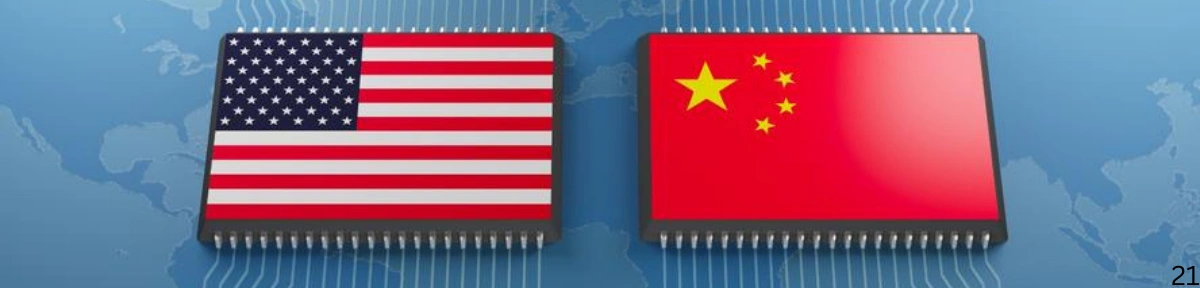
The Intel agreement also shows how committed Washington is to maintaining its technology lead over China. Beijing has invested billions in its own semiconductor aspirations in an effort to lessen dependency on American technology.
Washington’s stakes are clear: America’s competitive advantage in advanced manufacturing, defence technologies, artificial intelligence, and quantum computing might be undermined in the absence of safe domestic supply chains. By collaborating with Intel, the administration is guaranteeing that the most cutting-edge production and research capabilities continue to be under American control.
The action also aligns with larger initiatives to:
- Reshore Manufacturing: Reduce dependence on overseas suppliers vulnerable to geopolitical shocks.
- Protect National Security: Guarantee trusted supply of chips for defense and intelligence.
- Support Economic Growth: Create high-paying jobs and stimulate regional economies tied to semiconductor clusters.
Harvard vs. Trump: The $2.6 Billion Fight Over Funding and Freedom
Balancing Public and Private Roles

Even if the US government owns a sizable portion of Intel, it will continue to be a passive investment. In order to maintain Intel’s autonomy as a leader in the private sector, there won’t be any direct influence over the board or day-to-day operations.
In the event that Intel’s foundry division, which produces chips for outside customers, ever loses majority control, Washington will still have clout thanks to the five-year warrant for extra shares. The government’s desire to preserve Intel’s standing as a reliable source for American defence and technological requirements is reflected in this clause.
Donald Trump’s Crypto Revolution: From Sceptic to Bitcoin Superpower
The Future of America’s Semiconductor Strategy
The Intel collaboration is only one aspect of a larger picture. Tens of billions of dollars in incentives for chipmakers have already been made available by the CHIPS and Science Act, and new research centres are being built nationwide to promote the science of next-generation semiconductors.
Among the top priorities going forward are:
- Scaling Production – Ensuring American factories are able to manufacture chips on par with their Asian counterparts.
- Workforce Development – Training engineers and technicians for a rapidly growing industry.
- Supply Chain Resilience – Securing raw materials and components essential for chip production.
- Global Alliances – Working with allies in Europe and Asia to create a secure, diversified semiconductor network.
This national plan is anticipated to be anchored by Intel’s expansion, while other chipmakers such as TSMC and Samsung also increase their U.S.-based initiatives.
Geoffrey Hinton Warns AI Could Deepen Inequality and Cause Mass Unemployment
Conclusion:
The $8.9 billion that the US government owns in Intel is more than just an investment in one business. It is a calculated wager on America’s future that links technical leadership, national security, and economic competitiveness.
Washington is demonstrating its commitment to keeping the United States at the forefront of advanced computers, artificial intelligence, and semiconductors by fusing public investment with private innovation. The collaboration gives Intel the tools and support it needs to carry out one of its most ambitious expansions to date.
The agreement is significant because it represents a daring attempt to guarantee that the most cutting-edge technology is not only created in America but also manufactured there, as the competition for supremacy in semiconductors heats up globally.