
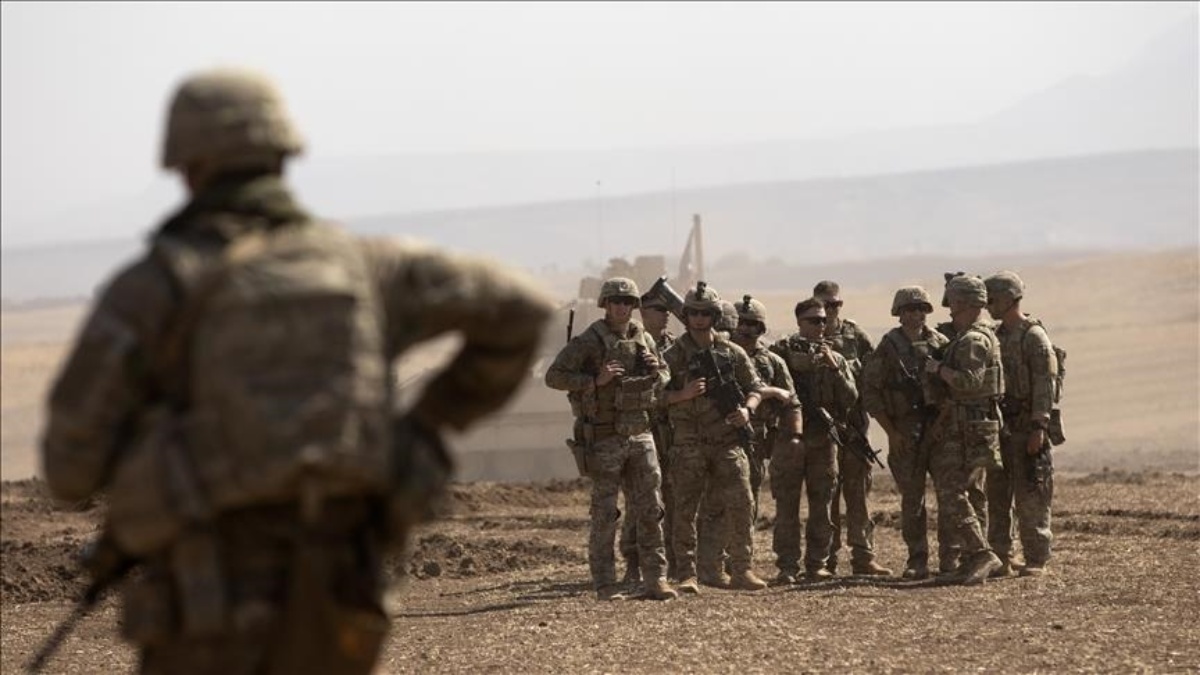
The possibility of the United States deploying thousands of troops to Iran has once again brought global attention to one critical question: What would a ground war in Iran actually look like?
While modern warfare has evolved with advanced technology, drones, and cyber capabilities, history offers a powerful lesson. The last major ground invasion involving Iran occurred during the Iran–Iraq War, a brutal and prolonged conflict that reshaped the Middle East—and serves as a warning for any future military campaign.
Rising Tensions: Why Troop Deployment Is Being Discussed
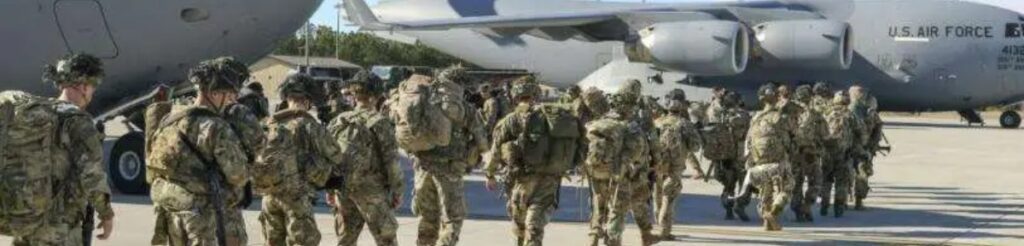
Recent developments suggest a significant escalation in tensions between the United States and Iran. Reports indicate that U.S. military strategy may include deploying ground forces alongside ongoing air and naval operations.
Current military actions have already intensified the situation, with thousands of strikes carried out and increased troop mobilization in the region.
Analysts warn that even a limited ground operation in Iran would be highly complex, potentially triggering large-scale retaliation and regional instability.
But to truly understand the risks, we need to look back.
The Last Ground Invasion of Iran: A Historical Overview

The last time Iran faced a full-scale ground invasion was in 1980, when Iraq, led by Saddam Hussein, launched a surprise attack.
The conflict quickly escalated into the Iran–Iraq War, one of the longest conventional wars of the 20th century, lasting nearly eight years and resulting in catastrophic losses.
Key Facts:
- Duration: 1980–1988
- Casualties: Over 1 million deaths
- Combatants: Iran vs Iraq
- Nature: Trench warfare, chemical weapons, human wave attacks
Phase 1: Iraq’s Initial Invasion
In September 1980, Iraq launched a coordinated air and ground assault on Iran. The attack began with airstrikes targeting Iranian military infrastructure, followed by a ground invasion into border regions.
Iraq’s goal was to:
- Seize oil-rich territories
- Weaken Iran’s revolutionary government
- Establish regional dominance
Initially, Iraq made gains—but things quickly changed.
Phase 2: Iran’s Resistance and Counterattack
Despite early setbacks, Iran mobilized its forces and began pushing back Iraqi troops. One of the defining features of Iran’s defense was its willingness to sustain heavy casualties to regain territory.
Operations like Operation Tariq al-Quds demonstrated Iran’s aggressive counter-strategy. Thousands of troops were deployed in intense battles, often relying on sheer numbers and determination.
Iran gradually regained lost ground and forced Iraqi troops into defensive positions.
Phase 3: Stalemate and Attrition
As the war dragged on, both sides became locked in a deadly stalemate. The conflict turned into a war of attrition, marked by:
- Trench warfare similar to World War I
- Massive human losses
- Economic exhaustion
- Use of chemical weapons
Neither side could achieve a decisive victory, and the war became increasingly destructive.
Phase 4: Final Offensives and Ceasefire
In 1988, Iraq launched a series of powerful offensives known as the Tawakalna ala Allah Operations, reclaiming lost territories and pushing into Iranian land.
Faced with mounting losses and international pressure, Iran agreed to a ceasefire, bringing the war to an end.
Lessons from the Iran–Iraq War
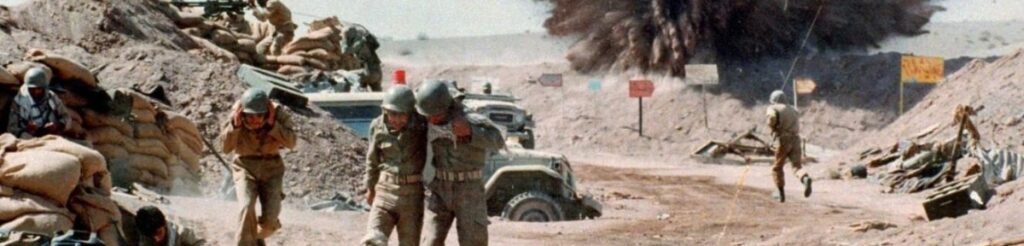
The Iran–Iraq War provides critical insights into what a modern ground invasion of Iran might look like:
1. Geography Favors Defense
Iran’s terrain—mountains, deserts, and vast distances—makes it extremely difficult for invading forces to advance quickly.
2. High Casualties Are Likely
The previous conflict resulted in over a million deaths, highlighting the human cost of ground warfare in the region.
3. Strong National Resistance
Iran demonstrated a willingness to endure prolonged conflict, mobilizing both military forces and civilians.
4. War Can Last for Years
What was expected to be a short war turned into an eight-year conflict.
How a Modern Invasion Would Be Different

While history provides context, today’s battlefield is very different.
Advanced Technology
Modern warfare includes:
- Drones
- Precision missiles
- Cyber warfare
Recent conflicts show the heavy use of airstrikes and missile systems before any ground engagement.
Regional Escalation Risk
A U.S. ground invasion could trigger responses from:
- Iranian proxy groups
- Allied militias across the Middle East
This could expand the conflict far beyond Iran’s borders.
Global Impact
Iran controls key strategic areas like the Strait of Hormuz, through which a significant portion of global oil flows. Disruptions here could impact global energy markets.
Why Experts Call It “High Risk”
Military analysts widely agree that a ground invasion of Iran would be one of the most challenging operations in modern history.
Reasons include:
- Iran’s large population and military strength
- Difficult terrain
- Strong internal defense systems
- Potential for prolonged guerrilla warfare
Even a limited operation could escalate into a full-scale regional war.
Political and Strategic Challenges
Beyond the battlefield, a ground invasion would face major political hurdles:
- Lack of international support
- Strain on military resources
- Domestic pressure in the U.S.
- Risk of long-term occupation
Recent reports also highlight internal challenges within U.S. decision-making structures during the ongoing conflict.
Could History Repeat Itself?

History doesn’t repeat exactly—but it often rhymes.
The Iran–Iraq War showed that:
- Quick victories are unlikely
- Resistance can be fierce
- Costs can spiral beyond expectations
A modern invasion may start differently—but it could still end in a prolonged and costly conflict.
Conclusion
The idea of the United States sending thousands of troops to Iran is not just a military question—it is a geopolitical gamble with global consequences.
The last time Iran faced a ground invasion, the result was nearly a decade of war, massive casualties, and no clear winner.
Today, with more advanced weapons and deeper global interconnections, the stakes are even higher.
If history is any guide, a ground war in Iran would not be quick, easy, or limited. Instead, it could become one of the most complex and consequential conflicts of the modern era.