

Many people thought Elon Musk’s announcement that SpaceX’s Starship will be built with 42 engines was just a pragmatic technical choice. Redundancy is essential for safety because rockets that can transport big payloads to Mars and beyond need a lot of thrust. However, science fiction fans recognised something else almost away: 42 is not a random number.
It is a clear reference to The Hitchhiker’s Guide to the Galaxy, the renowned science fiction series by Douglas Adams. As “the Answer to the Ultimate Question of Life, the Universe, and Everything,” 42 is playfully portrayed in the story. Once again, Musk has crossed the boundaries between technology, pop culture, and fantasy by incorporating this cultural allusion into the most ambitious spacecraft in the world.
SpaceX Starship Test Flight: A Milestone Toward Reusable Space Travel
The Origin of “42” in Science Fiction

In the 1979 book by Douglas Adams, a species of extremely intelligent creatures creates a supercomputer known as Deep Thought. What is the ultimate meaning of life, the cosmos, and everything? This is the question it seeks to address.
After seven and a half million years of incessant labour, Deep Thought finally comes up with the simple response, 42.
There is a twist, though. It never really knew what the original question was, the computer explains. We need to build a better computer to find out that. In the end, that computer is Earth itself, created as a component of a massive cosmic experiment to find the real Ultimate Question.
Unfortunately, the bureaucratic alien species known as the Vogons destroy Earth’s program before it can finish. Humanity is left with a perplexing solution but no accompanying query—a ridiculous yet incredibly humorous satire on the pursuit of meaning.
42 became a cultural icon thanks to its humorous and philosophical fusion, and it is now utilised in literature, science, and technology as a light-hearted reminder that certain problems may never have straightforward answers.
DHS Proposes Visa Rule Changes: Fixed Stays for Students, Exchange Visitors, and Foreign Media
Elon Musk’s Cultural Nod

Pop culture is something Elon Musk has always included into his work. From using a mannequin named “Starman” to launch a Tesla Roadster into orbit to naming Tesla models in a way that reads “S3XY,” he has continuously combined fun symbolism with mechanical ambition.
Musk is going beyond merely fulfilling technical specifications with the selection of 42 engines for Starship. In addition, he is hinting to fans of The Hitchhiker’s Guide to the Galaxy that the future of space exploration lies in philosophy, storytelling, and imagination rather than merely hardware.
For fans of science fiction, this selection serves as a reminder that invention frequently starts as a dream, sparked by works of literature, movies, and fiction that push the limits of human creativity. In addition to being a machine, Starship is a part of a story that links pop culture to the most audacious goals of humanity.
The Engineering Logic Behind 42 Engines
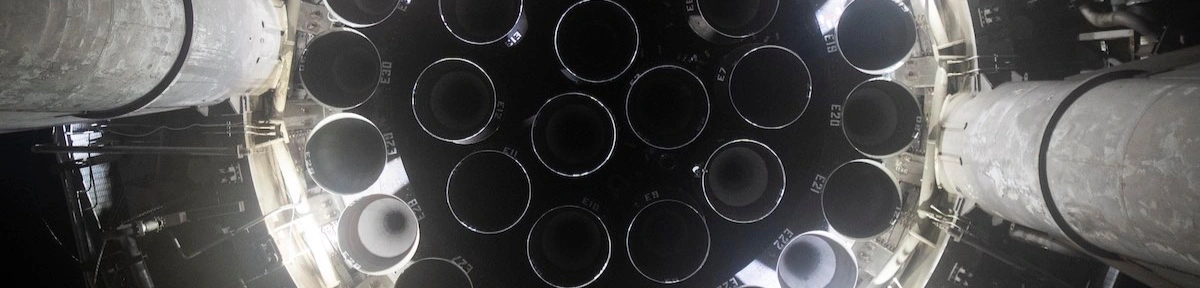
The number 42 has strong cultural connotations, but Starship’s engine count is also a technological choice with safety and physics considerations. This is the reason:
- Unprecedented Thrust: Starship needs a lot of liftoff force to transport heavy goods to the Moon, Mars, and possibly beyond. This cannot be produced by a single engine; instead, several engines must cooperate.
- Redundancy for Safety: Rockets are dangerous by nature. With 42 engines, engineers make sure the rocket can still accomplish its goal even if a few of them fail. The system is more resilient because of this redundancy.
- Scalability: SpaceX can modify Starship for a range of missions, from interplanetary transport to satellite placement, thanks to its several engines.
- Symbolism Meets Functionality: Without sacrificing technical design, the number’s alignment with a well-loved cultural allusion offers a layer of meaning.
In this sense, Starship becomes both utilitarian and poetic—a device designed for Mars that also subtly parodies life’s complexities.
Pop Culture and Space Exploration
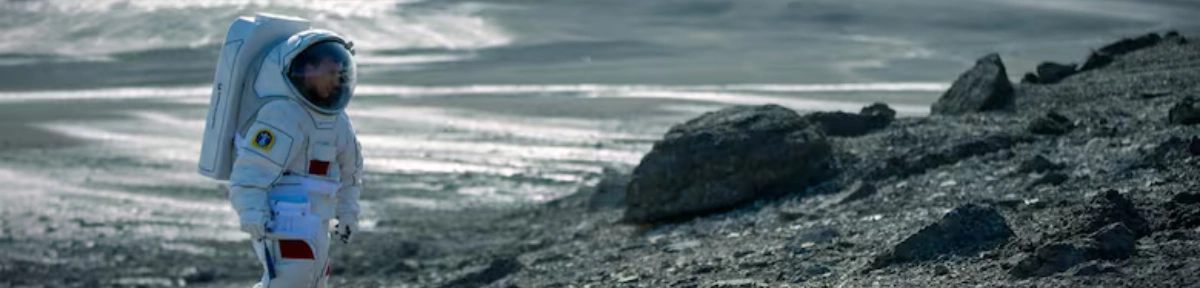
Elon Musk’s use of “42” exemplifies a developing trend in which space exploration involves stories that pique the public’s interest in addition to technology. Historical space initiatives, like the Apollo missions, attracted international attention as symbols of human potential and advancement.
Likewise, Musk’s light-hearted references to science fiction aim to:
- Engage the Public: A cultural symbol like 42 invites people who might not normally follow rocket science to take interest.
- Connect Past and Future: By linking Starship to a well-loved novel, Musk positions modern space travel as part of a larger cultural journey.
- Highlight Philosophy: Beyond rocket fuel and engine physics, the question of why we travel to space is important. Musk’s allusion serves as a reminder that exploration is linked to people’s never-ending quest for purpose.
Philosophy Meets Engineering

Douglas Adams posed thought-provoking queries about life through comedy. Elon Musk accomplishes a similar thing with Starship. His design decisions show that space travel is a philosophical endeavour in addition to a technical one.
The 42 engines on a starship represent:
- Humanity’s Curiosity: Humanity frequently seeks research without knowing exactly what it will discover, much like Deep Thought provided an answer without posing a question.
- Imagination in Science: Musk demonstrates that innovation, not just numbers, is what drives development by fusing pop culture with practical technology.
- Purpose Beyond Earth: In addition to being machinery, rockets represent humanity’s ambition to reach new heights and look for answers among the stars.
Starship as a Cultural Artifact

From this perspective, Starship is more than just the most potent rocket ever constructed. It is a cultural relic that combines humour, philosophy, and engineering. With its 42 engines, Starship might come to represent humanity’s quest for purpose beyond Earth, much like the Apollo missions did during the Cold War.
The rocket conveys a message: despite the fact that the ultimate issue is yet unsolved, humanity dares to dream, laugh at the ridiculousness of life, and aim for the stars.
U.S. Government Publishes GDP Data on Blockchains: Trump Administration’s Bold Crypto Endorsement
Conclusion:
At first glance, it appears that spreadsheets, calculations, and engineering necessity led to the decision to design Starship with 42 engines. On closer examination, though, it also alludes to a more significant theme: the human search for solutions.
Musk makes sure that Starship serves as a bridge between science and culture in addition to being a tool for space travel by citing The Hitchhiker’s Guide to the Galaxy. It serves as a reminder that if we are to fully comprehend our place in the world, we must bring philosophy, humour, and imagination along with our technology.
Starship’s 42 engines are a technological marvel and a cultural allusion as humanity gets ready for interplanetary travel; they suggest that 42 might be the secret to life, the universe, and everything.