

The United States recently moved a fleet of B-1 bombers away from RAF Fairford in the United Kingdom after intelligence raised concerns about a possible Iranian drone attack against the military facility. The development highlights how rapidly modern warfare is changing, with relatively inexpensive drones capable of threatening highly valuable military aircraft and personnel.
According to U.S. officials cited by Reuters and other major news organizations, around a dozen B-1 bombers were moved from RAF Fairford after multiple streams of intelligence indicated a possible attack. Iran has denied involvement in the alleged plot, and British authorities are continuing their investigation.
The decision to relocate the aircraft demonstrates the growing importance of intelligence, force protection and drone warfare in modern military strategy.
Why Were the B-1 Bombers Moved?

RAF Fairford is one of the United States’ most important bomber bases in Europe. Although the B-1 aircraft are not permanently stationed there, the base has long served as a preferred location for U.S. strategic bombers operating in Europe and the Middle East.
U.S. officials said intelligence suggested that an Iranian-linked attack could target aircraft and American personnel at the facility. The exact nature of the planned attack remains unclear, but officials were particularly concerned about the possibility of a coordinated drone operation.
President Donald Trump confirmed that threats had influenced the decision to move the aircraft. Vice President JD Vance also described the relocation as an abundance-of-caution measure designed to protect American personnel.
The Pentagon has not publicly disclosed intelligence details or confirmed the exact nature of the alleged Iranian operation.
The Growing Threat of Drone Warfare
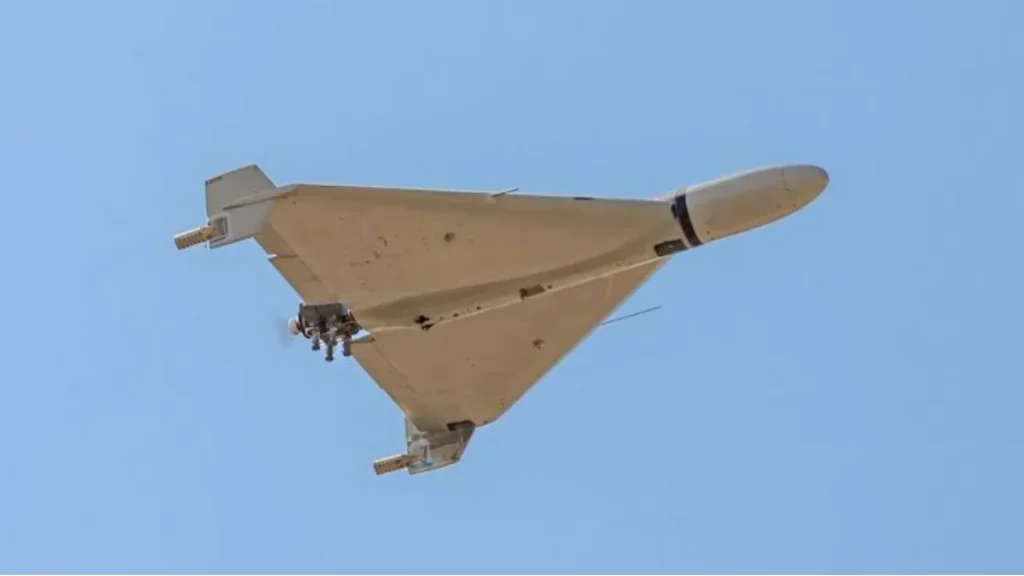
The situation illustrates one of the most important developments in modern warfare: the ability of relatively inexpensive drones to threaten extremely expensive military assets.
Traditional military thinking often focused on protecting aircraft from missiles, fighter aircraft and conventional attacks. Drones have added another layer of complexity. Small unmanned aircraft can be difficult to detect, relatively inexpensive to produce and potentially capable of causing significant damage.
The concern is particularly serious for military airfields because aircraft are concentrated in predictable locations. A successful attack does not necessarily need to destroy an entire fleet. Even damaging one or two aircraft, disrupting operations or forcing aircraft to relocate could create a significant strategic and psychological effect.
The concern has grown following major drone operations elsewhere. Ukraine’s 2025 “Operation Spiderweb,” for example, demonstrated how small drones could be covertly positioned near military airfields and used against strategic aircraft. The operation highlighted the vulnerability of aircraft sitting on the ground.
Suspicious Activity Near RAF Fairford
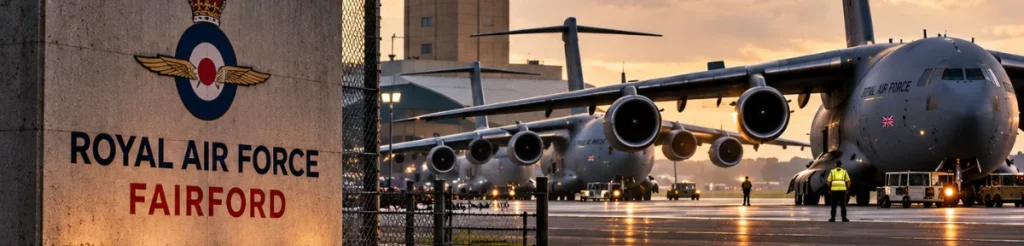
The decision to move the bombers came amid a British counterterrorism investigation involving suspicious activity near RAF Fairford.
British authorities arrested several men in connection with the investigation. Police reportedly found fuel containers in vehicles associated with some of the suspects, although authorities did not find explosives or drones at the time of the arrests. A seventh person was arrested in London on October 6 as the investigation continued.
The arrests do not by themselves establish that Iran organized an attack. Investigators are still examining evidence and possible links between the suspects and Iranian actors.
Iran has denied involvement in the alleged plot.
This distinction is important because intelligence assessments can evolve as investigators collect additional evidence. What is currently described as an Iranian-linked threat has not been publicly established as a completed Iranian operation.
Why RAF Fairford Matters
RAF Fairford is strategically valuable because of its location and its infrastructure.
For American bombers operating against targets in the Middle East, launching from the United Kingdom can provide significant geographic advantages compared with operating from the continental United States. The base has therefore played an important role in American military operations for decades.
Its importance also makes it an attractive potential target.
The recent relocation shows that even a highly protected military installation can become vulnerable if an adversary is believed to have the capability to use unconventional methods. Moving the aircraft reduces the immediate risk while allowing the United States to preserve its bomber capabilities elsewhere.
U.S. European Command emphasized that American B-1, B-2 and B-52 bombers can operate from different locations and conduct long-range precision missions when required.
Intelligence Before Force
One of the most significant aspects of this episode is the role of intelligence.
The United States apparently did not wait for an attack to take place. Instead, information from multiple intelligence sources reportedly contributed to a decision to reposition valuable aircraft.
This is an example of preventive military planning. When the potential consequences of an attack are extremely high, commanders may decide that even an uncertain threat deserves a precautionary response.
The B-1 is a sophisticated long-range bomber with substantial operational value. Leaving a large number of aircraft concentrated at one location could create an attractive target for an adversary.
By moving the aircraft, the United States reduced the possibility of a high-impact attack while retaining the ability to use the bombers from other bases.
Iran’s Expanding Use of Asymmetric Tactics
The alleged plot also reflects broader concerns about Iran’s use of asymmetric methods.
Iran does not possess the same conventional military capabilities as the United States. As a result, its strategic approach has often involved missiles, drones, cyber operations and partnerships with armed groups.
Drones are particularly useful because they can provide military effects without requiring the same level of investment associated with conventional aircraft or missiles.
Iran has developed a significant drone industry and has supplied drones and drone technology to partners and allied groups in the Middle East and beyond. This has made Iranian drone capabilities an important part of regional security calculations.
However, claims about a specific Iranian operation in Britain require evidence, and authorities have not publicly established all the details surrounding the RAF Fairford investigation.
The Wider Security Challenge for Europe

The incident is also significant for European security.
European countries have traditionally focused on protecting military bases from conventional threats. But drones have changed the security environment.
Military facilities are often located close to civilian communities and airports. Small drones can potentially be launched from nearby areas, making it difficult for security services to distinguish legitimate civilian activity from hostile preparation.
This creates a difficult problem for authorities: protecting military installations without disrupting surrounding communities.
Recent incidents across Europe have increased concerns about hostile-state activity, sabotage and drone surveillance. British authorities have also warned about threats involving Iran and other foreign states.
A Lesson for Military Bases
The RAF Fairford incident offers an important lesson: modern military bases must prepare for threats that may come from unexpected directions.
Air defense systems remain important, but protecting aircraft increasingly requires intelligence networks, surveillance, counter-drone technology, physical security and rapid decision-making.
The best defense may sometimes be preventing an aircraft from becoming a target in the first place.
Relocating the B-1 bombers demonstrates this principle. Instead of relying entirely on defenses at Fairford, U.S. commanders chose to remove the most valuable assets from a location where the perceived threat had increased.
Conclusion
The relocation of U.S. B-1 bombers from RAF Fairford is a powerful example of how intelligence and drone warfare are reshaping modern military strategy.
The United States responded to intelligence suggesting a possible Iranian-linked drone threat by moving valuable aircraft away from a potentially vulnerable location. While the alleged Iranian connection has not been fully established publicly and Tehran denies involvement, the incident has already highlighted the growing challenge posed by inexpensive drones and covert operations.
The episode also demonstrates that modern military power is not simply about possessing advanced weapons. It is increasingly about intelligence, adaptability and the ability to protect expensive assets from unconventional threats.
As drones become more capable and accessible, military bases across Europe and elsewhere will need to rethink how they defend aircraft, personnel and infrastructure. RAF Fairford may ultimately become a case study in how modern militaries respond when intelligence indicates that the battlefield could reach far beyond traditional war zones.